Why Santa Clara
Most Silicon Valley towns send their residents somewhere else to work. Santa Clara keeps the jobs inside the city limits: Intel's global headquarters, Nvidia's headquarters, ServiceNow, Applied Materials, and the original Sun Microsystems campus all sit in-city, with Levi's Stadium (San Francisco 49ers home) anchoring the northern edge near Great America Parkway. The city runs between Sunnyvale to the west and San Jose to the south and east, US-101 along the southeast edge and El Camino Real cutting through the middle, Santa Clara University (private Jesuit) in the central core, and a population around 128,000. One more thing sets it apart: Santa Clara Unified is a single K-12 district covering all of Santa Clara plus portions of Sunnyvale and San Jose, 14,200 students across 30 schools, state rank #333 of 1,910 (top 20%), so an address here does not drop a buyer into the district-boundary guesswork common elsewhere in the county.
The trade-off shows up in price. Santa Clara single-family runs 10 to 20% below Sunnyvale per square foot for comparable homes, and the reason is largely the school-district line: a Santa Clara Unified address instead of the Fremont Union high-school attendance that commands a premium next door. That attendance question, not the house itself, is the main pricing variable to weigh here. Within the city, single-family typically runs $1.4M to $2.0M in the central older tracts (Old Quad / Bowers / Mission College area), $1.6M to $2.3M for newer or renovated stock near Levi's Stadium and Mission College, and $1.5M to $2.2M in the southern Forest Park / Pomeroy West tracts; condos and townhomes run $700K to $1.3M. Lily's one documented Santa Clara closing, 941 Rose Ct at $1.65M in April 2024, sits squarely in that central single-family band. The Santa Clara housing market rewards buyers who price the school-district line first: it is why comparable single-family here runs 10 to 20% below Sunnyvale per square foot.
A short history of Santa Clara
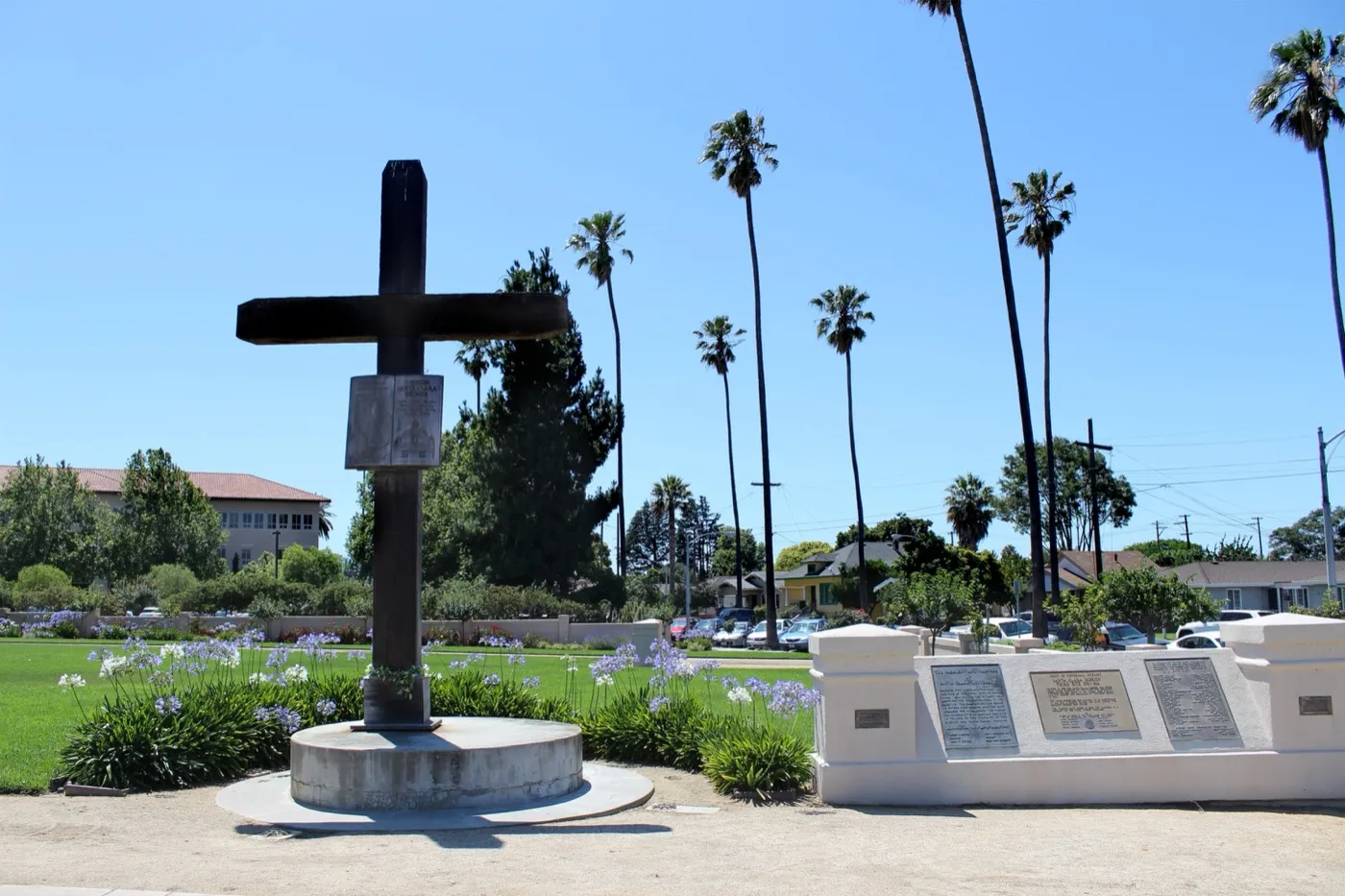
Santa Clara traces its origins to 1777, when Spanish settlers established Mission Santa Clara de Asís. The community takes its name from Saint Clare of Assisi. Santa Clara was incorporated as a town in 1852 and became state-chartered by 1862. For roughly a century afterward, its economy centered on agriculture, with orchards and vegetable farms thriving in the fertile local soil.
Beginning in the 1960s, the growth of the semiconductor industry reshaped Santa Clara from an agricultural community into a center of the region that became known for technology. Mission Santa Clara de Asís remains a central landmark of the city's heritage.
Source: Wikipedia: Santa Clara, California.
Santa Clara by the numbers
A neutral demographic snapshot from the most recent U.S. Census Bureau American Community Survey. These are city-wide figures; individual neighborhoods and parcels vary.
| Measure | Value |
|---|---|
| Population | 129,239 |
| Median age | 34.5 years |
| Median household income | $173,670 |
| Homeownership rate | 41.2% |
| Median home value (owner-occupied) | $1,527,900 |
| Median gross rent (monthly) | $2,985 |
| Average commute to work (one way) | 23.1 minutes |
| Average household size | 2.57 people |
Source: U.S. Census Bureau, American Community Survey 2019-2023 5-year estimates, Santa Clara city, California.
The Santa Clara market right now
| Median sale price | $1,710,000 |
|---|---|
| Days on market | 14 |
| Homes for sale (inventory) | 128 |
| Homes sold | 68 |
| Sale-to-list | 104% |
Data: Redfin, May 2026
For broader Bay Area context behind the Santa Clara numbers, read the current Bay Area market note.
What this means for you (May 2026)
Santa Clara homes closed at 104% of list in a median 14 days in May. That premium above asking tells sellers that demand is strong enough to support competitive bidding. With 68 closings from 128 listings, over half the inventory moved. I work with my seller clients here to time the listing and prepare the home so it captures that competition from day one.
Property taxes in Santa Clara
Property tax in Santa Clara starts with Santa Clara County's 1% base under Proposition 13 (California's 1978 law capping the base rate and limiting how fast assessed value climbs), plus voter-approved bond debt. For fiscal year 2025-26 the total ad valorem rate (the value-based portion) is 1.1786%. The verified parcel is a long-held, low-basis home, so on a representative roughly $1.6M Santa Clara home the bill runs about $19,006 per year, an effective rate of about 1.19%.
The direct charges here are light, with no city sewer line on this bill: SAFE, CLEAN WATER $80.40, MEASURE AA $12.00, MOSQUITO ASMT #1 $5.08 and #2 $9.82, SCVOSA ASMT #1 $12.00, SCVOSA MEASURE T $24.00, and FLOOD CTL DEBT-N CENTRAL $4.66, for a subtotal of $147.96 (Santa Clara Unified).
The weight of a Santa Clara bill sits in the school-district bonds, not the direct charges. See how California property tax works, and use the true monthly cost calculator to estimate a home. Figures come from a representative single-family county bill (FY 2025-26); every parcel differs, so check the actual bill for any home you are weighing. Compare all 38 cities side by side on the Bay Area property tax map. This is educational, not tax or legal advice; confirm any figure with a qualified tax professional and the county assessor before relying on it.
Schools (Santa Clara Unified School District)
Santa Clara Unified School District (SCUSD, K-12 single district, also covers parts of Sunnyvale and San Jose) serves 14,200 students across 30 schools (19 elementary, 4 middle, 6 high, 1 alternative); PublicSchoolReview state rank #333 of 1,910 (top 20%). Mission Early College High School (state rank #138) is the district's top performer; Adrian Wilcox HS (U.S. News #236 California1,695-1,977 students) and Santa Clara HS (U.S. News #240 California) are the two main comprehensive high schools.
Single K-12 district simplifies buying decisions. Address determines the elementary, middle, and comprehensive high school triad. Mission Early College HS is application-based, not boundary-based; the district's standout performer. Millikin Elementary ranks #13 in California out of 5,800+ elementary schoolsone of the highest-ranked elementaries in the state; Laurelwood Elementary #166 California. Some addresses near the Cupertino USD or Sunnyvale SD borders fall into those districts instead; verify by parcel for K-8 boundaries.
Typical assignment by sub-area
| Sub-area | Elementary feeders | Middle | High |
|---|---|---|---|
| Old Quad / Bowers / Mission College area (central) | Bowers / Millikin / Pomeroy | Buchser Middle | Adrian Wilcox High |
| North Santa Clara / Levi's Stadium / Great America corridor | Laurelwood / Don Callejon | Don Callejon (K-8) or Buchser | Adrian Wilcox High |
| Forest Park / Pomeroy West (south) | Pomeroy / Sutter | Cabrillo Middle | Santa Clara High |
| Eastern Santa Clara (near US-101) | Westwood / Scott Lane | Peterson Middle | Santa Clara High |
SCUSD attendance is by address; Mission Early College HS is application-based and not tied to a sub-area. Some addresses near the Sunnyvale or Cupertino borders may fall into Sunnyvale SD or Cupertino USD K-8 attendance (with Fremont Union HSD 9-12). Lily verifies the exact district by parcel before any offer.
Highlight schools
- Mission Early College High School (SCUSD, 9-12), state rank #138; the district's academic flagship; application-based, not boundary-based.
- Adrian Wilcox High School (SCUSD, 9-12, ~1,695-1,977 students), U.S. News #236 California; the central / north Santa Clara comprehensive flagship.
- Santa Clara High School (SCUSD, 9-12), U.S. News #240 California; the southern Santa Clara comprehensive.
- Millikin Elementary School (SCUSD, K-5), state rank #13 of 5,800+ California elementary schools; central Santa Clara; one of the highest-ranked elementaries in the state.
Sources: Santa Clara Unified School District; PublicSchoolReview SCUSD; U.S. News Wilcox HS; U.S. News Santa Clara HS.
Hospitals and birthing centers
Santa Clara has a major in-city Kaiser facility: Kaiser Permanente Santa Clara Medical Center (700 Lawrence Expressway) with full L&D and a large NICU; one of the largest Kaiser maternity facilities in Northern California and the Kaiser pediatric tertiary hub for the South Bay. For PPO patients, El Camino Health Mountain View (~10-15 min) and Stanford Hospital (~15-25 min) are the in-region alternatives.
| Hospital | Network | Drive time from Santa Clara | Key services |
|---|---|---|---|
| Kaiser Permanente Santa Clara Medical Center | Kaiser (closed) | in-city (0-10 min) | Full Kaiser L&D + large NICU; the Kaiser pediatric tertiary hub for South Bay; functionally Level III-equivalent with neonatologist coverage |
| El Camino Health Mountain View | Independent (PPO) | 10-15 min | Women's Hospital with full L&D; Level III NICU (Stanford Medicine partnership); 24/7 neonatology + OB anesthesia |
| Lucile Packard Children's Hospital Stanford (Palo Alto) | Stanford (PPO) | 15-25 min | Level IV NICU (40 beds); high-acuity referral destination |
| Good Samaritan San Jose | HCA (PPO) | 15-20 min | Alternative PPO L&D; full L&D + NICU |
Birthing centers: what matters
Kaiser Santa Clara is the default for Kaiser members across the South Bay: in-city, one of the largest Kaiser maternity facilities in Northern California, functionally Level III-equivalent NICU with neonatologist coverage. The Kaiser pediatric tertiary hub for the South Bay region.
El Camino Mountain View is the default PPO L&D for Santa Clara: 10 to 15 minutes north, Women's Hospital with Level III NICU (Stanford Medicine partnership). Higher-acuity transfers go to Stanford Lucile Packard (Level IV).
For Level IV NICU needs (severe neonatal complications, complex congenital cases), Stanford Lucile Packard Children's is the regional destination. 15 to 25 minutes north on US-101 or El Camino Real.
Hospital network coverage depends on your insurance plan. Lily does not advise on medical coverage decisions; for in-network confirmation contact your insurer directly. Hospital information above is current as of 2026-05-28 and should be re-verified with each hospital's admissions office before relying on it for a major life decision.
Sources: Kaiser Santa Clara L&D; Kaiser Santa Clara NICU; El Camino Women's Hospital; Lucile Packard NICU; California Perinatal Quality Care Collaborative NICU Directory.
Crime, hazards, and ratings
Santa Clara's crime letter is driven by retail-district theft around Westfield Valley Fair and downtown commercial corridors, a denominator artifact: residential violent crime sits below the California average. Flood risk is concentrated along Guadalupe River and the bayland tracts north of Hwy 237; the city is not in CAL FIRE LRA hazard zones, and liquefaction is High in the baylands.
| Category | Rating | Detail |
|---|---|---|
| Crime | denominator artifact: per-capita property crime inflated by retail-district shoplifting; violent crime near or below the California average. | |
| Flood | Mostly Zone X; Zone AE along the Guadalupe River, Saratoga Creek, and Calabazas Creek; Zone AE in the baylands north of Hwy 237 | |
| Fire | Not in LRA fire hazard zones; flat city | |
| Earthquake | Monte Vista-Shannon Fault about 5 miles southwest; Hayward-Calaveras junction about 9 miles northeast; San Andreas Fault about 10 miles southwest; liquefaction: High in baylands tracts north of US 101; Moderate citywide |
School ratings
Numeric snapshots for the highlight schools above:
| School | GreatSchools | Niche |
|---|---|---|
| Wilcox High | 8 | A+ |
| Santa Clara High | 7 | A |
| Cabrillo Middle | 7 | A- |
Environment and infrastructure
Beyond the natural-hazard ratings above, these are the environmental and infrastructure factors buyers ask about most. Each is a city-level summary; confirm the exact parcel before any offer.
| Factor | Detail |
|---|---|
| Gas transmission pipelines | PG&E high-pressure gas transmission pipelines cross the South Bay including the Santa Clara area; route proximity to a given parcel should be confirmed on the PHMSA National Pipeline Mapping System, which is approximate and excludes distribution mains. |
| Noise (freeway, rail, flight paths) | Santa Clara lies close to and partly under Mineta San Jose airport flight corridors and is one of the communities affected during 'south flow' arrival operations; northern Santa Clara is near the approach/departure paths. Freeway noise comes from US-101, I-880, CA-237 and CA-82 (El Camino), plus Caltrain. |
| Refineries and heavy industry | No petroleum refineries are in the South Bay or Santa Clara. The relevant heavy-industry legacy is semiconductor-era contamination, captured under contamination below. |
| Soil and groundwater contamination | Santa Clara has multiple EPA Superfund (NPL) sites from semiconductor manufacturing, including Intel (Santa Clara III, since deleted from the NPL after cleanup), Applied Materials (partially deleted), and the National Semiconductor site spanning Santa Clara and Sunnyvale, all associated with TCE and VOC soil and groundwater plumes. Parcel-level plumes and vapor-intrusion areas should be checked on SWRCB GeoTracker and DTSC EnviroStor. |
| Air quality and wildfire smoke | Santa Clara is in the San Francisco Bay Area air basin, designated nonattainment for the federal 8-hour ozone standard, with periodic wildfire-smoke (PM2.5) episodes and otherwise generally moderate air quality. Real-time data is from BAAQMD and AirNow. |
| Wildfire zone and power shutoffs (PSPS) | Santa Clara is flatland and is not in a CAL FIRE high fire hazard severity zone or a CPUC High Fire-Threat District; it carries essentially no direct wildfire or PG&E PSPS exposure beyond regional smoke. |
| High-voltage power lines | Santa Clara is served for electricity by Silicon Valley Power, the city's own municipal utility, rather than by PG&E, with associated substations and transmission feeds across the city; no single high-voltage corridor is documented as the defining feature of its residential areas. Specific corridors can be checked on the utility's facility maps. |
| Sea level and shoreline flooding | Santa Clara's far-northern edge reaches toward the South Bay baylands near the San Tomas Aquino / Guadalupe River shoreline and is comparatively low-lying; regional sea-level-rise planning identifies bayfront fringes of north Santa Clara as exposed, while the developed residential core is not bayfront. |
These are city-level summaries from public agencies and are approximate. Pipeline and power-line alignments, contamination parcels, and wildfire zones can differ block by block; verify the exact address with the agency tools linked above and your inspections before you write an offer.
Sources: PHMSA National Pipeline Mapping System; DTSC EnviroStor; State Water Board GeoTracker; EPA Superfund; BAAQMD air data; CAL FIRE Fire Hazard Severity Zones; PG&E PSPS maps; NOAA Sea Level Rise Viewer
Hazard ratings are city-level aggregates from public agencies (FEMA, CAL FIRE, USGS). Specific addresses can carry materially different risk; verify the exact parcel via the FEMA Flood Map Service Center, the CAL FIRE FHSZ viewer, and your insurance carrier before any offer. School ratings vary by year and by metric; the numbers above are point-in-time snapshots, treat them as a starting point and re-verify with the district registrar.
Sources: CrimeGrade.org (crime); FEMA Flood Map Service Center (flood); CAL FIRE FHSZ viewer (fire); USGS earthquake hazards (earthquake); GreatSchools + Niche (school ratings).
Track Record
1 documented Santa Clara closing, $1.7M local volume. Career-wide: 104 documented closings, $115M+ in total volume, with 91 of 104 on the buyer side, 10 closings in the last 12 months, career range $323K to $3.3M, 5.0-star Zillow average across 38+ reviews. The full transaction record for every Bay Area city Lily has closed in is summarized at the cities index.
Ready to talk about Santa Clara? Call or text me at 415-910-3958 for a free 30-minute consultation.
104 transactions · $115M+ · 5.0★ Zillow · Cal DRE #02010731
What buying a home in Santa Clara actually involves
Same fiduciary discipline as on every Lily Garipova representation: read every disclosure end-to-end, model the carrying cost (mortgage + property tax + HOA + insurance), walk the property at multiple times of day, and stay willing to walk you away from a property that does not pencil. Santa Clara-specific particulars are covered in the FAQ below; verify exact SCUSD vs Sunnyvale SD vs Cupertino USD K-8 boundary by parcel before any offer; the SCUSD vs Fremont Union HSD 9-12 assignment is the biggest school-related pricing variable.
What selling a home in Santa Clara involves
Strategic Listing Model applied to Santa Clara: data-driven comp analysis of the specific Santa Clara sub-area (central Old Quad vs north Levi's Stadium corridor vs Forest Park / Pomeroy West vs eastern near US-101 is a $300K to $600K price-spread per comparable square footage), pre-listing prep with positive-ROI improvements only, professional staging targeted to the Intel / Nvidia / ServiceNow / Levi's Stadium tech-buyer demographic, multi-platform marketing with active bid management, and honest disclosure of every defect.
The Meticulous Protector, applied to Santa Clara
The methodology behind Lily's 38+ five-star Zillow reviews and the highest repeat-and-referral rate of her career: read every disclosure line, verify every claim, model every carrying cost, walk every property in person before recommending an offer, document the ethical "no" when the math says no. The Santa Clara version of that methodology is the same as the Dublin version, the Pleasanton version, the Walnut Creek version, and every other city Lily represents, discipline does not change by city.
Santa Clara FAQ
What are Santa Clara price ranges in 2026?
Santa Clara single-family typically runs $1.4M to $2.0M in the central older tracts (Old Quad / Bowers / Mission College area), $1.6M to $2.3M in the newer / renovated single-family near Levi's Stadium and Mission College, and $1.5M to $2.2M for the Forest Park / Pomeroy West tracts in the southern part of the city. Condos and townhomes run $700K to $1.3M. The April 2024 Rose Ct closing at $1.65M is representative of the central single-family band.
Santa Clara vs Sunnyvale vs San Jose?
Santa Clara sits between Sunnyvale (west, smaller, premium school district premium via Cupertino USD / Fremont Union HSD addresses) and San Jose (south + east, larger, more inventory variety, more variable school quality across multiple districts). Santa Clara's defining structural features: single SCUSD K-12 district (no fragmentation worry), in-city Kaiser Santa Clara major hospital, Levi's Stadium / 49ers presence, Intel / Nvidia / ServiceNow employer concentration, and pricing 10 to 20% below comparable Sunnyvale per square foot.
Mission Early College HS, what is it?
Mission Early College High School is SCUSD's application-based magnet high school, state rank #138 (significantly higher than the comprehensive Wilcox at #236 or Santa Clara HS at #240). It is not boundary-based, students apply district-wide. The program partners with Mission College for early college credit, so graduating students can leave with an AA degree plus their high school diploma. Among the strongest public magnet high schools in the South Bay.
Does Lily Garipova speak Russian for Santa Clara transactions?
Yes. Russian is Lily's native language. Lily represents Russian-speaking buyers and sellers in Santa Clara and the broader South Bay in either English or Russian. Russian-language Santa Clara page: lilygaripova.com/ru/santa-clara-realtor/.
What is the Old Quad neighborhood in Santa Clara?
The Old Quad is Santa Clara's historic central neighborhood bounded roughly by The Alameda, Lafayette Street, Washington Street, and Benton Street, anchored by Santa Clara University (founded 1851, the oldest higher-education institution in California). Single-family stock skews 1900s to 1940s Craftsman, Spanish Mediterranean, and Period Revival on grid streets with mature canopy. Pricing typically runs $1.4M to $2.0M for comparable single-family in 2026. The Santa Clara Caltrain station sits on the east edge; walkable to the SCU campus, Mission Santa Clara, and the El Camino Real corridor.
What is the Rivermark master-planned neighborhood in Santa Clara?
Rivermark is a master-planned mixed-use community in north Santa Clara built starting 2002-2005 around the former Agnews State Hospital site near Tasman Drive and Lafayette Street. Single-family, townhomes, and condos in Rivermark run $1.3M to $2.2M depending on type and size. The Rivermark Village retail center, schools (Don Callejon K-8), and structured open space anchor the plan. Rivermark HOAs face SB326 exterior elevated element inspection liability and have ongoing reserve study and special-assessment dynamics; pull the most recent reserve study and 12 months of meeting minutes before any Rivermark offer.
What is the Forest Park / Pomeroy West area?
Forest Park and Pomeroy West are south-Santa-Clara single-family neighborhoods bounded roughly by Pomeroy Avenue, Saratoga Avenue, Stevens Creek, and the city limit with San Jose / Cupertino. Single-family runs $1.5M to $2.2M in 2026 with Santa Clara Unified attendance (Pomeroy or Sutter Elementary, Cabrillo Middle, Santa Clara High). Lot sizes 5,500 to 7,500 sf typical; construction era 1960s to 1970s tract with substantial recent renovations. Proximity to Westfield Valley Fair, Santana Row (across the city line in San Jose), and Apple Park (~15 minutes south) anchors the area's resale stability.
What is the Levi's Stadium and Great America corridor?
The Levi's Stadium / Great America corridor in north Santa Clara is anchored by Levi's Stadium (San Francisco 49ers home, opened 2014), California's Great America theme park, the Santa Clara Convention Center, and the Hyatt Regency Santa Clara. Single-family in the surrounding Rivermark and Mission Park tracts runs $1.6M to $2.3M in 2026 for newer or renovated stock. Stadium-day traffic (8 to 10 NFL home dates per year plus major concerts) is a localized exposure; check the calendar before any offer and walk the neighborhood on a stadium-event day to verify tolerance.
What major employers anchor Santa Clara property demand?
Santa Clara hosts the global headquarters of Intel (the world's largest semiconductor manufacturer by revenue), Nvidia (the dominant AI accelerator chipmaker), ServiceNow, Applied Materials, and the original Sun Microsystems campus (now Oracle). Plus Roku, Citrix, McAfee, Marvell, and Palo Alto Networks. The 49ers (San Francisco) own and operate Levi's Stadium. The Mission College community college and Santa Clara University (private Jesuit) anchor central Santa Clara. This employer density anchors the structural demand for Santa Clara single-family and condo inventory.
How do the Caltrain Santa Clara and Lawrence stations work?
Santa Clara has two Caltrain stations: Santa Clara station (Railroad Avenue, central, near Santa Clara University) and Lawrence station (Lawrence Expressway at Monroe, north). Both received service upgrades after 2024 Caltrain electrification. Properties within a half-mile walkshed of either station carry a measurable peninsula-commute premium for tech employees working San Francisco SoMa, Palo Alto, or Menlo Park. The Lawrence Station Area Plan TOD parcels add new mid-rise condo and townhome inventory near Lawrence station with HOA structures distinct from established single-family tracts.
What is Mission College and how does it factor into the area?
Mission College is the community college serving Santa Clara, located near Levi's Stadium and the Great America corridor. The college partners with SCUSD's Mission Early College High School to provide early college credit, allowing high school students to graduate with both a high school diploma and an AA degree. The Mission College campus, the Levi's Stadium corridor, and the Tasman light rail and Great Mall corridor together anchor north Santa Clara's mixed-use redevelopment density.
What is the Kaiser Santa Clara hospital network like for maternity and pediatric care?
Kaiser Permanente Santa Clara Medical Center (700 Lawrence Expressway) is a major in-city Kaiser facility, one of the largest Kaiser maternity facilities in Northern California. Full labor and delivery plus a large NICU functionally Level III-equivalent with neonatologist coverage; the Kaiser pediatric tertiary hub for the South Bay region. For PPO patients, El Camino Mountain View (~10-15 min) is the default and Stanford Lucile Packard (~15-25 min north) is the Level IV NICU high-acuity referral. Good Samaritan San Jose (~15-20 min south) is an alternative PPO option.
How do Santa Clara property tax rates work?
Santa Clara County base property tax is 1% of assessed value plus voter-approved overrides (voter-approved bonded-debt service above the 1% base rate), typically running 1.15% to 1.30% citywide for Santa Clara; any parcel taxes are separate flat per-parcel dollar charges billed on top, not part of that percentage rate. Some parcels, more often in newer master-planned or TOD (transit-oriented development, higher-density housing built around a transit stop) areas such as Rivermark and the Lawrence Station Area Plan, also carry a Mello-Roos special tax (an annual parcel charge that repays bonds for local infrastructure) levied through a CFD (Community Facilities District, the taxing district that issues those bonds). The Mello-Roos special tax varies tract to tract, so pull the current annual levy for the specific parcel and add it to carrying cost. The current levy is shown on the county property tax bill and disclosed in the seller Mello-Roos Notice of Special Tax; the recorded special-tax lien also appears on the preliminary title report (the title company's early report of liens and title matters on a parcel), but the prelim shows only that the lien and tax formula exist, not the current dollar amount. Do not assume an established central or southern tract carries no Mello-Roos; confirm the parcel either way. The effective tax rate calculation must include base rate, override, any Mello-Roos special tax, and any parcel taxes for accurate carrying-cost modeling.
What is the SB326 balcony inspection risk in Santa Clara HOAs?
California SB326 requires HOAs to inspect exterior elevated elements (balconies, decks, walkways) every nine years with the first round due 2025. Santa Clara HOAs (Homeowners Associations) in the Rivermark, Mission Park, and Lawrence Station Area Plan corridors are reserving or special-assessing for inspection-driven remediation, and the per-unit cost varies by association and by the condition found, so pull the HOA package for the specific building for its actual figures. Some smaller, under-reserved HOAs are issuing immediate special assessments rather than reserving over time. Always request the SB326 inspection report, the most recent reserve study, and the 12 months of HOA meeting minutes before any Santa Clara condo or townhome offer.
What is Millikin Elementary and why does it carry weight?
Millikin Elementary School (SCUSD, K-5) in central Santa Clara ranks #13 in California out of 5,800+ elementary schools, one of the highest-ranked elementaries in the entire state. The Millikin feeder pattern (typically into Buchser Middle and Adrian Wilcox High) is the strongest K-5 to 12 SCUSD pathway. Attendance is assigned by parcel and third-party rankings differ by school, so verify the exact assignment with the SCUSD (Santa Clara Unified School District) registrar by exact address before an offer; boundaries can shift between school years.
What about Laurelwood Elementary and Don Callejon?
Laurelwood Elementary (SCUSD, K-5) ranks #166 in California. Don Callejon (SCUSD, K-8) is a magnet K-8 in the Rivermark master-plan area and serves much of north Santa Clara. Both are strong SCUSD elementaries; the Don Callejon K-8 structure means students can complete K through 8 on a single campus before moving to Adrian Wilcox High. Buchser Middle, Cabrillo Middle, and Peterson Middle are the other main SCUSD middle schools. Verify exact attendance zone with the registrar by parcel.
What is Santa Clara University and how does it shape the area?
Santa Clara University (SCU) is a private Jesuit research university in the central Old Quad neighborhood, founded 1851 (the oldest higher-education institution in California). About 5,500 undergraduate and 3,500 graduate students. The campus anchors the historic central neighborhood and supports student-rental demand within walking distance. SCU's School of Engineering, Leavey School of Business, and Law School are nationally ranked. Student-rental concentration and SCU game-day traffic are localized factors to verify within the Old Quad walkshed.
What is the Santa Clara condo and townhome market?
Santa Clara condos and townhomes run $700K to $1.3M in 2026 depending on location and unit type. The Rivermark master-plan condos and townhomes ($900K to $1.5M) are the most concentrated newer-construction inventory. Lawrence Station Area Plan parcels are adding new mid-rise condos in the $750K to $1.1M range. Older condos along El Camino Real and Stevens Creek Boulevard run $700K to $950K. HOA dues vary by association and building, so pull the HOA package for the specific community for the actual figure; SB 326 (the California law requiring periodic inspection of balconies, decks, and other elevated exterior elements in multifamily buildings) inspection status drives much of the variance.
What is the Santa Clara seismic risk profile?
The Monte Vista-Shannon Fault sits about 5 miles southwest of Santa Clara; the Hayward-Calaveras junction sits about 9 miles northeast; the San Andreas Fault sits about 10 miles southwest. USGS Northern Santa Clara Valley liquefaction maps show High liquefaction in baylands tracts north of US-101 (including the Levi's Stadium area), Moderate citywide. Pre-1980 single-family with attached front garages carries soft-story exposure; $5K to $15K retrofit. Pre-1950 stock in the Old Quad carries knob-and-tube wiring that most major insurers will not write; $8K to $20K rewire.
What is the Santa Clara flood-zone exposure?
Most of Santa Clara sits in FEMA Zone X (minimal flood risk). Zone AE (1% annual chance flood) runs along the Guadalupe River, Saratoga Creek, and Calabazas Creek. Zone AE extends across the baylands tracts north of Highway 237. Properties in Zone AE require federal flood insurance if held by a federally-backed mortgage; Zone X properties do not. Always pull the parcel-specific FEMA Flood Map Service Center designation before offer; the lender will require flood-zone determination at appraisal anyway.
What about Santa Clara crime grade and what the C+ means?
Santa Clara's crime letter grade is driven by retail-district shoplifting around Westfield Valley Fair, Stevens Creek Boulevard, and downtown commercial corridors, a denominator artifact where high commercial density inflates the per-capita property-crime metric. Residential violent crime sits below the California average. CrimeGrade.org rates Santa Clara C+ overall but the residential-only metric tracks higher; the headline number is misleading for single-family buyers in established neighborhoods like the Old Quad, Forest Park, Pomeroy West, and Rivermark.
What is the Santa Clara ADU and SB9 lot-split opportunity?
Santa Clara has aligned with California state ADU law (SB9, AB1033, AB976) and permits both detached ADUs and JADU conversions on single-family parcels. Older single-family tracts in the Old Quad, Bowers, Forest Park, and Pomeroy West with 6,000+ sf lots are reasonable ADU candidates. SB9 lot splits (one parcel into two) face stricter planning review. An existing permitted ADU adds appraised value plus supports house-hacking; verify permit history with the City of Santa Clara planning department before assuming a structure is permitted.
What is the Lily Garipova process for a Santa Clara buyer representation?
Lily reads every disclosure end-to-end (TDS, NHD, SPQ, HOA package if applicable, preliminary title, CFD disclosure if applicable, Rivermark-specific reserve study if applicable), pulls the parcel-specific FEMA, CAL FIRE, and USGS liquefaction overlays, models full carrying cost (base property tax + override + any Mello-Roos + HOA + insurance), verifies SCUSD attendance with the district registrar by parcel (including potential CUSD or Sunnyvale SD pockets near borders), walks the property at multiple times of day, and remains willing to walk you away from a deal that does not pencil.
What does selling a Santa Clara home with Lily Garipova involve?
Strategic Listing Model applied at the Santa Clara sub-area level: comp set drawn from the exact neighborhood (Old Quad, Bowers, Mission Park, Rivermark, Forest Park, Pomeroy West, Levi's Stadium corridor), not city-wide averages; pre-listing inspection with positive-ROI improvements only; professional staging targeted to the Intel / Nvidia / ServiceNow / 49ers tech-buyer demographic; multi-platform marketing with active bid management; full California disclosure package preparation including SB326 status and HOA reserve disclosure for HOA-governed properties.
How do I schedule a free Santa Clara consultation with Lily Garipova?
Call or text 415-910-3958 or email lilyagaripova@gmail.com. Free 30-minute initial consultation by phone, Zoom, or in person at any Santa Clara address that works for you. Available in English and Russian. Cal DRE #02010731. The consultation walks through your specific buying or selling math: budget, timeline, SCUSD or pocket CUSD school priorities, target employer commute, financing pre-approval, and the realistic Santa Clara sub-area that fits your situation.
How has Santa Clara priced over the trailing 12 months?
Santa Clara single-family median has been roughly flat to up low-single-digits over the trailing 12 months ending mid-2026, with Rivermark and the Levi's Stadium corridor slightly outperforming and central Old Quad / Bowers running flat. Days-on-market has lengthened versus the 2021-2022 peak; well-priced, well-prepped listings still draw multiple offers. The Rivermark condo segment has been mildly negative as SB326 disclosure surfaces deferred-maintenance liabilities and special-assessment exposure becomes more transparent in HOA meeting minutes.
What is the Rivermark HOA reserve study and SB326 concern specifically?
The Rivermark master-plan HOAs face elevated SB326 exterior elevated element inspection liability due to the era of construction (2002-2010) and the prevalence of balcony, deck, and walkway elements typical of mixed-use master-plan condos. Multiple Rivermark HOAs have faced reserve study (the HOA's funded-reserves analysis for future repairs) top-ups or special assessments for SB 326-driven remediation, and the per-unit amount varies by association and by the condition found. Pull the most recent reserve study, the SB326 inspection report, and 12 months of meeting minutes before any Rivermark condo or townhome offer; the assessment exposure can materially shift the carrying-cost math.
What are the main Santa Clara neighborhoods to know by name?
By location and structural character: Old Quad (historic central, Santa Clara University, 1900s-1940s Craftsman / Spanish Mediterranean), Bowers (central, Millikin Elementary attendance, 1950s-1960s tract), Mission Park (central, near Mission College), Westwood Oaks (eastern, Peterson Middle attendance), Forest Park and Pomeroy West (southern, Cabrillo Middle / Santa Clara High), Rivermark (north, master-planned 2002-2010, mixed-use), Levi's Stadium / Great America corridor (north, newer / renovated), Lawrence Station Area Plan TOD (north, new construction). Each carries distinct school feeder, era, and HOA / non-HOA profile.
What is Westfield Valley Fair and how does it shape central Santa Clara?
Westfield Valley Fair, located on Stevens Creek Boulevard at Winchester Boulevard, is the largest mall in Northern California and one of the highest-grossing in the country. The mall straddles the Santa Clara / San Jose city limit. Properties within walking distance carry retail-amenity premium for some buyers but also bear higher daytime and weekend traffic. The adjacent Santana Row mixed-use development (across the city line in San Jose) anchors the corridor. Most central-Santa-Clara single-family sits a few blocks off the commercial frontage, giving access without direct retail exposure.