Why Livermore
Livermore sits at the far east end of the Tri-Valley, where the valley floor runs into the Livermore Valley AVA (American Viticultural Area, meaning wine country) rather than another suburb. That setting is both the appeal and the trade-off: more space per dollar and a genuine wine-country lifestyle on one side, and no BART, schools that sit mid-tier within the Tri-Valley, and ground that sits nearer active fault lines on the other. Lawrence Livermore National Laboratory anchors the local job base, a national lab rather than a tech cluster, which is part of why the mid-priced market stays steady even without BART. Livermore Valley Joint Unified School District covers most of the city, with Granada High and Livermore High as the two main public high schools.
Lily brings 1 documented Livermore closing plus active Tri-Valley representation. The city is really four markets with four price stories: downtown Livermore, walkable and mixed-use, runs $700K-$1.2M for condos and townhomes; south Livermore, newer single-family and master-planned tracts, runs $1M-$1.7M; north Livermore, older single-family, runs $800K-$1.2M; and the Sycamore Grove / Tesla Road corridor toward wine country carries estates at $1.5M-$3M+. Across those tiers Livermore holds a consistent 15-25% lower price-per-square-foot than Pleasanton for comparable inventory, which is the arithmetic that defines the town: the discount is real, and so is what you give up for it. Which is to say the Livermore housing market is really four price stories under one name, from the downtown condos up to the wine-country estates.
A short history of Livermore
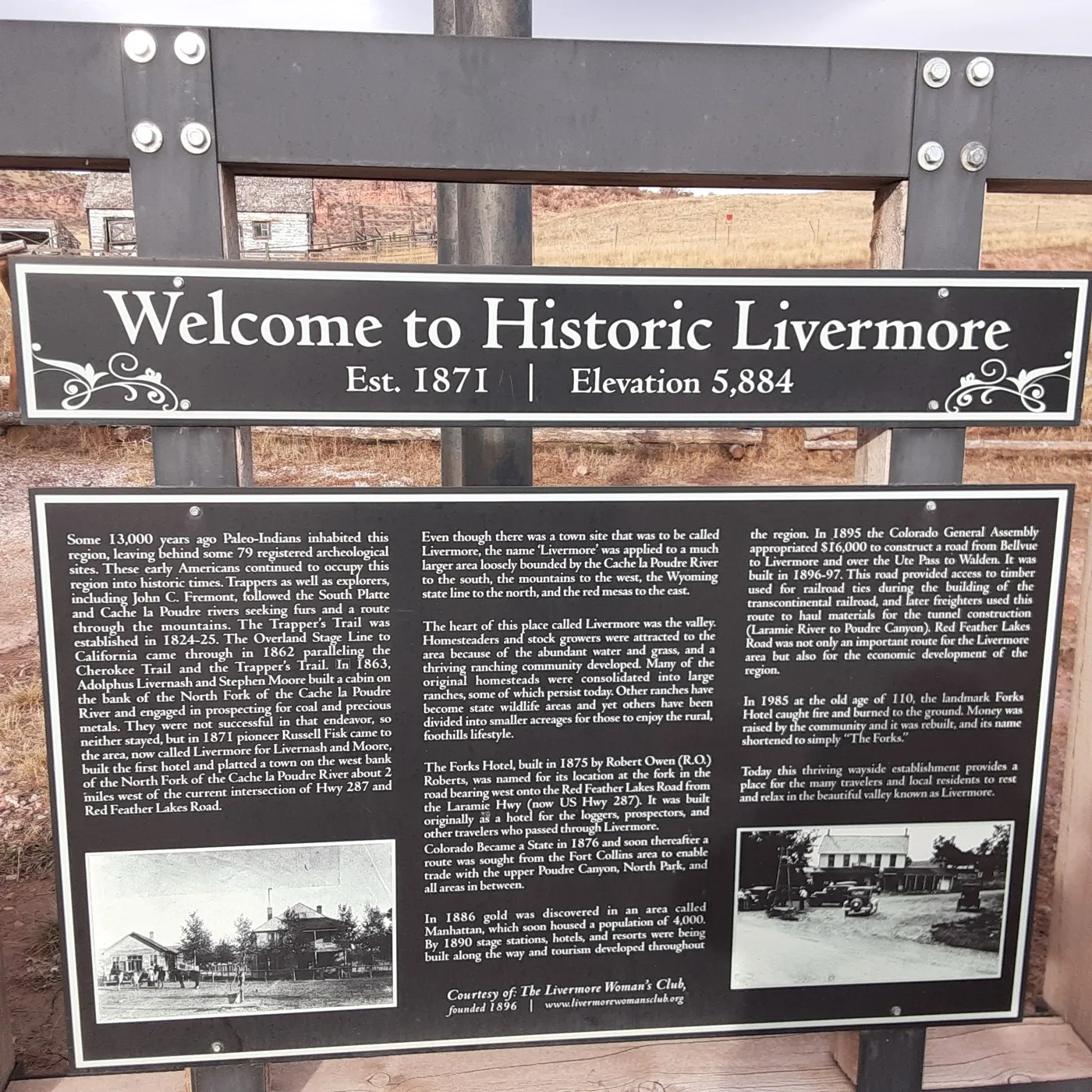
Livermore was founded as a railroad town in 1869 and incorporated on April 1, 1876. The city is named for Robert Livermore, a rancher who settled in the valley in the 1840s. In its early decades the local economy was based on wheat, cattle, coal, oil, roses, and wine, and wineries founded in the 1880s, among them Wente Vineyards, Concannon Vineyards, and Cresta Blanca Winery, shaped the surrounding valley's wine industry.
In 1952 the federal government established Lawrence Livermore National Laboratory in the city, adding a major research presence to the area. Livermore is also home to the Centennial Light, a light bulb that has burned almost continuously since 1901, and to the Livermore Carnegie Library, which opened in 1909.
Source: Wikipedia: Livermore, California.
Livermore by the numbers
A neutral demographic snapshot from the most recent U.S. Census Bureau American Community Survey. These are city-wide figures; individual neighborhoods and parcels vary.
| Measure | Value |
|---|---|
| Population | 85,870 |
| Median age | 40.5 years |
| Median household income | $153,602 |
| Homeownership rate | 72.0% |
| Median home value (owner-occupied) | $1,038,600 |
| Median gross rent (monthly) | $2,640 |
| Average commute to work (one way) | 29.3 minutes |
| Average household size | 2.76 people |
Source: U.S. Census Bureau, American Community Survey 2019-2023 5-year estimates, Livermore city, California.
The Livermore market right now
| Median sale price | $1,200,000 |
|---|---|
| Days on market | 12 |
| Homes for sale (inventory) | 138 |
| Homes sold | 75 |
| Sale-to-list | 102% |
Data: Redfin, May 2026
For broader Bay Area context behind the Livermore numbers, read the current Bay Area market note.
What this means for you (May 2026)
Livermore homes moved quickly in May, with a median 12 days on market and a 102% sale-to-list ratio. For sellers, that's an important signal: price your home within the range that comparable sales support, and you'll likely see offers at or above asking within two weeks. Staging pays for itself here, because a polished first impression in a fast market drives the premium.
Property taxes in Livermore
In Livermore, property tax begins with Alameda County's 1% base under Proposition 13 (California's 1978 cap on the base tax at 1% of assessed value), plus voter-approved bonds. The verified single-family bill here (FY 2025-26), a Sage-era home built in 2012, carried no Mello-Roos or Community Facilities District (CFD) line, with $1,299.62 in non-CFD service charges.
The biggest of those is city sewer at $899.88. The rest are a Livermore school parcel tax (a flat per-property levy) of $138.00, the landscape and lighting line L & L MAINT GRP 4 $109.00, a LARPD special tax of $40.20, and smaller mosquito, paramedic, vector, and urban-runoff charges. The lines total $1,299.62.
Sage-era Livermore tracts carry essentially no Mello-Roos, but newer or still-forming Livermore districts could differ. See the Mello-Roos guide, how California property tax works, and the true monthly cost calculator. Figures come from a representative single-family county bill (FY 2025-26); every parcel differs, so check the actual bill for any home you are weighing. Compare all 38 cities side by side on the Bay Area property tax map. This is educational, not tax or legal advice; confirm any figure with a qualified tax professional and the county assessor before relying on it.
Schools (Livermore Valley Joint Unified School District)
Livermore Valley Joint Unified School District (LVJUSD) serves about 12,925 students across 18 schools. The district covers Livermore proper and parts of unincorporated Alameda County to the south. Four high schools: Granada High (the largest and traditionally highest-scoring, ~2,234 students), Livermore High, Del Valle High (continuation), and Vineyard Alternative. LVJUSD sits in the middle tier of Bay Area districts: stronger than HUSD, weaker on the headline than the top-tier Tri-Valley districts (DUSD, PUSD, SRVUSD), with significant per-school variation that rewards careful feeder-pattern reading.
Granada High is the south-Livermore flagship. Granada High School (~2,234 students, U.S. News #336 California) anchors south-side and Springtown / Sunset tract buyers. Livermore High (#586 California) anchors central and north-side / downtown / wine-country-edge buyers. The two high schools are reasonably comparable for general college-prep, but buyers prioritizing a stronger high school feeder typically look at Granada. The Pleasanton boundary is the alternative buyers across the city line consider (Pleasanton USD's Amador and Foothill are both stronger statewide than Granada), at a 10 to 25% per-square-foot premium.
Typical assignment by sub-area
| Sub-area | Elementary feeders | Middle | High |
|---|---|---|---|
| Sunset / Springtown / south-side | Sunset / Lawrence / Croce | Mendenhall | Granada High |
| Downtown / central Livermore | Marylin Avenue / Joe Michell K-8 | East Avenue | Livermore High |
| North-side / Holdener Park / east downtown | Junction K-8 / Smith | Christensen | Livermore High |
| South Livermore / wine country edge | Altamont Creek / Smith | Mendenhall | Granada High |
LVJUSD attendance lines are address-specific; Lily verifies the current assignment with the LVJUSD registrar before any offer.
Highlight schools
- Granada High School (9-12, ~2,234 students), U.S. News #336 California, the district's largest and highest-scoring comprehensive high school. The main south-Livermore buyer draw.
- Livermore High School (9-12), U.S. News #586 California; comprehensive program; the central / downtown / north-side flagship.
- Joe Michell K-8one of the higher-scoring LVJUSD K-8 options; central Livermore.
- Altamont Creek Elementary (K-5), one of the strongest LVJUSD elementaries; south Livermore.
Sources: Livermore Valley Joint USD; U.S. News LVJUSD; California Department of Education DataQuest; Niche LVJUSD.
Hospitals and birthing centers
Livermore sits in the same Tri-Valley hospital pool as Dublin and Pleasanton. The local Stanford campus is Stanford Health Care Tri-Valley Livermorean outpatient and general acute-care facility; the full Birth Center and Level II NICU for the Tri-Valley sit at the Stanford Health Care Tri-Valley Pleasanton campus (~10-15 minutes west), and Pleasanton is therefore the default in-network labor and delivery destination for Livermore PPO buyers. Kaiser Permanente Livermore is outpatient-only; Kaiser members deliver at Kaiser Walnut Creek (~35-45 min).
| Hospital | Network | Drive time from Livermore | Key services |
|---|---|---|---|
| Stanford Health Care Tri-Valley Livermore campus | Stanford (PPO) | in-city (0-10 min) | General acute care + outpatient; no in-city labor & delivery |
| Stanford Health Care Tri-Valley (Pleasanton campus) | Stanford (PPO) | 10-15 min | Full Birth Center; Level II NICU (32+ weeks); 24/7 OB anesthesiology; only outpatient lactation clinic in Tri-Valley |
| San Ramon Regional Medical Center | Tenet (PPO, independent) | 20-30 min | Alternative PPO; Family Birthing Center; Level II Special Care Nursery |
| Kaiser Permanente Livermore Medical Offices | Kaiser (closed) | in-city (0-10 min) | Outpatient + specialty care only; no labor & delivery on-site |
| Kaiser Permanente Walnut Creek Medical Center | Kaiser (closed) | 35-45 min | Closest Kaiser L&D for Livermore Kaiser members |
| John Muir Medical Center Walnut Creek (Level III NICU referral) | John Muir (PPO) | 35-50 min | Regional Level III NICU (only one in Contra Costa County); high-risk pregnancy referral center |
Birthing centers: what matters
The Livermore campus of Stanford Tri-Valley does not have labor and delivery: Stanford's L&D for the Tri-Valley is at the Pleasanton campus (5555 West Las Positas Blvd), 10 to 15 minutes west. Level II NICU there (handles 32+ weeks), 24/7 OB anesthesiology, and the only outpatient lactation clinic in the Tri-Valley after discharge. For Livermore PPO buyers, Pleasanton is the default in-network L&D destination.
San Ramon Regional Medical Center is a comparable alternative (also Level II NICU) at roughly equivalent driving distance, and may be closer for some north-Livermore buyers depending on traffic.
Kaiser members in Livermore should plan for the Walnut Creek commute: Kaiser has medical offices in Livermore for outpatient care, but Kaiser L&D for Tri-Valley members is at Kaiser Walnut Creek (~35-45 minutes from most Livermore addresses). Build this commute into prenatal-care scheduling.
Hospital network coverage depends on your insurance plan. Lily does not advise on medical coverage decisions; for in-network confirmation contact your insurer directly. Hospital information above is current as of 2026-05-28 and should be re-verified with each hospital's admissions office before relying on it for a major life decision.
Sources: Stanford Health Care Tri-Valley (incl. maternity); San Ramon Regional Obstetrics; Kaiser Walnut Creek maternity; John Muir Walnut Creek; California Perinatal Quality Care Collaborative NICU Directory.
Crime, hazards, and ratings
Livermore carries moderate crime exposure, sits mostly outside FEMA flood zones, with Very High fire hazard concentrated in hillside tracts relative to the broader Bay Area. School ratings reflect the local district's performance bands.
| Category | Rating | Detail |
|---|---|---|
| Crime | property crime near US average; violent crime near California average | |
| Flood | Mostly Zone X; Zone AE along Arroyo Mocho, Arroyo Las Positas, and Arroyo Seco | |
| Fire | Moderate to High in the southern hills (above Wente, Tesla Rd, Mines Rd) and Altamont area; Very High in some Tesla/Mines Rd canyons; flatland tracts Low | |
| Earthquake | Greenville Fault about 4 miles east; Calaveras Fault about 6 miles west; Las Positas Fault traverses south Livermore; liquefaction: Low to Moderate on the valley floor; Higher in arroyo corridors |
School ratings
Numeric snapshots for the highlight schools above:
| School | GreatSchools | Niche |
|---|---|---|
| Granada High | 9 | A |
| Livermore High | 7 | B+ |
| Joe Michell K-8 | 8 | A- |
| Altamont Creek Elementary | 8 | A- |
Environment and infrastructure
Beyond the natural-hazard ratings above, these are the environmental and infrastructure factors buyers ask about most. Each is a city-level summary; confirm the exact parcel before any offer.
| Factor | Detail |
|---|---|
| Gas transmission pipelines | PG&E high-pressure gas transmission lines serve the Livermore Valley along the broader I-580 corridor, but PHMSA NPMS publishes only approximate alignments excluding local distribution, so proximity to a specific address must be verified. |
| Noise (freeway, rail, flight paths) | Livermore noise sources include I-580, the Altamont Pass freight-and-wind corridor to the east, two Altamont Corridor Express (ACE) stations (Vasco Road and downtown) on shared Union Pacific freight track, and Livermore Municipal Airport, a general-aviation reliever airport with roughly 197,000 aircraft operations in 2022 whose flight-training traffic produces overflight noise (noise-sensitive areas extend about 2 miles west and 0.75 mile east of the field). |
| Refineries and heavy industry | There are no oil refineries in Livermore, but the city hosts the two largest research/industrial institutions in the Tri-Valley, Lawrence Livermore National Laboratory (LLNL) and Sandia National Laboratories, both major federal facilities east of downtown. |
| Soil and groundwater contamination | Lawrence Livermore National Laboratory is on the EPA Superfund National Priorities List at two locations: the 821-acre main site east of downtown Livermore (listed 1990; groundwater/soil contaminated with VOCs, fuel hydrocarbons, PCBs, tritium, and high-explosive compounds) and the 7,000-acre Site 300 about 15 miles southeast toward Tracy (listed 1990; groundwater contaminated with TCE/VOCs, tritium, perchlorate, nitrate, and uranium), both under ongoing cleanup. |
| Air quality and wildfire smoke | Livermore consistently records the highest ozone (smog) levels in the Bay Area: BAAQMD/MTC data show the Livermore monitoring site (with San Martin) reading over 70 parts per billion, the region's highest, versus under 55 ppb at coastal Oakland and San Francisco, because inland heat and the valley basin trap pollutants; the Bay Area is an EPA ozone nonattainment area and Livermore is also exposed to regional wildfire smoke and winter PM2.5. |
| Wildfire zone and power shutoffs (PSPS) | The grassland hills south and east of Livermore (toward the Altamont and the south-hills wildland-urban interface) carry real fire hazard and have been included in PG&E Public Safety Power Shutoff de-energizations during high-wind, high-fire-danger events; the central valley floor is lower risk. |
| High-voltage power lines | Major high-voltage transmission infrastructure runs through the Livermore/Altamont area, including PG&E 500 kV lines crossing I-580 into the Tesla substation on Patterson Pass Road east of the city, plus the Las Positas 230 kV/60 kV substation in eastern Livermore; specific corridor proximity to a given residential street should be confirmed against PG&E and CAISO maps. |
| Sea level and shoreline flooding | Livermore is inland and elevated with no bay frontage, so sea-level rise is not a factor; the relevant water risk is creek flooding (Arroyo Mocho, Arroyo Las Positas) with FEMA-mapped flood zones along those channels. |
These are city-level summaries from public agencies and are approximate. Pipeline and power-line alignments, contamination parcels, and wildfire zones can differ block by block; verify the exact address with the agency tools linked above and your inspections before you write an offer.
Sources: PHMSA National Pipeline Mapping System; DTSC EnviroStor; State Water Board GeoTracker; EPA Superfund; BAAQMD air data; CAL FIRE Fire Hazard Severity Zones; PG&E PSPS maps; NOAA Sea Level Rise Viewer
Hazard ratings are city-level aggregates from public agencies (FEMA, CAL FIRE, USGS). Specific addresses can carry materially different risk; verify the exact parcel via the FEMA Flood Map Service Center, the CAL FIRE FHSZ viewer, and your insurance carrier before any offer. School ratings vary by year and by metric; the numbers above are point-in-time snapshots, treat them as a starting point and re-verify with the district registrar.
Sources: CrimeGrade.org (crime); FEMA Flood Map Service Center (flood); CAL FIRE FHSZ viewer (fire); USGS earthquake hazards (earthquake); GreatSchools + Niche (school ratings).
Track Record
1 documented Livermore closing (broader-area coverage via adjacent cities). Career-wide: 104 documented closings, $115M+ in total volume, with 91 of 104 on the buyer side, 10 closings in the last 12 months, career range $323K to $3.3M, 5.0-star Zillow average across 38+ reviews. The full transaction record for every Bay Area city Lily has closed in is summarized at the cities index.
Ready to talk about Livermore? Call or text me at 415-910-3958 for a free 30-minute consultation.
104 transactions · $115M+ · 5.0★ Zillow · Cal DRE #02010731
What buying a home in Livermore actually involves
Same fiduciary discipline as on every Lily Garipova representation: read every disclosure end-to-end before recommending an offer, model the carrying cost (mortgage + property tax + HOA + Mello-Roos, a special tax that funds infrastructure in newer developments, where it applies, plus insurance) over the buyer's actual cash-flow horizon, walk the property at multiple times of day before bidding, and stay willing to walk you away from a property that does not pencil for your specific situation. Livermore-specific particulars are covered in the FAQ below; verify exact school assignment by address through the district registrar before any offer.
What selling a home in Livermore involves
Strategic Listing Model applied to Livermore: data-driven comp analysis of the specific Livermore sub-area (not city-wide averages), pre-listing prep with positive-ROI improvements only (no over-spending), professional staging targeted to the Livermore buyer demographic, multi-platform marketing with active bid management, and honest disclosure of every defect found in pre-listing inspection. Livermore sub-area pricing variance is large; the comp set for one neighborhood typically does not transfer to another.
The Meticulous Protector, applied to Livermore
The methodology behind Lily's 38+ five-star Zillow reviews and the highest repeat-and-referral rate of her career: read every disclosure line, verify every claim, model every carrying cost, walk every property in person before recommending an offer, document the ethical "no" when the math says no. The Livermore version of that methodology is the same as the Dublin version, the Pleasanton version, the Walnut Creek version, and every other city Lily represents, discipline does not change by city.
Livermore FAQ
What are Livermore price ranges in 2026?
Single-family in south Livermore (newer construction) typically runs $1M-$1.7M. North and central Livermore (older inventory) runs $800K-$1.2M. The Sycamore Grove / Tesla Road wine country corridor pushes $1.5M-$3M for estate inventory. Condos and townhomes in downtown Livermore run $500K-$900K. Master-planned tracts on the south + east side carry Mello-Roos in some cases.
Livermore vs Pleasanton vs Dublin?
Pleasanton carries the school + downtown premium. Dublin has BART and the most new-construction inventory. Livermore is the lowest price floor of the three with no BART (the Tri-Valley BART terminus is Dublin/Pleasanton; Livermore residents drive 10-15 minutes to that station). Livermore offsets the no-BART tradeoff with wine country lifestyle + LLNL employer cluster + more space per dollar.
How are Livermore schools?
Livermore Valley Joint Unified School District covers most of the city. Granada High and Livermore High are the two main public high schools. Schools are mid-tier within the Tri-Valley (below Pleasanton Unified and Dublin Unified on most published measures). Some Livermore addresses on the western boundary may be in Pleasanton Unified instead; verify by exact address.
Does Lily Garipova speak Russian for Livermore transactions?
Yes. Russian is Lily native language. Lily represents Russian-speaking buyers and sellers in Livermore and the broader Tri-Valley in either English or Russian. Russian-language Livermore page: lilygaripova.com/ru/livermore-realtor/.
What is the price band for downtown Livermore condos and townhomes?
Downtown Livermore condos and townhomes typically run $500K-$900K in 2026, the lowest attached entry in the Tri-Valley. Stock clusters along First Street, Railroad Avenue, and the post-2010 mixed-use product around the Bankhead Theater corridor. The walkable historic First Street downtown (anchored by Bankhead, the Wente Vineyards tasting room, and the Saturday farmers market) is one of the strongest small-town downtowns in the East Bay. HOA (homeowners association) dues vary by building, so pull the HOA package for the specific unit. SB326 balcony-inspection status is the dominant price variable on older buildings; always pull the SB326 report and reserve study before offer.
What is the price band for south Livermore newer single-family?
South Livermore newer single-family (Sunset, Springtown, post-2000 master-planned tracts toward the Pleasanton boundary) typically runs $1.0M-$1.7M in 2026. Most stock is post-2000 stucco-clad construction on conventional lots. Some south Livermore tracts carry active Mello-Roos (a voter-approved special tax that funds infrastructure in newer developments), and others do not; the special tax varies tract to tract, so pull the current annual levy for the specific parcel and add it to carrying cost. The current annual levy is shown on the county property tax bill and disclosed in the seller's Mello-Roos Notice of Special Tax (a required seller disclosure). South Livermore feeds Granada High via Mendenhall Middle and the Altamont Creek or Sunset elementary feeders, which is the strongest school feeder pattern in LVJUSD. The trade-off versus Pleasanton is roughly 15-25% lower per-square-foot price for comparable inventory.
What is the Sycamore Grove / Tesla Road wine-country estate tier?
The Sycamore Grove and Tesla Road corridor runs east of Livermore proper into the Livermore Valley AVA, with estate inventory $1.5M-$3M+ on larger lots, often with view exposure, vineyard adjacency, and equestrian or hobby-farm potential. Construction era ranges widely from older ranch homes to post-2010 custom builds. Some parcels carry septic systems (no city sewer in the rural east), agricultural well disclosures, and CAL FIRE FHSZ overlays in the upper hillside portions. The wine-country lifestyle premium is real but the buyer pool is narrower; days-on-market run longer than the mid-priced single-family tier.
How does the Livermore Valley AVA actually affect home values?
The Livermore Valley AVA (American Viticultural Area) is the second-largest winery region in the Bay Area after Napa and Sonoma with 50+ wineries within 15-25 minutes east of downtown Livermore along Tesla Road and Greenville Road, anchored by Wente Vineyards (oldest continuously operating family winery in California, founded 1883), Concannon, Murrieta's Well, and Garré. View and adjacency premiums apply to homes that look onto vineyards or sit walking distance to the cluster. The lifestyle differentiator versus Pleasanton and Dublin is unique in the Tri-Valley; for buyers indifferent to wine country, the price discount versus Pleasanton-comparable inventory is the relevant arithmetic.
Does Livermore have BART, and how does the ACE train work for commuters?
Livermore does not have BART. The Tri-Valley BART terminus is Dublin/Pleasanton, 10-15 minutes drive west of most Livermore addresses. The Altamont Corridor Express (ACE) train runs Livermore to San Jose via the Pleasanton, Sunol, and Fremont corridor, with morning and evening peak service only; the Livermore station is at North Livermore Avenue. ACE is the South Bay rail option for Livermore tech commuters working in Santa Clara, Sunnyvale, and San Jose. Wheels (Livermore-Amador Valley Transit) feeder buses connect Livermore neighborhoods to Dublin/Pleasanton BART for SF-bound commuters.
Where does Lawrence Livermore National Laboratory fit in the buyer pool?
Lawrence Livermore National Laboratory (LLNL) on East Avenue is the dominant single-employer cluster in Livermore, with about 8,000 employees including scientists, engineers, and support staff. Sandia National Laboratories California Site is co-located across the street. LLNL is run by Lawrence Livermore National Security LLC for the U.S. Department of Energy/NNSA. Many LLNL employees buy in Sunset, Springtown, and south-side Livermore for the short commute (5-15 minutes door-to-door), and the LLNL employer base is one of the structural reasons Livermore has a robust mid-priced single-family market even without BART or a tech-employer cluster.
What is the recent inventory pattern of Livermore relistings at 2020 prices?
Livermore has seen a meaningful relisting pattern in 2025 and 2026 where homes previously listed in 2021-2022 at peak prices have returned to the market in 2026 at or near their 2020 list prices, reflecting the broader Tri-Valley correction in the soft half of the market plus seller-specific timing pressures (interest-rate resets, relocation, life-event sales). The pattern is concentrated in older central and north Livermore inventory that needs work, in the wine-country estate tier, and in townhome and condo product with SB326 exposure. The price discipline lesson: anchoring on 2021 comparables in 2026 leaves money on the table after a 60-90 day reduction cycle. Lily Garipova's seller-side comp analysis updates against the most recent six months only.
What is Granada High vs Livermore High vs Del Valle High?
Livermore Valley Joint Unified runs three traditional public high schools plus alternative options. Granada High (~2,234 students, U.S. News #336 California) is the south-side flagship and the largest, anchoring south Livermore and Springtown buyers. Livermore High (#586 California) is the central / downtown / north-side flagship, comprehensive program. Del Valle High is the continuation high school for students who need an alternative path. For buyers prioritizing a stronger feeder, Granada typically wins; the 10-25% price discount from Pleasanton over the western boundary is the alternative many buyers actively compare.
What about Pacific Charter and the newer Livermore east-side schools?
Livermore Valley Charter (Las Positas College area) and Pacific Charter Schools provide alternative public-school options outside LVJUSD assignment. On the east side and south Livermore, several newer LVJUSD elementaries (Altamont Creek, Smith) post stronger CAASPP scores than the central and north-side feeders, and buyers in newer master-planned tracts often value the contemporary campus plus the Granada High feeder pattern. Assignment is address-specific and not guaranteed by listing description; Lily Garipova verifies with the LVJUSD registrar before every offer.
How does Stanford Health Care Tri-Valley Livermore work for buyers?
The Stanford Tri-Valley Livermore campus (1133 East Stanley Blvd) is general acute care plus outpatient, with no labor and delivery on-site. Stanford's L&D for the Tri-Valley is at the Pleasanton campus (5555 West Las Positas Blvd), 10-15 minutes west. Level II NICU there (handles 32+ weeks), 24/7 OB anesthesiology, and the only outpatient lactation clinic in the Tri-Valley. San Ramon Regional Medical Center is the alternative PPO Level II NICU option ~20-30 minutes north. Kaiser members in Livermore must use Kaiser Walnut Creek for labor and delivery (35-45 minutes); Kaiser Livermore is outpatient only.
Is there a Russian-speaking community in Livermore?
Yes, smaller than in Pleasanton or Dublin but present. The Russian-speaking population in Livermore is concentrated among LLNL and Sandia employees plus tech workers commuting to the I-680 corridor. The community is smaller and more dispersed than the South Bay Russian-speaking pools. Russian-language Sunday school and cultural programming sit in San Francisco, Walnut Creek, and Castro Valley. Day-to-day Russian-speaking professional services (lawyer in Latin script, doctors, accountants) are available across the Tri-Valley. Lily Garipova represents Russian-speaking buyers and sellers in Livermore in either English or Russian.
What inspection items recur on north and central Livermore older single-family homes?
Central and north Livermore older single-family inventory (1950s-1980s, $800K-$1.2M typically) recurs on: original 1970s and 1980s HVAC and water-heater systems at or past end of life; galvanized supply lines on the 1950s-1960s stock; original asphalt-shingle roofs at or past end of life; lead paint and asbestos disclosures on pre-1978 units; non-grounded electrical receptacles on the oldest blocks; occasional unpermitted additions where the city's permit history does not match the listing description. Inspection budget $8K-$25K on average for items that should be remediated. The Las Positas Fault touches portions of south Livermore; pull the parcel-specific Alquist-Priolo overlay.
What is the seismic risk profile of Livermore?
Livermore sits in a meaningfully more active fault zone than Dublin or Pleasanton. The Greenville Fault runs about 4 miles east, the Calaveras Fault about 6 miles west, and the Las Positas Fault traverses south Livermore through portions of Sunset and the south-side master-planned tracts. The Alquist-Priolo Earthquake Fault Zone overlay touches specific south Livermore parcels; always pull the parcel-specific California Geological Survey overlay before offer. Liquefaction is Low to Moderate on the valley floor and Higher in the arroyo corridors (Arroyo Mocho, Arroyo Las Positas, Arroyo Seco). Fire hazard is Very High in the Tesla Road and Mines Road canyons per CAL FIRE FHSZ.
What is the property tax structure in Livermore including any Mello-Roos?
Base California property tax is 1.0% of assessed value under Proposition 13, plus voter-approved local assessments and bond debt service. Livermore's effective base rate is typically around 1.15-1.20% of assessed value depending on parcel, before any Mello-Roos. Some post-2000 south Livermore and east Livermore master-planned tracts carry active Mello-Roos (a voter-approved special tax that funds infrastructure in newer developments) through a CFD (Community Facilities District) on top of the base rate; older central and north Livermore inventory typically does not carry Mello-Roos because it predates the CFD era. The special tax varies tract to tract, so pull the current annual levy for the specific parcel and add it to carrying cost. The current annual levy is shown on the county property tax bill and disclosed in the seller's Mello-Roos Notice of Special Tax (a required seller disclosure); the recorded special-tax lien also appears on the preliminary title report (the title company's pre-closing summary of liens on the parcel), but the prelim shows only that the lien and tax formula exist, not the current dollar amount. Lily Garipova pulls the parcel-specific tax bill before every offer.
How does Livermore compare to Tracy and Mountain House for affordability?
Tracy (San Joaquin County, 20-30 minutes east over the Altamont Pass on I-580) and Mountain House (an unincorporated planned community between Livermore and Tracy) are the next affordability tier east of Livermore, with single-family typically $700K-$1.1M for comparable stock. Trade-offs: San Joaquin County property tax structure and school districts (Tracy Unified, Lammersville Unified) differ from Alameda County; the Altamont commute can be brutal (90+ minutes to SF morning peak); and the local employer base is thinner. For buyers maximizing affordability and able to absorb a longer commute, Tracy and Mountain House extend the math one tier further; for buyers anchored in the Tri-Valley, Livermore remains the lowest entry.
What is the Livermore First Street walkable downtown like?
Livermore's First Street corridor is the city's walkable historic downtown, running from L Street east through the Bankhead Theater, the Livermore Cinemas, the Wente Vineyards tasting room downtown, several Tesla Road winery satellite tasting rooms, and the Saturday farmers market. The post-2010 mixed-use redevelopment along First Street and Railroad Avenue has densified the core with apartments, condos, and townhomes above ground-floor retail. Walkable single-family within a half-mile of First Street trades at a noticeable premium. The corridor anchors central Livermore as a real downtown destination, not just a commuter suburb.
How does Livermore compare to Brentwood and Discovery Bay further east?
Brentwood (Contra Costa County, 30-40 minutes north on Vasco Road) and Discovery Bay (a planned water-front community further north) are the east-side Contra Costa County affordability tier, with single-family typically $750K-$1.2M. Trade-offs: Contra Costa County property tax structure differs from Alameda County; school districts (Brentwood Union, Liberty Union) are different from LVJUSD; the commute to most Bay Area employers runs through Vasco Road or Antioch and is materially longer than Livermore's. For buyers anchored in the Tri-Valley with a Livermore employer (LLNL, Sandia, Tri-Valley healthcare), Livermore wins on commute math; for buyers chasing the lowest entry with a flexible commute, Brentwood extends the affordability tier.
How are Livermore's water restrictions and drought disclosures handled?
Livermore is served by Zone 7 Water Agency (wholesale) and California Water Service or City of Livermore Water Resources (retail), with the Livermore Valley's groundwater basin as the local supply. Drought-cycle water restrictions apply in cycles (2014-2017, 2020-2023, and ongoing intermittent restrictions); landscape watering and outdoor use can be limited during declared drought. Disclosure obligations include any private well status, septic system status (some rural east-Livermore parcels), and irrigation system condition. Lily Garipova pulls the parcel-specific water and septic disclosures for any rural or wine-country-adjacent Livermore offer.
Does Livermore have an ADU-friendly permit path?
Yes. California state ADU law (AB1033, SB9, SB897, AB976) plus Livermore's own ADU permit program have streamlined backyard ADU construction on most single-family lots. Detached ADUs up to 1,200 square feet, junior ADUs up to 500 square feet, and attached-conversion ADUs up to 50% of primary square footage are permitted by-right on most R-1 parcels, with ministerial review. The catch in Livermore: rural east-side parcels with septic systems often need septic upgrade for ADU permitting; HOA-governed tracts may have architectural-review restrictions exceeding state law. Read the CC&Rs and septic capacity before assuming you can add an ADU.
What about Springtown and Sunset specifically as Livermore submarkets?
Sunset is the south-side neighborhood near the south Livermore boundary, with 1970s-1990s tract single-family on conventional lots, $950K-$1.5M typically, feeding Granada High via Sunset Elementary and Mendenhall Middle. Springtown is the north-east neighborhood near Springtown Boulevard and the Springtown Golf Course, with mixed-era inventory (1960s-2000s) $850K-$1.3M, feeding the central / north-side feeders into Livermore High. Sunset commands a school premium versus Springtown because of the Granada feeder; Springtown trades on lot size and the Springtown Golf Course amenity. Both submarkets are well-known Livermore buyer-pool draws.
How does Lily Garipova represent Livermore buyers specifically?
Lily reads every disclosure end-to-end (TDS, NHD, SPQ, HOA package where applicable, preliminary title, NHD report, Mello-Roos disclosure where applicable, septic and well disclosures on rural parcels), pulls the parcel-specific FEMA, CAL FIRE, USGS Alquist-Priolo, and California Geological Survey overlays, models full carrying cost including Livermore's specific property tax rate plus any Mello-Roos, walks the property at multiple times of day, verifies the school assignment with the LVJUSD registrar by parcel, and stays willing to recommend walking from a deal that does not pencil. Free 30-minute initial consultation.
How does Lily Garipova represent Livermore sellers specifically?
Strategic Listing Model applied at the Livermore sub-area level: comp set drawn from the exact neighborhood (downtown, Sunset, Springtown, south Livermore master-planned, wine-country estate), not city-wide averages; up-front Mello-Roos disclosure where applicable; pre-listing inspection with positive-ROI improvements only; professional staging targeted to the sub-area's actual buyer pool; multi-platform marketing with active bid management; six-month comp window discipline to avoid anchoring on 2021 peak comparables. Bay Area closings in every year since 2017; $115M+ career volume.
How do I schedule a Livermore consultation with Lily Garipova?
Call or text 415-910-3958, or email lilyagaripova@gmail.com. Free 30-minute initial consultation by phone, Zoom, or in person at any Livermore address that works for you. Available in English and Russian. Cal DRE #02010731. The consultation walks through your specific buying or selling math: target sub-area (downtown vs Sunset vs Springtown vs south Livermore vs wine-country corridor), budget, Mello-Roos tolerance, school constraints (Granada vs Livermore High), commute mode (ACE rail, BART feeder, or car), financing pre-approval, and the realistic Livermore product that fits.
How has Livermore priced over the trailing 12 months?
Livermore single-family median has been roughly flat to mildly negative over the trailing 12 months ending mid-2026, with south Livermore newer construction in top Granada attendance areas still drawing multiple offers in the first 14-21 days, and the wine-country estate tier above $2M lengthening days-on-market with routine price reductions. Older central and north Livermore inventory that needs work has been the softest segment, with the 2025-2026 relisting pattern bringing properties back at or near 2020 list prices. The condo and townhome segment has been flat to negative as SB326 disclosure surfaces deferred-maintenance liabilities.
Should I worry about LLNL air-quality or environmental disclosures on east-Livermore homes?
LLNL and Sandia run their operations under standard federal environmental review (NEPA) and California Environmental Quality Act (CEQA) frameworks with annual public reporting. Residential parcels in the East Avenue corridor near LLNL do not carry mandatory state disclosure obligations beyond the standard California Natural Hazard Disclosure. Buyers concerned about historical site usage should review the LLNL Site-Wide Environmental Impact Statement and the EPA Superfund Site Profile for the LLNL Site 300 (the high-explosives test site, located outside city limits 15 miles south, not in residential Livermore). Lily Garipova does not advise on environmental health risk; consult an environmental consultant directly if this concern is decisive.