Why Alameda
Alameda is a city you reach by bridge or tube, not by turning off a freeway: physically an island (plus the Bay Farm Island peninsula), tied to Oakland by three bridges and two tubes (Posey + Webster), with a population around 79,000. That one fact of geography is the whole story here, and it cuts both ways. The same water that gives Alameda its slower pace, its ferry to San Francisco, and its contained small-city feel is also what shapes the commute math around which tube or bridge you take, narrows the school choice to Alameda Unified School District alone (no cross-district feeder options), and pushes labor and delivery care off-island entirely (covered in detail in the Hospitals section). Buyers who love the island have to price in the island.
Lily has 1 documented Alameda closing: 2101 Shoreline Dr APT 237, $600,000, October 2020, a buyer-side condo on the Bay Farm Island shoreline. Because the island cannot grow outward, its housing is layered by era rather than spread across new subdivisions: turn-of-the-century Victorian and Edwardian single-family in the East End / Park Street area ($1.4M-$2.5M+), mid-century single-family in the Marina / Bay Farm Island ($1.2M-$2M), the newer master-planned homes and condos on the former Naval Air Station / Alameda Point ($800K-$1.6M), and the historic West End single-family ($1.1M-$1.8M). With no new buildable land, the island premium is less a marketing line than a supply fact, and it keeps inventory tight. The Alameda housing market is defined by that fixed supply: stock stays layered by era, from the roughly $1.1M West End single-family to the $2.5M+ East End Victorians, rather than spread across new tracts.
A short history of Alameda
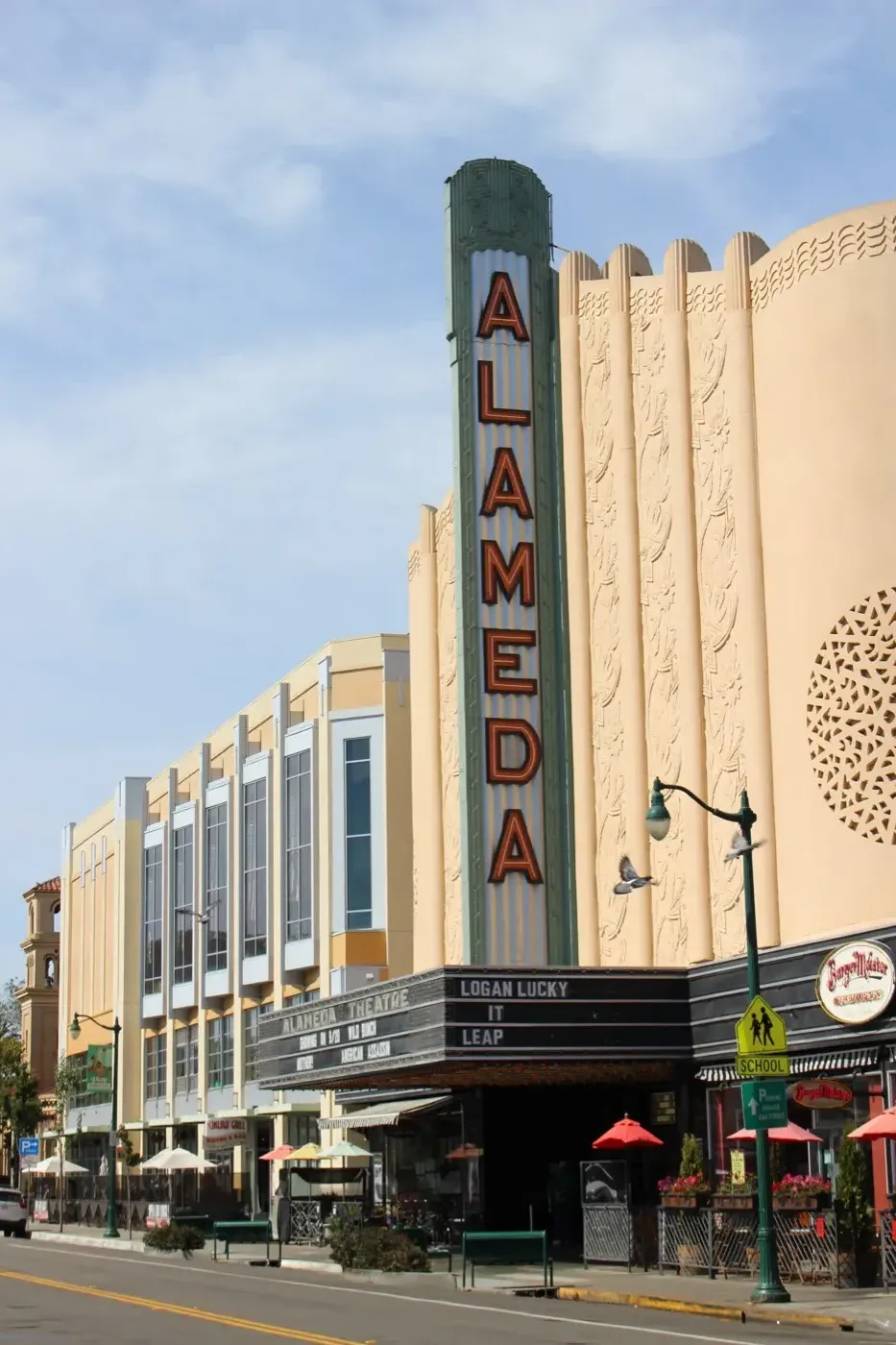
Alameda is a city in Alameda County, California, founded on June 6, 1853 and incorporated the following year, on April 19, 1854. Its name is Spanish for "grove of poplar trees" or "tree-lined avenue," chosen as the city's official name in 1853 by popular vote. Alameda sits on an informal archipelago in San Francisco Bay made up of Alameda Island, Bay Farm Island, and Coast Guard Island. Once a peninsula, it became an island after work on a tidal canal, begun in 1874 and completed in 1902, separated it from the mainland.
Shipbuilding and naval activity shaped much of Alameda's early industry. The Alameda Works Shipyard was one of the largest and best-equipped shipyards in the country and became part of the defense buildup before and during World War II, and Naval Air Station Alameda was built on the island, in operation by 1941. Landmarks tied to the city's commercial and civic history include the Art Deco Alameda Theatre on Park Street and the USS Hornet, a former aircraft carrier now preserved as a museum.
Source: Wikipedia: Alameda, California.
Alameda by the numbers
A neutral demographic snapshot from the most recent U.S. Census Bureau American Community Survey. These are city-wide figures; individual neighborhoods and parcels vary.
| Measure | Value |
|---|---|
| Population | 76,876 |
| Median age | 40.7 years |
| Median household income | $132,015 |
| Homeownership rate | 49.0% |
| Median home value (owner-occupied) | $1,203,900 |
| Median gross rent (monthly) | $2,394 |
| Average commute to work (one way) | 32.1 minutes |
| Average household size | 2.54 people |
Source: U.S. Census Bureau, American Community Survey 2019-2023 5-year estimates, Alameda city, California.
The Alameda market right now
| Median sale price | $1,277,726 |
|---|---|
| Days on market | 19 |
| Homes for sale (inventory) | 94 |
| Homes sold | 48 |
| Sale-to-list | 111% |
Data: Redfin, May 2026
For broader Bay Area context behind the Alameda numbers, read the current Bay Area market note.
What this means for you (May 2026)
Alameda buyers paid 111% of asking price in May, a clear sign of competitive bidding across the city. With 94 homes on the market and 48 closings, demand is absorbing inventory quickly. Come in with financing locked and offer terms tight, because well-priced listings here rarely sell for less than asking.
Property taxes in Alameda
In Alameda, property tax begins with Alameda County's 1% base under Proposition 13 (California's 1978 cap on the base tax at 1% of assessed value), plus voter-approved bonds. The verified bill here (FY 2025-26) sits on an old Prop 13 basis, so its effective rate (total bill as a share of value) reads about 1.86%. The total ad valorem rate (the part charged against assessed value) is 1.2127%.
A stack of parcel taxes (flat per-property levies) dominates, led by Alameda Unified's AUSD MEASURE E at $954.72. Behind it come city sewer, a 2002 healthcare levy, EBMUD wet-weather, a Peralta college tax, and the regional-parks line EBRPD CFD NO A/C-3 $12.00. Special assessments total $2,156.16.
The only CFD line is that EBRPD regional-parks Community Facilities District (CFD), levied county-wide, not a development Mello-Roos (the tax newer tracts add for infrastructure); Measure E drives the bill. See the Mello-Roos guide, how California property tax works, and the true monthly cost calculator. Figures come from a representative single-family county bill (FY 2025-26); every parcel differs, so check the actual bill for any home you are weighing. Compare all 38 cities side by side on the Bay Area property tax map. This is educational, not tax or legal advice; confirm any figure with a qualified tax professional and the county assessor before relying on it.
Schools (Alameda Unified School District)
Alameda Unified School District (AUSD) serves 9,035 students across 16 schools, ranked #192 of 1,907 California districts (top 20%) per PublicSchoolReview. Two comprehensive high schools split the island: Alameda High School (U.S. News #166 California) serves the East End / Park Street / Bay Farm Island side, and Encinal Junior/Senior High School (U.S. News #270 California) serves the West End / Webster Street / former Naval Air Station side. Encinal's unusual 6-12 grade combined structure means the West End has single-school continuity from 6th through 12th.
The east/west island split is the main attendance-line variable. Alameda High is the historically stronger of the two (older, more established programs, deeper AP catalog), while Encinal serves the West End and the former Naval Air Station area. Attendance assignment is set by parcel and third-party rankings differ by school, so verify the exact assignment with the AUSD registrar before an offer. Both schools are credible college-prep options; the choice between them is structural, not academic.
Typical assignment by sub-area
| Sub-area | Elementary feeders | Middle | High |
|---|---|---|---|
| East End / Park Street / Gold Coast | Edison / Franklin / Lincoln | Lincoln Middle | Alameda High |
| Central island / Marina | Bay Farm / Earhart | Lincoln or Wood Middle | Alameda High |
| Bay Farm Island (peninsula) | Amelia Earhart / Bay Farm | Wood Middle | Alameda High |
| West End / Webster Street / Alameda Point | Maya Lin / Paden / Ruby Bridges | Encinal Jr/Sr (6-12 combined) | Encinal Jr/Sr High |
AUSD has used a controlled-choice / lottery enrollment system in addition to attendance boundaries; the specific school assignment for a given address can include lottery-eligible alternatives. Lily verifies the current assignment and any active lottery options with the AUSD enrollment office before any offer.
Highlight schools
- Alameda High School (AUSD, 9-12), U.S. News #166 California, #1,252 nationally; 59% AP participation; the East End / Bay Farm Island flagship and historically the stronger of the two AUSD high schools.
- Encinal Junior/Senior High School (AUSD, 6-12 combined), U.S. News #270 California, #1,975 nationally; 1,218 students; unusual 6-12 single-school structure provides continuity from middle school through high school for West End students.
- Lincoln Middle School (6-8), the East End / central island middle feeder.
- Edison Elementary School (K-5), one of the stronger AUSD elementaries; East End attendance.
Sources: Alameda Unified School District; U.S. News Alameda High; U.S. News Encinal Jr/Sr High; PublicSchoolReview AUSD; Niche AUSD.
Hospitals and birthing centers
Critical caveat for Alameda Island buyers who will need labor and delivery care: Alameda Hospital does NOT offer labor and delivery. The on-island hospital is part of Alameda Health System and provides basic emergency services and a Primary Stroke Center, but L&D was discontinued. Alameda Island buyers who will need labor and delivery care must travel off-island via tube (Posey or Webster) or bridge (Park Street, High Street) to reach a birthing center. This is one of three structural caveats in the 2026 East Bay hospital landscape (alongside the St. Rose Hayward Family Birthing Center suspension and the Regional Medical Center San Jose L&D closure).
| Hospital | Network | Drive time from Alameda | Key services |
|---|---|---|---|
| Alameda Hospital (Alameda Health System) | Alameda Health System (accepts most plans + Medi-Cal) | in-city (0-10 min) | Basic emergency services + Primary Stroke Center + outpatient + diagnostic imaging; no labor & delivery on-site |
| Wilma Chan Highland Hospital Campus (Oakland) | Alameda Health System (accepts most plans + Medi-Cal) | 15-25 min | Adult Level I Trauma Center (only one in Alameda County); midwifery-based L&D with all private rooms |
| Sutter Alta Bates Summit (Berkeley campus) | Sutter (PPO) | 20-30 min | Regional Sutter Birth Center; full L&D + NICU |
| Kaiser Permanente Oakland Medical Center | Kaiser (closed) | 15-25 min | Full Kaiser L&D + on-site NICU; new birthing facility with large private rooms |
| UCSF Benioff Children's Hospital Oakland | UCSF (PPO) | 20-30 min | Level IV NICU; pediatric Level I Trauma Center (only one in Alameda + Contra Costa County) |
Birthing centers: what matters
The off-island travel is the structural Alameda Island fact. Whichever tube or bridge you use, plan for 15 to 30 minutes of travel to reach any of the Oakland or Berkeley L&D options. The Posey + Webster tubes occasionally close for maintenance or due to flooding (rare but it happens); the bridges are the redundant access. Build this into your prenatal planning, particularly for the final weeks.
For PPO-plan membersSutter Alta Bates (Berkeley) is the regional Sutter Birth Center option; Kaiser members have Kaiser Oakland; Wilma Chan Highland is the Alameda Health System / Medi-Cal-accepting option with a midwifery-based L&D model.
For high-acuity newborn needsUCSF Benioff Children's Hospital Oakland is the regional Level IV NICU referral destination and the only pediatric Level I trauma center serving Alameda + Contra Costa County.
Hospital network coverage depends on your insurance plan. Lily does not advise on medical coverage decisions; for in-network confirmation contact your insurer directly. Hospital information above is current as of 2026-05-28 and should be re-verified with each hospital's admissions office before relying on it for a major life decision.
Sources: Alameda Hospital; Alameda Health System Labor & Delivery; Sutter Alta Bates Summit; Kaiser Oakland maternity; UCSF Benioff Children's Hospital Oakland; California Perinatal Quality Care Collaborative NICU Directory.
Crime, hazards, and ratings
Alameda is an island city built largely on sand-and-fill construction; the headline risk is liquefaction, not flooding. Bay Farm Island and the West End carry the highest liquefaction susceptibility, with the Hayward Fault about four miles east. Buyers see Zone X over the central interior without realizing the seismic exposure underneath the entire island.
| Category | Rating | Detail |
|---|---|---|
| Crime | property crime moderately above US average; violent crime well below US average; concentrated near the West End commercial strips | |
| Flood | Significant portions in Zone AE (Bay Farm Island, West End); Zone X over the central island interior; Zone VE along the bay-fronting shoreline | |
| Fire | Not in LRA fire hazard zones; island city | |
| Earthquake | liquefaction: Very High; the entire island is sand-and-fill construction, with Bay Farm Island and the West End the most exposed; nearest faults: Hayward Fault about 4 miles east (under Oakland Hills); San Andreas Fault about 17 miles west |
School ratings
Numeric snapshots for the highlight schools above:
| School | GreatSchools | Niche |
|---|---|---|
| Alameda High | 10 | A |
| Encinal Junior/Senior High | 7 | A |
| Lincoln Middle | 8 | A |
| Edison Elementary | 9 | A |
Environment and infrastructure
Beyond the natural-hazard ratings above, these are the environmental and infrastructure factors buyers ask about most. Each is a city-level summary; confirm the exact parcel before any offer.
| Factor | Detail |
|---|---|
| Gas transmission pipelines | PG&E gas transmission service to Alameda island is shown in PHMSA's National Pipeline Mapping System, with transmission infrastructure on the Oakland side feeding the island. NPMS alignments are approximate and exclude distribution mains, so property-specific proximity should be verified via the NPMS viewer or PG&E. |
| Noise (freeway, rail, flight paths) | Alameda has comparatively limited freeway noise (no freeway crosses the island; I-880 runs through Oakland just across the estuary) and no BART station, but it is significantly affected by Oakland International Airport (OAK) flight paths, with aircraft noise over Bay Farm Island and parts of the main island. There is no freight rail running through the city. |
| Refineries and heavy industry | Alameda has no petroleum refinery and is not adjacent to one (Richmond is across the bay roughly 10 miles north); the island's main legacy industrial footprint is the former Naval Air Station rather than active heavy industry. |
| Soil and groundwater contamination | The former Alameda Naval Air Station (Alameda Point) is a major federal cleanup site with documented soil and groundwater contamination including petroleum, solvents, PCBs and radiological areas, managed under the Navy's environmental program and overseen by EPA and the state. It is one of the most significant contamination sites among these seven cities and is tracked in EPA, DTSC EnviroStor and SWRCB GeoTracker records. |
| Air quality and wildfire smoke | Alameda's air quality is generally moderate, influenced by estuary-side and port-adjacent diesel sources and regional traffic rather than an on-island industrial source, with regional wildfire-smoke exposure. BAAQMD, AirNow and CalEnviroScreen provide current and tract-level data. |
| Wildfire zone and power shutoffs (PSPS) | Alameda is a flat, low-lying island entirely outside the CAL FIRE / CPUC High Fire Threat District, with minimal wildfire and PSPS exposure. |
| High-voltage power lines | Alameda is served by its own municipal utility (Alameda Municipal Power) with transmission feeds crossing from the mainland; there is no large refinery-scale transmission corridor on the island itself. Specific infrastructure locations can be confirmed with Alameda Municipal Power. |
| Sea level and shoreline flooding | As a low-lying island, Alameda (especially Bay Farm Island, the estuary edge and Alameda Point) is among the most sea-level-rise-exposed communities in the county under NOAA and BCDC scenarios, and the city has active shoreline-adaptation planning. Essentially the entire city sits near current sea level. |
These are city-level summaries from public agencies and are approximate. Pipeline and power-line alignments, contamination parcels, and wildfire zones can differ block by block; verify the exact address with the agency tools linked above and your inspections before you write an offer.
Sources: PHMSA National Pipeline Mapping System; DTSC EnviroStor; State Water Board GeoTracker; EPA Superfund; BAAQMD air data; CAL FIRE Fire Hazard Severity Zones; PG&E PSPS maps; NOAA Sea Level Rise Viewer
Hazard ratings are city-level aggregates from public agencies (FEMA, CAL FIRE, USGS). Specific addresses can carry materially different risk; verify the exact parcel via the FEMA Flood Map Service Center, the CAL FIRE FHSZ viewer, and your insurance carrier before any offer. School ratings vary by year and by metric; the numbers above are point-in-time snapshots, treat them as a starting point and re-verify with the district registrar.
Sources: CrimeGrade.org (crime); FEMA Flood Map Service Center (flood); CAL FIRE FHSZ viewer (fire); USGS earthquake hazards (earthquake); GreatSchools + Niche (school ratings).
Track Record
1 documented Alameda closing, $0.6M local volume. Career-wide: 104 documented closings, $115M+ in total volume, with 91 of 104 on the buyer side, 10 closings in the last 12 months, career range $323K to $3.3M, 5.0-star Zillow average across 38+ reviews. The full transaction record for every Bay Area city Lily has closed in is summarized at the cities index.
Ready to talk about Alameda? Call or text me at 415-910-3958 for a free 30-minute consultation.
104 transactions · $115M+ · 5.0★ Zillow · Cal DRE #02010731
What buying a home in Alameda actually involves
Same fiduciary discipline as on every Lily Garipova representation: read every disclosure end-to-end, model the carrying cost (mortgage + property tax + HOA + insurance), walk the property at multiple times of day, and stay willing to walk you away from a property that does not pencil. Alameda-specific particulars are covered in the FAQ below; the hospital caveat (Alameda Hospital has no L&D, off-island travel required) is essential for buyers planning for labor and delivery.
What selling a home in Alameda involves
Strategic Listing Model applied to Alameda: data-driven comp analysis of the specific Alameda sub-area (East End Victorians vs Bay Farm Island mid-century vs Alameda Point newer master-planned vs West End historic, four different markets in one city), pre-listing prep with positive-ROI improvements only, professional staging suited to the specific Alameda Island property, multi-platform marketing with active bid management, and honest disclosure of every defect.
The Meticulous Protector, applied to Alameda
The methodology behind Lily's 38+ five-star Zillow reviews and the highest repeat-and-referral rate of her career: read every disclosure line, verify every claim, model every carrying cost, walk every property in person before recommending an offer, and document the ethical "no" when the math says no. The Alameda version of that methodology is the same as the Dublin version, the Pleasanton version, the Walnut Creek version, and every other city Lily represents; discipline does not change by city.
Alameda FAQ
What are Alameda Island price ranges in 2026?
East End Victorians and Edwardians in the Park Street / Gold Coast attendance area typically run $1.4M-$2.5M+, with restored landmark properties pushing higher. Bay Farm Island peninsula mid-century single-family runs $1.2M-$2M. Alameda Point and the former Naval Air Station newer master-planned single-family + condos run $800K-$1.6M. West End historic single-family runs $1.1M-$1.8M. Condos across the island run $500K-$900K. The October 2020 Shoreline Dr condo closing at $600K is representative of the entry-level condo tier.
Why does Alameda Hospital not deliver babies?
Alameda Hospital is part of the Alameda Health System but does not currently operate a labor and delivery service. The hospital provides basic emergency services and is a Primary Stroke Center. Alameda Health System patients needing L&D are referred to Wilma Chan Highland Hospital Campus in Oakland (the Alameda Health System Family Birthing Center). PPO and Kaiser members also need to travel off-island for L&D (covered in the Hospitals section above). Plan accordingly during pregnancy.
Alameda Island vs Oakland vs Berkeley?
Alameda is structurally an island, which is the defining difference. The slower-pace island culture, the bridges + tubes commute pattern, the contained AUSD school district, and the lack of new buildable land are all consequences of the island geography. Oakland has more inventory variety, walkable downtown + Rockridge, more density. Berkeley is the university-anchored small-city with the strongest school district (Berkeley Unified) but tighter inventory and higher prices. Alameda is the in-between: more space than San Francisco, more island-character than Oakland, more diverse housing than Berkeley.
Does Lily Garipova speak Russian for Alameda transactions?
Yes. Russian is Lily's native language. Lily represents Russian-speaking buyers and sellers in Alameda Island and the broader East Bay in either English or Russian. Russian-language Alameda page: lilygaripova.com/ru/alameda-realtor/.
What is the East End / Gold Coast Victorian and Edwardian price band?
The East End and Gold Coast neighborhoods between Park Street and Broadway hold Alameda's most architecturally distinctive single-family: Queen Anne Victorians, Eastlake-influenced Stick-style, Colonial Revival Edwardians, and California Craftsman bungalows from the 1880s through 1920s. The price band runs $1.4M to $2.5M+ in 2026, with restored landmark properties on the Gold Coast (Grand Street, Versailles Avenue) pushing to $3M+. The historic-resource designation, original-finish inventory, and Edison Elementary feeder drive the premium.
What is the Bay Farm Island mid-century single-family price band?
Bay Farm Island, the peninsula south of the main Alameda island connected via the Bay Farm Bridge, holds a large share of Alameda's mid-century and contemporary single-family stock at $1.2M to $2M in 2026. Construction era is largely 1960s through 1990s, with a meaningful 2000s-2010s infill wave on the southern golf-course-adjacent parcels. The Amelia Earhart Elementary and Bay Farm Elementary feeders both lead into Wood Middle and Alameda High. The Harbor Bay Isle planned community is the dominant Bay Farm sub-area.
What is Alameda Point and the former Naval Air Station redevelopment?
Alameda Point covers the former Naval Air Station Alameda on the western edge of the main island, decommissioned in 1997. Current redevelopment includes newer master-planned single-family, attached townhomes, condos, and mixed-use commercial, with price band $800K to $1.6M depending on layout, build year, and proximity to the bay shoreline. Some parcels carry SHRA (State Historic Resources) overlays, some have post-decommissioning environmental remediation history requiring careful disclosure review, and CFD special assessments are common. Lily pulls the parcel-specific environmental history before every Alameda Point offer.
What is the West End single-family price band?
The West End, west of Webster Street through the Encinal High attendance area, holds Alameda's most affordable historic single-family at $1.1M to $1.8M in 2026. The stock mixes 1900s-1920s Victorians and Edwardians (smaller than Gold Coast equivalents) with 1940s-1950s post-war infill from the Naval Air Station shipyard era. The Maya Lin Elementary, Paden Elementary, and Ruby Bridges Elementary feeders lead into Encinal Jr/Sr High School (unusual 6-12 combined). The West End sits at the lowest single-family entry on the island.
What do Alameda Island condos price at in 2026?
Alameda Island condos run $500K to $900K in 2026, with the densest clusters at Bay Farm Island (Shoreline Drive, Mecartney Road), the West End / Marina Village, and the Alameda Point redevelopment. HOA (homeowners association) dues vary by complex and run higher on the bay-facing buildings, where saltwater corrosion drives reserve study (the association's savings plan for major repairs) costs; pull the HOA package for the actual dues. SB326 balcony inspection compliance and any pending special assessment dominate the price variable. Lily reviews the SB326 report, reserve study, and 12 months of HOA meeting minutes before every Alameda condo offer.
How do the Alameda Unified attendance lines actually work?
AUSD uses a hybrid attendance-boundary plus controlled-choice / lottery system. The base attendance is geographic: East End / Park Street / Bay Farm feeds Alameda High; West End / Webster / Alameda Point feeds Encinal Jr/Sr. Lottery-eligible alternatives let some households request a school outside their base zone if space allows. The lottery typically opens December for the following fall. Lily verifies both the base attendance and the current lottery eligibility with the AUSD enrollment office before every buyer offer.
How does Alameda High compare to Encinal Jr/Sr High?
Alameda High ranks U.S. News #166 California, #1,252 nationally, with 59% AP participation, and is historically the stronger of the two AUSD high schools with a deeper AP catalog and more established programs. Encinal Jr/Sr ranks U.S. News #270 California, #1,975 nationally, with 1,218 students across the unusual 6-12 combined structure that gives West End students single-school continuity from 6th through 12th grade. Both are credible college-prep options; the choice is structural, not academic, and follows the East / West attendance split.
Why does Alameda Island geography matter for commute math?
Alameda Island connects to Oakland via the Posey Tube (eastbound) and Webster Tube (westbound) for cars and AC Transit Transbay buses, the Park Street Bridge and High Street Bridge from the East End, the Fruitvale Bridge / Miller-Sweeney from the central island, and the Bay Farm Bridge linking Bay Farm peninsula to the main island. The tube + bridge mix means every off-island commute depends on which crossing you use, which can fail (rare tube closures, scheduled bridge maintenance). Plan redundancy into any commute reliant on a single crossing.
What is the Alameda Ferry to San Francisco commute math?
San Francisco Bay Ferry runs from two Alameda terminals (Main Street ferry terminal near Alameda Point, Harbor Bay Ferry terminal on Bay Farm Island) to the Ferry Building in San Francisco. Crossing time is 20 to 30 minutes; one-way fare is roughly $9.10 in 2026 (Clipper discount available). Round-trip cost is about $18.20 per day or $370 per month at 5-day commute. The ferry is one of the most pleasant Bay Area commutes (water-level, on-board cafe, no transfers); it is also weather-sensitive and runs limited service nights and weekends.
How do Alameda residents reach BART without an on-island station?
Alameda has no BART station. The closest stations are Fruitvale BART (15-25 minutes via High Street Bridge or Fruitvale Bridge), West Oakland BART (15-25 minutes via Webster Tube), and Lake Merritt BART (15-25 minutes via Posey Tube). Each can be reached via AC Transit Transbay buses or by car-and-park. The lack of an on-island BART is a structural Alameda commute fact and one of the reasons the ferry is heavily used for SF transit-equivalent trips.
What is the seismic profile of Alameda Island?
Alameda Island is built largely on sand-and-fill construction, particularly Bay Farm Island and the West End, which drives Very High liquefaction risk across the entire island and concentrated extreme risk in Bay Farm Island and the former Naval Air Station footprint. The Hayward Fault sits about 4 miles east under the Oakland Hills; the San Andreas Fault about 17 miles west. The island is not in the Alquist-Priolo Earthquake Fault Zone, but the liquefaction overlay is the dominant seismic variable. Verify the parcel-specific California Geological Survey overlay before any offer.
What does flood risk look like on Alameda Island?
Significant portions of Alameda are in FEMA Zone AE flood overlay: most of Bay Farm Island, the West End, and the bay-fronting margins. The central island interior sits mostly in Zone X. Zone VE (coastal flood with wave action) covers the bay-fronting shoreline along Crown Beach and the Bay Farm Island peninsula tip. Zone AE properties require federal flood insurance for any federally-backed mortgage. With sea-level rise projections, the long-term flood exposure on bay-fronting parcels is a real underwriting consideration; Lily pulls the parcel-specific FEMA overlay and elevation certificate before every Alameda offer.
What hospitals do Alameda Kaiser members and PPO plan holders use?
Kaiser members go to Kaiser Permanente Oakland Medical Center (15-25 min via Webster Tube or Posey Tube), full Kaiser L&D plus on-site NICU. PPO plan holders use Sutter Alta Bates Summit in Berkeley (20-30 min via Posey or Webster) for the regional Sutter Birth Center, full L&D plus NICU. Wilma Chan Highland Hospital Campus in Oakland is the Alameda Health System / Medi-Cal-accepting option with midwifery-based L&D and all private rooms (15-25 min). UCSF Benioff Children's Hospital Oakland is the regional Level IV NICU referral destination.
What is the Park Street and Webster Street downtown character?
Park Street is the East End / Gold Coast downtown corridor, walkable from Lincoln Avenue south to Encinal Avenue, with independent restaurants, the historic Alameda Theatre & Cineplex, the Alameda Free Library, boutique retail, and the Park Street farmers market. Webster Street is the West End downtown corridor, walkable through the historic streetcar suburb storefronts, with a cluster of independent restaurants, the West Alameda Business Association district, and the gateway to the Alameda Point redevelopment. Both downtowns are car-light, transit-served, and an Alameda value driver.
Are there Mello-Roos special assessments on Alameda Point or Bay Farm tracts?
Some Alameda Point redevelopment parcels and post-1995 Bay Farm Island master-planned tracts carry a Mello-Roos special tax: a CFD (Community Facilities District) levy that repays an infrastructure bond, added on top of the base property tax. The Mello-Roos special tax varies tract to tract, so pull the current annual levy for the specific parcel and add it to carrying cost. The current annual levy is shown on the county property tax bill and disclosed in the seller Mello-Roos Notice of Special Tax; the recorded special-tax lien also appears on the preliminary title report, but the prelim shows only that the lien and tax formula exist, not the current dollar amount. The CFD term and pay-off date also matter, so pull the remaining bond schedule before offer.
Should I worry about lead paint and asbestos in pre-1978 Alameda homes?
Yes for any pre-1978 single-family, which is the majority of East End, Gold Coast, and West End stock. Lead paint, original galvanized water supply lines, asbestos floor tile, asbestos ceiling popcorn, and original cloth-wrapped electrical wiring are common pre-offer findings on Alameda Victorians and Edwardians. Federal lead-based paint disclosure is mandatory for pre-1978 sales. Budget abatement at $5K to $40K depending on scope. Lily structures the inspection contingency to surface the historic-era findings before contingency removal.
How do Alameda historic preservation rules affect renovation?
Alameda has one of the strongest historic-preservation overlays in Northern California: the Historical Advisory Board reviews exterior changes on landmark properties and on contributing properties within historic districts. The Gold Coast Historic District covers the East End / Grand Street / Versailles Avenue area; multiple smaller districts cover the West End and central island. Window replacement, exterior paint color, roofing material, and any setback or addition typically requires HAB review. Budget extra time on any post-purchase renovation; Lily verifies the historic-district status by parcel before offer.
Does Alameda have small-multifamily and duplex inventory?
Alameda has a meaningful 2-to-4-unit small-multifamily and duplex stock, particularly along Park Street, Webster Street, Central Avenue, and Encinal Avenue, typically $1.5M to $2.8M depending on unit count, historic-district status, and rent roll. The city's just-cause eviction and rent-stabilization ordinance (RRSO) is among the strongest in Alameda County and shapes every multifamily transaction. Lily reviews the existing rent roll, RRSO compliance, and the historic-preservation overlay on every multifamily transaction; pre-existing tenancies are routinely under-priced into offers.
What is Alameda RRSO and how does it affect single-family with ADUs?
Alameda's Rent Review, Stabilization, and Limitations on Evictions Ordinance (RRSO) covers most residential rentals on the island, including single-family with permitted ADUs once tenant-occupied. The ordinance limits annual rent increases to a CPI-linked cap and requires just cause for eviction. For investor buyers and house-hackers, RRSO compliance is a structural carry consideration; for owner-occupants planning to live in the main house and rent the ADU, the rules still apply once the ADU has a tenant. Lily reviews RRSO status on every ADU transaction.
How does Lily Garipova represent Alameda buyers specifically?
Lily reads every disclosure end-to-end (TDS, NHD, SPQ, HOA package, preliminary title, pre-1978 lead-based paint disclosure, historic-district disclosure, environmental remediation history for Alameda Point), pulls the parcel-specific FEMA Flood Map and USGS liquefaction overlay, verifies AUSD attendance and lottery eligibility, models full carrying cost including SB326 condo assessments and any CFD bond, walks the property at multiple times of day, and stays willing to recommend walking from any deal that does not pencil. Free 30-minute initial consultation in English or Russian.
How does Lily Garipova represent Alameda sellers specifically?
Strategic Listing Model applied at the Alameda sub-area level: comp set drawn from the exact neighborhood (East End / Gold Coast, Bay Farm Island, Alameda Point, West End, central island), not city-wide averages; pre-listing inspection with positive-ROI improvements only (with historic-preservation review on any landmark or contributing property); professional staging that distinguishes between Victorian charm and mid-century clean lines; multi-platform marketing with active bid management; full disclosure preparation including pre-1978 lead, RRSO status, SB326, CFD, environmental history.
How has Alameda priced over the trailing 12 months?
Alameda single-family median has been roughly flat to up low-single-digits over the trailing 12 months ending mid-2026, with East End / Gold Coast Victorians outperforming on continued East Bay buyer migration from San Francisco and Bay Farm Island mid-century slightly underperforming. Condo segment has been flat as SB326 disclosure surfaces deferred-maintenance liabilities and special assessment risk on bay-facing complexes. Days-on-market has lengthened versus the 2021-2022 peak; well-prepped landmark listings still attract multiple offers above asking.
How do I schedule an Alameda consultation with Lily Garipova?
Call or text 415-910-3958, or email lilyagaripova@gmail.com. Free 30-minute initial consultation by phone, Zoom, or in person at any Alameda address that works for you. Available in English and Russian. Cal DRE #02010731. The consultation walks through your specific buying or selling math: budget, timeline, AUSD attendance and lottery options, ferry / tube / bridge commute, the off-island labor and delivery implication, financing pre-approval, and the realistic Alameda sub-area that fits.
What about Crown Beach, Crab Cove, and the Alameda waterfront?
Crown Memorial State Beach runs the southern shoreline of the main island from Webster Street east, with Crab Cove Visitor Center on the eastern Crown Beach edge. Bay-fronting single-family with Crown Beach exposure typically prices above comparable interior tracts, the trade-off is FEMA Zone VE coastal-flood overlay, saltwater corrosion on building systems, and the long-term sea-level rise underwriting question. The Bay Trail follows the shoreline for the full island circuit. Lily pulls FEMA, elevation certificate, and reserve-study (for shoreline condos) before every waterfront Alameda offer.
What is the Alameda Antique Faire and the cultural calendar?
The Alameda Point Antiques Faire is the largest antique show in Northern California, held the first Sunday of each month at the former Naval Air Station, drawing buyers from across the Bay Area. The Park Street Art and Wine Faire runs each summer; the Mayor's Fourth of July Parade is one of the largest small-city Independence Day parades in the country; the Christmas Tree Lane on Thompson Avenue runs through December. The cultural calendar is a real Alameda differentiator versus Oakland or Berkeley and a quiet quality-of-life value driver for owner-occupants.
What about Alameda Free Library, parks, and the recreation amenity base?
The Alameda Free Library has three branches (Main on Oak Street, West End on Webster, Bay Farm on Aughinbaugh) all walkable to their respective residential pools, with strong children's programming. Alameda Recreation and Park Department operates 39 parks including Lincoln Park, Washington Park, and Krusi Park, plus the Alameda Beltway Trail system. The Harbor Bay Club on Bay Farm and the Alameda Athletic Club downtown are the established private fitness destinations. The amenity-density-per-square-mile is unusually high for a Bay Area city, a function of the island's contained population and the historic civic investment.