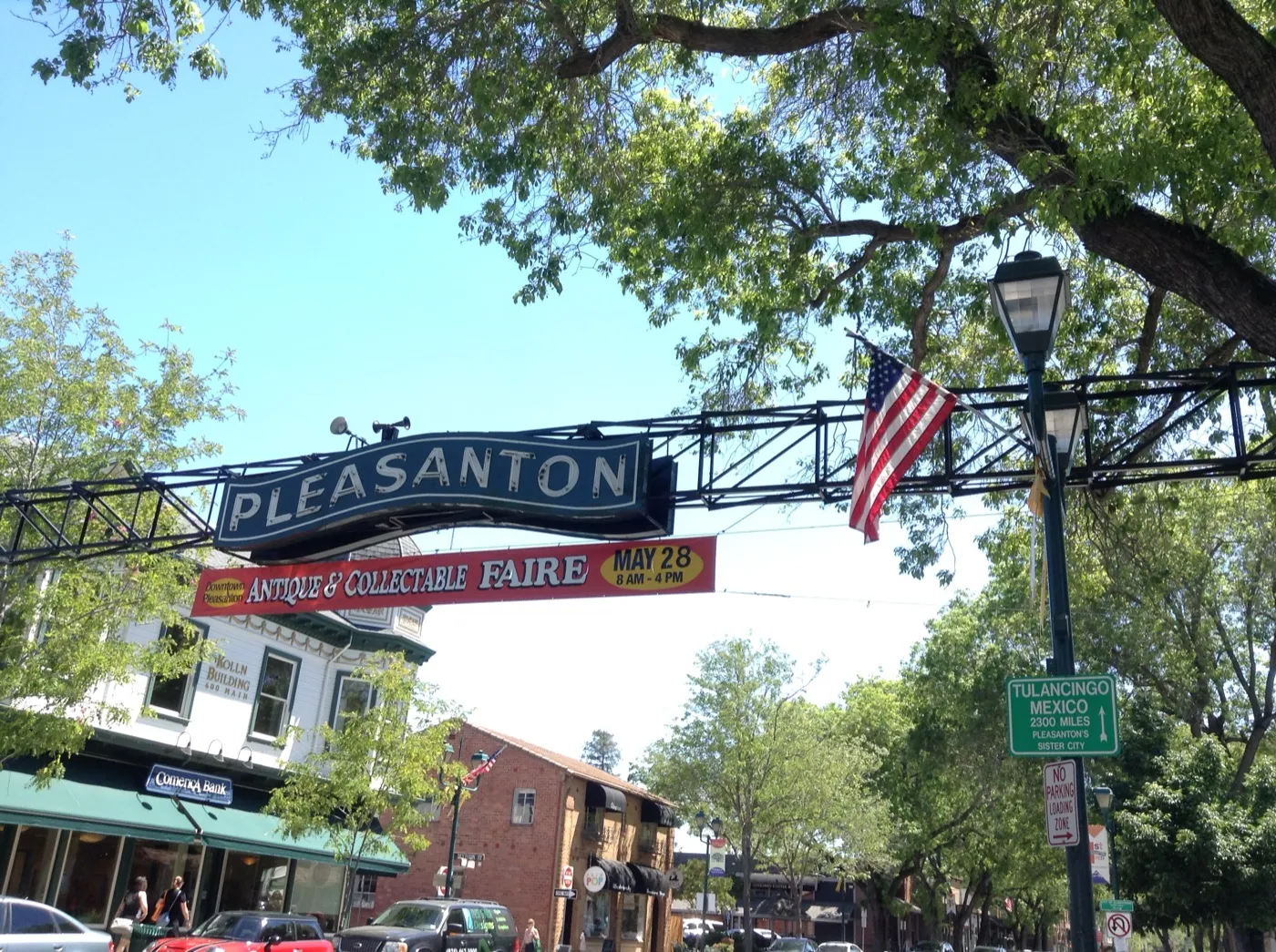
Honest, advisory help to buy a house in Pleasanton and across the wider Tri-Valley corridor.
California licensed since 2016, in real estate since 2007. 104 documented closed transactions
and $115M+ in career volume across the Bay Area. Pleasanton is really two
markets under one price premium: the older central and downtown blocks with no Mello-Roos but aging
mechanicals, and the newer east-side master-planned tracts with modern construction but Mello-Roos
and HOA cost on top. The brief is the same either way: tell you what is actually happening on your
block, read the Mello-Roos, Ruby Hill HOA, and stucco disclosures the way
a careful lawyer would, and stay willing to walk you away from a property that does not pencil.
Lily Garipova is a REALTOR® (Cal DRE #02010731) serving Pleasanton and the wider San Francisco Bay Area, California licensed since 2016 and in real estate since 2007 (first in Nantucket, MA), with 104 documented transactions, $115M+ volume, and a 5.0★ Zillow rating. Call or text 415-910-3958. I work in English and Russian.
Why Pleasanton
Pleasanton sits in the middle of the Tri-Valley, with Dublin (its sister city) directly north
across I-580, Livermore and wine country to the east, and San Ramon further north up I-680.
Ridge and open-space preserves wrap the south and west sides and effectively cap outward growth,
and that single fact shaped the city. It is why downtown Pleasanton kept its small-town historic
feel while the only room left to build, the east side, filled with master-planned construction
through the 1990s and 2000s. Almost every Tri-Valley buyer weighs Pleasanton against Dublin and
Livermore as one decision, and Pleasanton typically commands a premium of 10 to 25% per square
foot over Dublin for comparable single-family stock. Two things drive that premium: the Foothill
High and Amador Valley High reputations inside Pleasanton Unified, and the walkable historic Main
Street core that Dublin and Livermore do not have in the same form. That premium is the defining feature of the Pleasanton housing market: comparable single-family stock runs 10 to 25% per square foot above Dublin, and the gap holds across cycles.
Commute is where Pleasanton splits in the buyer's favor and against it in the same breath. The
Dublin/Pleasanton and West Dublin/Pleasanton BART stations sit on the Pleasanton side of I-580
(the BART name carries both city names because the stations physically straddle the line), and
Hacienda Business Park, the city's largest employer cluster, sits next to the Dublin/Pleasanton
station, with Workday, Veeva, 10x Genomics, and Roche all a few minutes from the platform. If you
work in Hacienda, the commute is often single-digit minutes, a structural advantage neither Dublin
nor Livermore quite matches. If you work in the South Bay, the Sunol Grade on I-680 adds 45 to 75
minutes each way to Apple, Google, and NVIDIA; for San Francisco, BART runs roughly 50 to 60
minutes to Embarcadero or Montgomery on peak headways.
Once you are set on Pleasanton, the real decision is internal, because the city splits cleanly
into two markets with very different housing stock and very different arithmetic. The downtown
core and the established neighborhoods around it (Birdland, Val Vista, Vintage Hills) sit on
inventory built in waves from the 1920s through the 1970s, on conventional lots, generally with no
Mello-Roos (a special tax that funds infrastructure in newer developments). You pay instead in
older mechanicals. The east side (Sycamore Heights and the adjacent post-2000 subdivisions) sits
on newer master-planned construction, with the trade running the other way: modern build quality,
but often active Mello-Roos and sub-association HOA dues on top. Ruby Hill, the gated estate
community on the southeast edge of the city off Vineyard Avenue, is its own price tier, with its
own HOA and, depending on phase, its own Mello-Roos structure.
Downtown Pleasanton
The historic Main Street core and the immediately surrounding blocks, with restored Victorian and Craftsman inventory, walkable retail, and a Saturday farmers market that defines the neighborhood's social rhythm. Strongest case: walkability, downtown character, no Mello-Roos in most blocks, and resale durability driven by limited supply (the historic core does not grow). Watch: oldest inventory in the city, with original electrical, foundation work on pre-war homes, occasional unpermitted historic additions, and lead paint or asbestos in pre-1978 units.
Birdland
Mid-century established neighborhood on the north side of the city, with streets named after birds (Lark, Robin, Mockingbird). Generally 1960s through 1980s ranch and split-level single-family inventory on conventional lots. Strongest case: Amador Valley feeder pattern, mature street trees, no Mello-Roos, walking proximity to downtown for the southern blocks. Watch: 40 to 60 year old housing-stock items including original supply lines, original HVAC and roof end-of-life, occasional pool maintenance backlogs, and the standard pre-1978 lead and asbestos disclosures.
Vintage Hills
Established south-side neighborhood feeding Foothill High, with 1960s through 1980s single-family inventory on larger lots that often include mature landscaping and pool inventory. Strongest case: Foothill High feeder, larger lot sizes than downtown-adjacent blocks, no Mello-Roos on most parcels, and a quiet residential character. Watch: older housing-stock items including original electrical panels, dated HVAC, occasional pool deferred maintenance, and the standard pre-1978 disclosures on the oldest inventory.
Sycamore Heights and east-side master-planned
The post-2000 master-planned tracts on the east side of the city, including the Sycamore Heights corridor and several smaller subdivisions built in the late 1990s and 2000s. Newer single-family construction with sub-association HOAs and (commonly) active Mello-Roos. Strongest case: newer build quality, modern floor plans, lower deferred maintenance, and proximity to newer school facilities. Watch: combined HOA plus Mello-Roos monthly carrying cost, stucco-cladding moisture disclosures, slab settlement on post-2000 construction, and reserve study adequacy at the sub-association level.
Ruby Hill
Gated estate community on the southeast edge of the city off Vineyard Avenue, with a country-club centerpiece, a golf course, and a strong concentration of estate inventory. Strongest case: gated security, country-club amenities, large lots with view inventory, top-of-market Pleasanton product. Watch: monthly HOA dues that vary by phase (pull the HOA package for the current figure), Mello-Roos on several phases, strict architectural-review committee rules, optional or quasi-mandatory club-membership obligations that vary by phase, and longer days on market in the upper price bands.
Val Vista and the central west side
Established west-side neighborhoods between downtown and the I-680 corridor, with a mix of 1970s and 1980s single-family inventory. Strongest case: central location, Amador Valley feeder for most blocks, no Mello-Roos, and reasonable per-square-foot pricing relative to downtown-adjacent inventory. Watch: housing-stock items typical of the era, road-noise exposure on the streets closer to I-680, and individual lot conditions on the older subdivisions.
Schools sit on top of that map, not beside it. Pleasanton Unified School District runs two
comprehensive high schools that buyers actively compare, Foothill and Amador Valley, and the
boundary between them is the central school-decision question here. Because both campuses defend
the Pleasanton premium, that boundary is more about which pattern a household is choosing than
about resale. The dedicated Schools section below walks through district structure, the Foothill
vs Amador Valley split as redrawn in 2024, and typical school assignment by sub-neighborhood.
Pleasanton sits in Alameda County on land that was once part of two Mexican land grants, Rancho Valle de San Jose and Rancho Santa Rita. An earlier settlement known as Alisal took shape in the area during the 1850s, and the town of Pleasanton grew nearby in the 1860s. According to the city's recorded history, it was named by John W. Kottinger for Union Army Major General Alfred Pleasonton. Pleasanton was incorporated on June 18, 1894.
The surrounding valley was long devoted to farming and ranching before the area shifted after World War II toward a residential community and a base for corporate offices. The fairgrounds racetrack, built in 1858, is recognized as the oldest one-mile horse racing track in the United States. In 1917 the town served as a filming location for the silent film Rebecca of Sunnybrook Farm, starring Mary Pickford.
A neutral demographic snapshot from the most recent U.S. Census Bureau American Community Survey. These are city-wide figures; individual neighborhoods and parcels vary.
Measure
Value
Population
77,500
Median age
42.4 years
Median household income
$186,206
Homeownership rate
67.1%
Median home value (owner-occupied)
$1,432,300
Median gross rent (monthly)
$3,017
Average commute to work (one way)
34.0 minutes
Average household size
2.78 people
Source: U.S. Census Bureau, American Community Survey 2019-2023 5-year estimates, Pleasanton city, California.
Pleasanton sellers accepted offers below asking in May, with a 99% sale-to-list ratio. With 110 homes available and a median 24 days on market, buyers here have both choice and negotiating room. These numbers give you leverage to negotiate on price and terms.
Property taxes in Pleasanton
In Pleasanton, property tax begins with Alameda County's 1% base under Proposition 13 (California's 1978 cap on the base tax at 1% of assessed value), plus voter-approved bonds. On a representative single-family bill in Pleasanton (FY 2025-26), the total ad valorem rate (the part charged against assessed value) is 1.1694%, and the effective rate runs about 1.17%, the lightest in this East Bay batch.
Direct charges here are small. Special assessments total just $97.76, made up of lines like MOSQ MSR K 1982 $1.74 and URBAN RUNOFF $14.00, with no sewer, landscape, or Community Facilities District (CFD) line. Separately, the Zone 7 water bond, 1-FLD ZN 7 STATE WTR $160.60, appears as an ad valorem line.
Established Pleasanton neighborhoods carry almost no direct charges, but newer master-planned tracts differ and some carry a Mello-Roos CFD (an extra tax that funds a development's own infrastructure). See the Mello-Roos guide, how California property tax works, and the true monthly cost calculator. Figures come from a representative single-family county bill (FY 2025-26); every parcel differs, so check the actual bill for any home you are weighing. Compare all 38 cities side by side on the Bay Area property tax map. This is educational, not tax or legal advice; confirm any figure with a qualified tax professional and the county assessor before relying on it.
Schools (Pleasanton Unified School District)
Pleasanton Unified School District (PUSD) serves about 13,300 students across 13 schools: nine TK-5 elementaries (Alisal, Donlon, Fairlands, Hearst, Lydiksen, Mohr, Valley View, Vintage Hills, Walnut Grove), three middle schools (Hart, Harvest Park, Pleasanton Middle), two comprehensive high schools (Amador Valley and Foothill), and one continuation high school (Village High). Niche grades the district A+ overall (A+ Academics, A+ College Prep, A+ Teachers), #17 of 466 Best School Districts in California and #2 in Alameda County. Per the most recent state CAASPP results: 74% math proficient, 78% reading proficient. PublicSchoolReview ranks PUSD #49 of 1,908 California districts (top 5%); EdData and the California School Dashboard mirror the same data.
Two structural notes that matter for Pleasanton buyers:
Pleasanton's high school split was redrawn in 2024. Under the current boundaries: Foothill High serves the elementaries Fairlands, Donlon, Lydiksen, and Hearst (south + east side of the city, including most of Ruby Hill, Vintage Hills, Sycamore Heights corridor). Amador Valley High serves the others, Alisal, Mohr, Valley View, Vintage Hills, Walnut Grove (central + north side, including downtown Pleasanton, Birdland, Val Vista). Middle-school feeders also shifted: Hart and Pleasanton Middle generally feed Amador Valley; Harvest Park feeds Foothill. Both high schools are top-tier; the boundary question is more about cultural fit and feeder middle school than about resale value.
Foothill vs Amador Valley by the numbers (per U.S. News 2025-2026 Best High Schools): Amador Valley ranks #459 nationally, #59 California, 70% AP-taking. Foothill ranks #553 nationally, #75 California, 65% AP-taking, 9% economically disadvantaged. Both substantially above California medians; the gap between them is narrow enough that the cultural-fit dimension usually dominates the data-only ranking.
Foothill High (Fairlands feeder) or Amador Valley (Donlon area)
Vintage Hills (east master-planned)
Vintage Hills Elementary
Pleasanton Middle or Hart
Amador Valley High
Sycamore Heights (east-side master-planned)
Fairlands or Donlon
Harvest Park
Foothill High
Ruby Hill (gated estate, far south-east)
Fairlands or Donlon
Harvest Park
Foothill High
Val Vista (central-north)
Hearst or Valley View
Pleasanton Middle
Amador Valley High
These assignments are typical, not guaranteed. The 2024 boundary redraw is recent and some pocket-level edges may still adjust. Lily verifies the current assignment with the PUSD registrar before any offer, not the listing description.
Highlight schools
Amador Valley High School (9-12, 1155 Santa Rita Rd): US News #459 National Rankings, #59 California. 70% AP-taking. The traditional Pleasanton flagship, established programs, deepest extracurricular catalog.
Foothill High School (9-12): US News #553 National Rankings, #75 California. 65% AP-taking. Slightly smaller than Amador Valley, strong STEM and college-prep profile.
Hart Middle School one of the three PUSD middle schools; cross-feeds depending on the 2024-redrawn boundary at your address.
Harvest Park Middle School the standard south-side feeder into Foothill High; serves Ruby Hill / Birdland / Sycamore Heights corridor.
Lydiksen, Vintage Hills, Donlon, Fairlands, Walnut Grove Elementaries all Niche grade A; the elementary slate that drives the Pleasanton-premium pricing relative to neighboring Dublin and Livermore.
Pleasanton has the biggest hospital-convenience advantage of any Tri-Valley city: Stanford Health Care Tri-Valley is in-city (at 5555 W. Las Positas Blvd), with full labor and delivery and a Level II NICU about five minutes from most addresses. San Ramon Regional Medical Center sits ~15-20 minutes north as the second option. Kaiser Permanente members have a key caveat covered below.
Hospital
Network
Drive time from Pleasanton
Key services
Stanford Health Care Tri-Valley (Pleasanton campus)
Stanford Health Care (PPO)
in-city (5-10 min)
Labor & delivery; Level II NICU (32+ weeks); 24/7 OB anesthesiology; only outpatient lactation clinic in Tri-Valley
San Ramon Regional Medical Center
Tenet (PPO, independent)
15-20 min
Family Birthing Center; Level II Special Care Nursery; UCSF Benioff Children's pediatricians on-call 24/7
Kaiser Permanente Pleasanton Medical Office
Kaiser (closed)
in-city (5 min)
Outpatient + specialty care only; no labor & delivery on-site
Kaiser Permanente Walnut Creek (for Kaiser-member L&D)
Kaiser (closed)
30-40 min
Closest Kaiser labor & delivery for Pleasanton Kaiser members
John Muir Medical Center Walnut Creek (Level III NICU referral)
John Muir (PPO)
35-45 min
Regional Level III NICU (only one in Contra Costa County, Stanford Children's partnership); Level II Trauma Center; high-risk pregnancy referral
Birthing centers: what matters
Stanford Health Care Tri-Valley is the default Pleasanton labor and delivery hospital. Five minutes from downtown, ten minutes from Ruby Hill, ten minutes from Birdland / Vintage Hills. Level II NICU handles babies as young as 32 weeks; for anything below 32 weeks or higher-acuity cases, transfer goes to John Muir Walnut Creek (Level III) or Stanford in Palo Alto. Private LDR suites, 24/7 OB anesthesiology, epidural and nitrous oxide both available, and the only outpatient lactation clinic in the Tri-Valley after discharge.
San Ramon Regional Medical Center is the second Tri-Valley option (also Level II NICU) and the closer hospital for buyers in north Pleasanton. UCSF Benioff Children's Hospital Oakland pediatricians are on-call 24/7.
Kaiser members in Pleasanton should plan for the Walnut Creek commute: Kaiser has a medical office in Pleasanton (7601 Stoneridge Dr South) for outpatient care, but Kaiser labor and delivery for Tri-Valley members is at Kaiser Permanente Walnut Creek Medical Center (~30-40 minutes from Pleasanton). Factor this commute into prenatal-care scheduling.
Hospital network coverage depends on your insurance plan. Lily does not advise on medical coverage decisions; for in-network confirmation contact your insurer directly. Hospital information above is current as of 2026-05-28 and should be re-verified with each hospital's admissions office before relying on it for a major life decision.
Pleasanton scores well on crime, sits mostly outside FEMA flood zones, with elevated fire hazard in hillside tracts relative to the broader Bay Area. School ratings reflect the local district's performance bands.
Category
Rating
Detail
Crime
A-
property and violent crime both well below California averages; one of the safest cities in Alameda County
Flood
Low
Mostly Zone X; Zone AE corridors along Arroyo Mocho and Arroyo del Valle
Fire
Moderate to High
Moderate to High in the Pleasanton Ridge/southwest hills (above Foothill Rd, Castlewood, Kottinger Ranch); flatland tracts not in LRA hazard zones
Earthquake
Moderate
Calaveras Fault about 5 miles east; Verona/Mt. Diablo Thrust roughly 8 miles north; Hayward Fault about 12 miles west; liquefaction: Low to Moderate; Moderate near the Arroyo corridors
School ratings
Numeric snapshots for the highlight schools above:
School
GreatSchools
Niche
Foothill High
10
A+
Amador Valley High
10
A+
Hart Middle
9
A
Pleasanton Middle
8
A
Environment and infrastructure
Beyond the natural-hazard ratings above, these are the environmental and infrastructure factors buyers ask about most. Each is a city-level summary; confirm the exact parcel before any offer.
Factor
Detail
Gas transmission pipelines
PG&E high-pressure gas transmission lines traverse the I-580/I-680 corridor near Pleasanton, but PHMSA NPMS does not publish exact street-level alignments, so proximity to a given property must be verified case by case.
Noise (freeway, rail, flight paths)
Pleasanton is bordered by I-580 and I-680 and is served by an Altamont Corridor Express (ACE) commuter-rail station on shared Union Pacific freight track, so freeway and intermittent train noise affect properties near those lines.
Refineries and heavy industry
There are no oil refineries in Pleasanton or the Tri-Valley; the area's industry is office, retail, and light commercial rather than heavy processing.
Soil and groundwater contamination
PFAS (PFOA/PFOS) was detected in Pleasanton's municipal groundwater: Well 8 was placed on standby in June 2019 and Wells 5 and 6 went offline in November 2022, so all three city wells (about 20 to 25% of supply) are out of service and the city now buys all its water from Zone 7; regulators are investigating sources of a PFAS plume roughly six miles long including the Livermore Airport and the Livermore-Pleasanton fire training center, and Zone 7 opened PFAS treatment plants in Pleasanton in 2023 and 2025.
Air quality and wildfire smoke
Pleasanton, in the inland Tri-Valley, sees higher summer ozone than coastal Bay Area cities due to heat and basin trapping, within an EPA ozone nonattainment region, and is subject to regional wildfire-smoke episodes.
Wildfire zone and power shutoffs (PSPS)
The Pleasanton Ridge and surrounding southern/western hills are wildland-urban-interface terrain with elevated fire hazard, and these uphill areas have been included in PG&E Public Safety Power Shutoff events during high-wind, high-fire-danger conditions; the valley floor is lower risk.
High-voltage power lines
High-voltage transmission corridors cross the Tri-Valley near Pleasanton, feeding the Vineyard substation in central Pleasanton via 60 kV lines from the 230 kV system; specific tower alignments next to residential neighborhoods should be confirmed against PG&E and CAISO transmission maps.
Sea level and shoreline flooding
Pleasanton is inland and elevated with no bay frontage, so sea-level rise is not a factor; the relevant flood feature is the Arroyo de la Laguna / Arroyo Mocho creek system, with FEMA-mapped flood zones along those channels.
These are city-level summaries from public agencies and are approximate. Pipeline and power-line alignments, contamination parcels, and wildfire zones can differ block by block; verify the exact address with the agency tools linked above and your inspections before you write an offer.
Hazard ratings are city-level aggregates from public agencies (FEMA, CAL FIRE, USGS). Specific addresses can carry materially different risk; verify the exact parcel via the FEMA Flood Map Service Center, the CAL FIRE FHSZ viewer, and your insurance carrier before any offer. School ratings vary by year and by metric; the numbers above are point-in-time snapshots, treat them as a starting point and re-verify with the district registrar.
One documented closed Pleasanton transaction, buyer-side, in 2020. Tri-Valley adjacency adds two
documented Dublin closings (most recent $950,000 on Whitworth Dr in June 2024) and regular buyer
representations in adjacent San Ramon and Livermore that do not show in the Pleasanton count.
The full career file is 104 documented closings and $115M+ in total volume, with 91 of 104 on
the buyer side.
Career-wide stats: 104 closings, $115,001,499 in total volume, 91 buyer-side / 12 seller-side,
10 closings in the last 12 months, career average about $1.09M, career range $323K to $3.3M,
5.0 star Zillow average across 38+ reviews.
Ready to talk about Pleasanton? Call or text me at 415-910-3958 for a free 30-minute consultation.
104 transactions · $115M+ · 5.0★ Zillow · Cal DRE #02010731
What buying a home in Pleasanton actually involves
The 2025 to 2026 Bay Area market is a split market, and Pleasanton shows the split inside
one ZIP as clearly as any Tri-Valley city. Well-prepared single-family homes in the top
Foothill or Amador Valley attendance areas, especially in the $1.8M to $2.6M
band, routinely attract multiple offers in the first 10 to 14 days. Downtown-adjacent
walk-to-Main blocks and the established Vintage Hills and Birdland streets sustain that
pace consistently. Ruby Hill estate inventory above $4M moves more slowly with longer days
on market and routine price reductions. Older homes that need work sit unless priced
realistically. The same headline ("Pleasanton is hot" or "Pleasanton is cooling") fits both
halves of the city at the same time and is therefore not useful. The block-level and
sub-area-level read is the useful read.
Price bands as of 2026. Single-family inventory in the downtown core and the established
neighborhoods (Vintage Hills, Birdland, Val Vista) typically runs $1.5M to $2.5M, with the
prime walk-to-Main blocks pushing higher. East-side master-planned single-family
(Sycamore Heights and adjacent post-2000 tracts) typically runs $1.8M to $3.0M depending
on tract, sub-association, and lot size. Ruby Hill estate inventory runs roughly $3M to
$8M depending on lot, view, and finish level, with the top of the gated-community market
well above that. Condos and townhomes across the city run roughly $800K to $1.3M depending
on age, HOA, and Mello-Roos exposure. The competitive dynamic in the strong half of
Pleasanton in 2026 behaves very similarly to the strongest Cupertino sub-markets, at a
slightly lower price tier and with stronger Russian and Eastern European buyer presence in
recent inflows.
The Mello-Roos and HOA arithmetic, before you write the offer. The
east-side master-planned tracts built in the late 1990s and 2000s commonly carry an active
Community Facilities District bond. Mello-Roos varies tract to tract on top of the standard 1.25% California property tax, so pull the current annual levy for the specific parcel and add it to carrying cost. The older central and downtown-area neighborhoods
(Birdland, Val Vista, Vintage Hills, the downtown core itself) were generally built before
the CFD era and typically do not carry Mello-Roos, which is part of why per-square-foot
prices in those areas can run higher even on older inventory. Ruby Hill layers a high
monthly HOA structure on top of (depending on phase) Mello-Roos and depending on phase a
country-club membership obligation. Combined monthly carrying cost in Ruby Hill (HOA plus 1/12 of the annual Mello-Roos levy, before any optional club dues) varies by phase and parcel, so pull the HOA package and the parcel's current Mello-Roos levy and add both to carrying cost. The current Mello-Roos levy is shown on the county property tax bill and disclosed in the seller Mello-Roos Notice of Special Tax, while the preliminary title report shows only that the recorded special-tax lien and its formula exist, and the HOA carrying cost is in the HOA package; the common mistake is discovering these in escrow after the offer is accepted, by which point the monthly housing math has already moved against you. We confirm the exact CFD line items and read the full HOA package in writing before
recommending any east-side or Ruby Hill offer.
Inspection patterns in Pleasanton cluster sharply by era of construction. The honest list of
things that come up often:
Downtown core and pre-war historic blocks (1920s through 1940s): foundation items including post-and-pier and original-perimeter foundation wear, original knob-and-tube or early-generation electrical, original plumbing including galvanized supply lines, occasional unpermitted historic additions, and the standard pre-1978 lead paint and asbestos disclosures. Permit history through the City of Pleasanton building department is the single most useful pre-offer document on these homes.
Mid-century established neighborhoods (Birdland, Val Vista, Vintage Hills, 1950s through 1980s): the standard 40 to 70 year old housing-stock items including galvanized supply lines, original HVAC and roof end-of-life, original pool maintenance backlogs on homes built with pools, occasional unpermitted additions where a sunroom or bonus room never made it through the city, and the standard pre-1978 lead and asbestos exposure on the older subset.
East-side master-planned (Sycamore Heights and adjacent post-2000 tracts): stucco-cladding moisture intrusion at window flashings and at the foundation transition, slab-on-grade settlement and resulting hairline cracks in interior drywall, builder-grade HVAC and water-heater systems hitting end of life around the 18 to 22 year mark, and post-tension slab inspection on the tracts that used post-tension construction.
Ruby Hill estate inventory: the standard items applicable to large custom and semi-custom homes including HVAC systems sized for square footage and zoning correctly, pool and spa systems, irrigation systems on larger landscapes, slope and drainage on the hillside parcels, and the full HOA package (which on Ruby Hill is unusually thick because it covers gated infrastructure, golf-course adjacency, and architectural-review committee rules).
Condos and townhomes citywide: reserve studies, special-assessment history, deferred maintenance on shared roof and exterior systems, FHA approval status (matters for resale to first-time buyers), owner-occupancy ratio, and rental-cap rules. The thinner condo and townhome inventory in Pleasanton compared to Dublin makes the building-quality variance higher: each building deserves its own read.
All east-side and HOA-governed property: the HOA package is the second inspection report. Reserve study adequacy, pending or recent special assessments, current and pending litigation (post-2000 stucco-clad construction has a known moisture-claim history at the master-HOA level across the East Bay), and Mello-Roos remaining term.
Bidding norms in 2026: a competitive offer in the strong half of the Pleasanton market
(single-family homes in top Foothill or Amador Valley attendance areas, $1.8M to $2.6M band)
usually combines a pre-underwritten loan, a shortened inspection window after a thorough
pre-offer disclosure review (which includes the Mello-Roos confirmation where applicable
and the full HOA package for Ruby Hill or any HOA-governed property, work the buyer-side
agent should be doing for you, not skipping), and an appraisal gap up to 5% rather
than a full contingency waiver. Cash-equivalent leverage matters more than blanket waivers.
Waiving inspection on a post-2000 stucco-clad east-side Pleasanton home, or on a 1930s
downtown-core home with original electrical, is the most common way Pleasanton buyers
inherit five-figure problems after close. In the soft half (Ruby Hill estate above $4M,
older homes needing work), the right move is often the opposite: bid at or below asking
with full contingencies, because the listing has already taught the seller what the market
thinks.
What selling a home in Pleasanton involves
On the listing side, Pleasanton rewards preparation and punishes overpricing. A well-staged
single-family home in the established neighborhoods, with clean disclosures (including an
up-front Mello-Roos summary where applicable and a complete HOA package for HOA-governed
product), professional photography, and a price set at the comp line (not above it)
typically draws its strongest activity in the first 10 to 14 days on market. The same home
priced 5 to 8% above the comp line will sit through that opening window, lose its
launch momentum, and then sell weeks later for less than the original comp-line price would
have produced.
Lily's listing approach in Pleasanton is the same Strategic Listing model she runs across
the Bay Area: data-driven pricing against real local comps (separated by sub-area, since
downtown-core inventory does not comp to east-side master-planned and Ruby Hill does not
comp to either), pre-listing improvements with positive ROI (paint, light staging,
deferred-maintenance triage, occasionally a targeted inspection package the seller funds
upfront so buyers do not bid down on unknowns), and multi-platform marketing with active
bid management. Career example outside Pleasanton worth citing: a Springer Way listing in
San Jose priced at $1,588,000 sold for $1,800,000, a $212,000 premium driven by managed
competitive bidding rather than a higher initial price. The Pleasanton seller-side
opportunity is the same: the right price plus the right preparation extracts more from the
same buyer pool than a hopeful price ever does.
The Meticulous Protector, applied to Pleasanton
The brand positioning is "The Meticulous Protector" and the in-transaction practice is the
"Ethics of No": a willingness to talk a client out of a purchase when the inspections, the
disclosures, or the contract terms reveal risks that compromise long-term financial
security. That posture matters specifically in Pleasanton because of three structural
features of the local market: the Mello-Roos overlay on most east-side master-planned
tracts, the Ruby Hill HOA and architectural-review structure (which is one of the thickest
HOA documents most Bay Area buyers will ever read), and the post-2000 stucco-clad
construction patterns that have a documented moisture-intrusion history across the East
Bay. All three are routine to surface before the offer; all three are routine to miss when
the buyer-side agent is racing to write.
In practice for a Pleasanton purchase, this looks like:
Confirming the parcel's current annual Mello-Roos levy in writing from the county property tax bill and the seller Mello-Roos Notice of Special Tax, along with the remaining bond term, before recommending an offer on any east-side master-planned home. The preliminary title report confirms only that the recorded special-tax lien and its formula exist, not the current dollar amount.
Reading the full Ruby Hill HOA package (master plus any sub-association budget, reserves, minutes for at least the last 12 months, special-assessment history, current and pending litigation, CC&Rs in full, and the architectural-review committee rules) before recommending an offer inside the gates. On Ruby Hill specifically, confirming in writing whether the phase carries a mandatory or quasi-mandatory country-club membership obligation, because that obligation can change the monthly carrying cost by a four-figure margin.
Reading the full HOA package on any east-side master-planned property where a sub-association governs the tract, scanning the master-HOA litigation history for stucco moisture-intrusion claims.
Verifying permit history with the City of Pleasanton building department on any home that lists a remodeled kitchen, a finished basement, an added bathroom, an ADU, or a "permitted addition," especially on downtown-core and pre-war inventory where unpermitted historic work is common. The listing description is not the source of truth. The city is.
Ordering or reviewing a structural inspection separately from the general inspection on Ruby Hill hillside lots and on any home with slope, drainage, or shared retaining wall exposure.
Modeling combined monthly carrying cost (mortgage plus property tax plus Mello-Roos plus HOA plus any club-membership obligation) against the buyer's actual cash flow, not the buyer's optimism, before recommending a competitive offer in east-side Pleasanton or in Ruby Hill.
Saying no, when the math says no. A passed deal is cheaper than a wrong deal, every time.
For sellers, the same posture shows up as honesty about price and disclosure transparency.
The right list price in Pleasanton today is the comp-supported price for the specific
sub-area (downtown-core, Birdland, Vintage Hills, east-side master-planned, Ruby Hill), not
the aspirational price. Sellers who anchor on what a neighbor got two years ago and refuse
to update the read leave money on the table after a 45 to 60 day reduction cycle.
Disclosing the Mello-Roos and the HOA carrying cost (and on Ruby Hill, the club-membership
obligation) up front in the marketing package accelerates the right offers from the right
buyers and filters out the buyers who would walk in escrow once they ran the math.
Pleasanton FAQ
What is the typical price range for homes in Pleasanton, CA?
As of 2026, single-family homes in the downtown Pleasanton core and the older established neighborhoods (Vintage Hills, Birdland, Val Vista) typically trade between roughly $1.5M and $2.5M, with the prime walk-to-downtown blocks pushing higher. East-side master-planned single-family homes (Sycamore Heights and the newer post-2000 tracts) typically trade between roughly $1.8M and $3.0M. Ruby Hill estate inventory inside the gates runs roughly $3M to $8M depending on lot, view, and finish level, with the top of the gated-community market well above that. Condos and townhomes across the city run roughly $800K to $1.3M depending on age, HOA, and Mello-Roos exposure. Pleasanton typically commands a premium of 10 to 25% per square foot over comparable Dublin single-family stock, driven primarily by the Foothill and Amador Valley high school reputations and downtown Pleasanton's walkable historic core.
Foothill vs Amador Valley High School: which has the better reputation in Pleasanton?
Pleasanton Unified School District operates two comprehensive high schools that buyers actively compare. Foothill High (serving the south and east side of the city, including most of Ruby Hill, Vintage Hills, and the Sycamore Heights corridor) and Amador Valley High (serving the central and north side, including the downtown core, Birdland, and Val Vista) both rank consistently among the strongest public high schools in Alameda County and the broader East Bay. The published academic and college-placement measures sit very close together; the practical difference is usually program mix, sports culture, and which feeder middle school a family is already in. Both campuses sustain the Pleasanton premium to neighboring Dublin and Livermore, so the attendance-boundary question is more about cultural fit than about resale value: a home in either boundary defends its school premium. Lily verifies the current attendance boundary with the district office, not the listing description, before any offer.
What is the BART vs car commute story from Pleasanton to tech?
Pleasanton shares two BART Blue Line stations with Dublin: Dublin/Pleasanton at the end of the line (the larger station with the bigger parking garage, on the Pleasanton side of I-580 with the Hacienda employer cluster across the freeway) and West Dublin/Pleasanton (newer infill station near Stoneridge mall and the western edge of Pleasanton). BART from Dublin/Pleasanton runs roughly 50 to 60 minutes to Embarcadero or Montgomery in San Francisco, with peak trains every 8 to 15 minutes. For tech corridor commuters the relevant numbers are usually the I-580 and I-680 drives: 5 to 15 minutes to the Pleasanton tech employers in Hacienda Business Park (Workday, Veeva, 10x Genomics, Roche), 45 to 75 minutes over the Sunol Grade to South Bay (Apple, Google, NVIDIA) depending on time of day, and 25 to 45 minutes north on I-680 to the San Ramon and Bishop Ranch employer cluster. Pleasanton's commute advantage over Dublin is the close-in walk to Hacienda for employees of those four companies; the BART story is essentially identical because the stations are shared.
What is Mello-Roos in east-side Pleasanton master-planned communities, and how much does it cost?
Mello-Roos is a special property-tax assessment levied through a Community Facilities District (CFD) on top of the standard 1.25% California property tax. It funds infrastructure built for a new tract: streets, schools, parks, sometimes fire stations. The east-side Pleasanton master-planned tracts built in the late 1990s and 2000s (most notably the Sycamore Heights corridor and several smaller post-2000 subdivisions) commonly carry active Mello-Roos bonds. The Mello-Roos special tax varies tract to tract, so pull the current annual levy for the specific parcel and add it to carrying cost. The bond typically runs 25 to 40 years from issuance, so the remaining term depends on when the tract was built. The older central and downtown-area neighborhoods (Birdland, Val Vista, Vintage Hills, the downtown core itself) were generally built before the CFD era and typically do not carry Mello-Roos, which is part of why per-square-foot prices in those areas can run higher even on older inventory. You generally cannot negotiate the assessment itself down, but you can sometimes pay it off early in a lump sum, and you absolutely should price it into your monthly housing budget before you write the offer. The current annual levy is shown on the county property tax bill and disclosed in the seller Mello-Roos Notice of Special Tax; the recorded special-tax lien and its formula also appear on the preliminary title report (the title company's pre-close report on recorded liens), but the prelim shows only that the lien and formula exist, not the current dollar amount. Lily confirms the parcel's current levy from the tax bill and Notice of Special Tax in writing before recommending any east-side Pleasanton offer.
What HOA gotchas should I watch for in Ruby Hill?
Ruby Hill is a gated master-planned community on the southeast edge of Pleasanton (the Ruby Hill Drive corridor, off Vineyard Avenue) with a country-club centerpiece, a golf course, and a large concentration of estate homes. The Ruby Hill HOA carries monthly dues that vary by phase (pull the HOA package for the current figure), and several phases of Ruby Hill also carry active Mello-Roos on top. Combined monthly carrying cost (HOA plus 1/12 of the annual Mello-Roos levy, before any optional country-club membership) varies by phase and parcel, so pull the HOA package and the parcel's current Mello-Roos levy and add both to carrying cost. The specific items to read for in the Ruby Hill package: golf-club membership obligation (some phases tie ownership to mandatory or quasi-mandatory club dues; some do not), reserve study adequacy across the master and sub-association levels, special-assessment history (mature gated communities periodically face large reserve calls for road resurfacing, gate-system replacement, and landscape overhaul), pending or recent litigation, and architectural-review committee rules (Ruby Hill enforces strict exterior-modification rules that affect everything from solar to fencing to repaint colors). Lily reads the full HOA package (budget, reserves, minutes for at least the last 12 months, special-assessment history, current and pending litigation, and the CC&Rs in full) before recommending any Ruby Hill offer.
What makes a Pleasanton offer competitive in the 2026 market?
Pleasanton in 2026 is part of the Bay Area split market, and the strong half of Pleasanton behaves very similarly to the strongest Cupertino sub-markets at a slightly lower price tier. Well-prepared single-family homes in the top Foothill or Amador Valley attendance areas, especially in the $1.8M to $2.6M band, routinely attract multiple offers in the first 10 to 14 days. Downtown-adjacent walk-to-Main blocks and the established Vintage Hills and Birdland streets sustain that pace consistently. Ruby Hill estate inventory above $4M moves more slowly with longer days on market and routine price reductions. Older homes that need work sit unless priced realistically. Competitive offers in the strong half usually combine a pre-underwritten loan, a shortened inspection window after a thorough pre-offer disclosure review (which includes the Mello-Roos confirmation where applicable and the full HOA package for Ruby Hill or any HOA-governed property), and an appraisal gap up to 5% rather than a full contingency waiver. Cash-equivalent leverage matters more than blanket waivers, because waiving inspection on a post-2000 stucco-clad east-side Pleasanton home or on an older downtown-area home with original electrical is the most common way buyers inherit five-figure problems after close.
Pleasanton vs Dublin vs Livermore: how should I decide between the three Tri-Valley cities?
All three sit in the same Tri-Valley corridor along I-580 and share BART access at the shared Dublin/Pleasanton stations (Livermore via the ACE rail line and the Wheels bus). They trade against each other for the same buyer pool. Pleasanton (in the middle, between Dublin to the north and Livermore to the east) carries the highest per-square-foot prices of the three for comparable single-family stock, driven by the Foothill and Amador Valley school reputations, downtown Pleasanton's walkable historic core, and the longer-established neighborhood patina. Dublin runs roughly 10 to 25% below Pleasanton per square foot in comparable stock, with the trade-off that more of Dublin carries Mello-Roos and the city is younger and less established. Livermore runs roughly 10 to 25% below Pleasanton as well, with the trade-off of a longer commute to most South Bay and San Francisco employers and a different school district (Livermore Valley Joint Unified). The right answer depends on school priorities, walkability priorities, commute mode, Mello-Roos tolerance, and how much you value an older established neighborhood vs newer construction. Lily models all three side by side with current comps in a free consultation.
Downtown Pleasanton vs east-side master-planned: which makes sense as a buyer choice?
The two halves of Pleasanton solve different buyer problems. The downtown core and the established neighborhoods around it (Birdland, Val Vista, Vintage Hills) sit on older single-family inventory built in waves from the 1920s through the 1970s, with conventional lots, mature street trees, and generally no Mello-Roos. Strongest case: walk-to-Main Street character, the Amador Valley feeder pattern, no CFD property-tax overlay, and resale durability driven by limited supply. Watch: older housing stock items (original electrical, foundation work on the oldest pre-war homes, occasional unpermitted additions, lead paint and asbestos in pre-1978 units). The east-side master-planned tracts (Sycamore Heights and adjacent post-2000 subdivisions) offer newer construction, larger lots in some phases, modern floor plans, and proximity to newer schools, with the trade-offs of active Mello-Roos, sub-association HOAs, and stucco-cladding inspection patterns that recur in post-2000 East Bay construction. Strongest case: newer build quality and lower deferred maintenance. Watch: combined HOA plus Mello-Roos monthly cost, and a more thorough pre-offer inspection list on the cladding and slab. Lily walks through both halves with first-time and move-up buyers before recommending a focus, because the right Pleasanton answer depends on what you actually want to pay for.
Does Lily Garipova speak Russian for Pleasanton transactions?
Yes. Russian is Lily's native language and English is fluent. She represents Russian-speaking buyers, sellers, and investors in Pleasanton with paperwork, Ruby Hill HOA package review, Mello-Roos disclosure analysis, and negotiation available in either language. The Russian-language version of this page is at lilygaripova.com/ru/pleasanton-realtor/.
What is Birdland in Pleasanton and how does it price?
Birdland is an established central Pleasanton neighborhood north of downtown, bounded roughly by Hopyard Road, Black Avenue, and Santa Rita Road, with streets named after birds (Bluejay, Heron, Canary, etc.). Construction is predominantly 1960s-1980s tract single-family on conventional lots, generally no Mello-Roos. Pricing typically runs $1.6M-$2.4M depending on lot, condition, and street. Birdland feeds Amador Valley High via Hart Middle and Walnut Grove Elementary. The premium versus east-side master-planned is the no-Mello-Roos basis, mature street trees, and Amador Valley feeder pattern; the trade is older mechanicals.
What is Vintage Hills in Pleasanton and what should buyers know?
Vintage Hills is the south-side established neighborhood bounded roughly by Vineyard Avenue, Bernal Avenue, and the Pleasanton Ridge foothills, with construction mostly 1960s-1980s tract single-family and some 1990s infill. Pricing typically runs $1.7M-$2.6M. Vintage Hills generally does not carry Mello-Roos (predates the CFD era). Most of Vintage Hills feeds Foothill High via Pleasanton Middle and Vintage Hills Elementary. The neighborhood sits closer to the Pleasanton Ridge Regional Park and Augustin Bernal Park for hillside trails, and the walkability to downtown Main Street is moderate (10-20 minutes depending on block).
How is the 2024 Pleasanton Unified school boundary redraw affecting buyers?
Pleasanton Unified completed a boundary redraw in the 2024-25 cycle in connection with the opening of new Village High School (the district's new comprehensive option) and capacity rebalancing across Amador Valley and Foothill. Some streets that historically fed Amador Valley now feed Foothill (or Village), and vice versa. Buyers in the boundary-affected blocks (parts of central Pleasanton, the Bernal corridor, and adjacent neighborhoods) should verify the current assignment with the PUSD registrar by parcel; a 2023 listing description does not reflect the 2024-25 reassignment. Lily checks the current PUSD attendance map for every offer.
What is Sycamore Heights in Pleasanton and how does it compare to other east-side tracts?
Sycamore Heights is the post-2000 east-side master-planned community in southeast Pleasanton near Sycamore Road and the Pleasanton Ridge foothills. Construction is mostly post-2002 stucco-clad single-family, $1.9M-$2.9M. Sycamore Heights carries active Mello-Roos (the special tax varies tract to tract, so pull the current annual levy for the specific parcel) and a sub-association HOA layered under a master association. The community feeds Foothill High via Pleasanton Middle. Stucco-cladding moisture-intrusion inspection is the recurring item; lily reads the master-HOA litigation history before any offer because the post-2000 East Bay stucco pattern is documented.
How does Ruby Hill's golf-club membership obligation work?
Ruby Hill in southeast Pleasanton wraps around the private Ruby Hill Country Club golf course. Some phases of Ruby Hill (typically the older, golf-adjacent phases) carry a mandatory or quasi-mandatory club-membership obligation in the CC&Rs; other phases do not. Initiation fees on the mandatory phases historically run into five figures, and monthly club dues add several hundred to four-figure dollars on top of the HOA. The obligation moves with the property, not the seller. Confirm in writing whether your specific Ruby Hill parcel carries the club obligation before offer; the marketing description is not the source of truth. The escrow estoppel from the country club is the definitive document.
What is Val Vista in Pleasanton?
Val Vista is an established central Pleasanton neighborhood north of downtown near Stoneridge Drive and Owens Drive, built in waves through the 1970s and 1980s. Single-family pricing typically runs $1.5M-$2.3M. No Mello-Roos. Val Vista feeds Amador Valley High via Hart Middle. The neighborhood sits adjacent to the Hacienda Business Park, which makes Val Vista a strong short-commute pick for employees of Workday, Veeva, 10x Genomics, and Roche; walk or short-drive to office is unusual in the Tri-Valley and Val Vista delivers it on the Hacienda side.
Where does Hacienda Business Park sit and which Pleasanton neighborhoods are walk-to?
Hacienda Business Park is the largest mixed-use employer park in the Tri-Valley, on the north side of I-580 between Hacienda Drive and Owens Drive, anchored by Workday (HQ), Veeva (HQ), 10x Genomics (HQ), Roche, Kaiser, and the Stoneridge Mall corridor. The walk-to neighborhoods are limited: Val Vista (central Pleasanton), parts of Birdland on the east side, and the Hacienda apartment/condo tracts themselves. Single-family walk-to-Hacienda inventory typically prices at a 5-10% premium versus comparable Pleasanton stock outside the walkshed. West Dublin/Pleasanton BART is the one-stop transit option for inbound Hacienda commuters.
Why does Pleasanton command a premium over Dublin?
Pleasanton commands a 10-25% per-square-foot premium over Dublin in comparable single-family stock because of three structural factors: the Amador Valley and Foothill High school reputations (both among the strongest Bay Area public high schools, well above Dublin Unified on most published measures); the walkable historic Main Street downtown core (Dublin has no equivalent walkable historic main street); and the longer-established neighborhood patina of central Pleasanton (Birdland, Vintage Hills, Val Vista) versus mostly post-2000 East Dublin construction. The trade-off is that Pleasanton's older inventory carries older mechanicals and Dublin's newer construction has lower deferred maintenance.
What does the historic Main Street walkability look like in Pleasanton?
Pleasanton's Main Street corridor runs from First Street north through Saint Mary Street, with restaurants, the Pleasanton Hotel, boutique retail, the Saturday farmers market at Angela Plaza, and the Veterans Memorial Building. Single-family within a half-mile walk of Main Street trades at a noticeable premium versus comparable inventory further from downtown. The walkshed covers the older Pleasanton blocks from First Street north to Bernal Avenue and east to Sunol Boulevard. Downtown adjacent inventory is mostly 1920s-1960s with character architecture (Victorian, Craftsman, mid-century ranch), trades $1.6M-$2.6M typically, and carries older-mechanicals inspection items.
What is Pleasanton's property tax rate compared to neighboring cities?
Base California property tax is 1.0% of assessed value under Proposition 13, plus voter-approved local assessments and bond debt service. Pleasanton's effective base rate is typically around 1.18-1.25% of assessed value depending on parcel, before any Mello-Roos. East-side master-planned tracts and certain Ruby Hill phases add a Mello-Roos CFD levy on top; the special tax varies tract to tract, so pull the current annual levy for the specific parcel. Downtown and the established central neighborhoods (Birdland, Vintage Hills, Val Vista) generally do not carry Mello-Roos because they predate the CFD era. The current levy is shown on the county property tax bill and disclosed in the seller Mello-Roos Notice of Special Tax, not the preliminary title report; Lily Garipova pulls the parcel-specific tax bill before every offer.
How does Stanford Health Care Tri-Valley work for Pleasanton buyers?
Stanford Health Care Tri-Valley is in Pleasanton itself at 5555 West Las Positas Blvd, making it the closest labor and delivery hospital for almost every Pleasanton address. The hospital has a full Birth Center with Level II NICU (handles 32+ weeks), 24/7 OB anesthesiology, private LDR suites, and the only outpatient lactation clinic in the Tri-Valley. For higher-acuity cases below 32 weeks, transfer is to John Muir Walnut Creek (Level III NICU) or Stanford Palo Alto. Kaiser members must use Kaiser Walnut Creek for labor and delivery (~25-35 minutes); Kaiser Pleasanton (7601 Stoneridge Dr South) is outpatient only.
Is there a Russian-speaking community in Pleasanton?
Yes. Pleasanton and the wider Tri-Valley have a growing Russian-speaking population concentrated among tech employees at Workday, Veeva, Roche, 10x Genomics, and the broader I-680 employer cluster. The community is younger than the established Russian-speaking pools in the South Bay and on the Peninsula. Russian-language Sunday school and cultural programming sit in San Francisco, Walnut Creek, and Castro Valley; day-to-day Russian-speaking professional services (lawyer in Latin script, doctors, accountants) are available across the Tri-Valley. Lily Garipova represents Russian-speaking buyers and sellers in Pleasanton in either Russian or English.
What does a Pleasanton to San Francisco commute actually cost in 2026?
BART from the shared Dublin/Pleasanton station to Embarcadero is about $8.45 one-way in 2026 ($16.90 round-trip), 50-60 minutes door-to-platform. From most Pleasanton addresses the station drive is 5-15 minutes plus parking. Monthly: about $370 if you commute 5 days plus parking. Driving to SF via I-580 to Bay Bridge runs $7-$8 toll plus $30-$50/day SoMa or FiDi parking. Hybrid 2-3 days in-office usually tips the math in BART's favour. The Dublin/Pleasanton parking garage filling by 8:00-8:30 AM is the practical constraint; reserved permits run $115/month.
How are Pleasanton condo and townhome buyers affected by SB326?
Pleasanton condos and townhomes ($800K-$1.3M) carry SB326 obligations: HOAs must inspect exterior elevated elements (balconies, decks, walkways) every nine years with the first round due 2025. Older Pleasanton condo HOAs (1970s-1990s buildings) have started reserving for these assessments, and under-reserved associations are issuing special assessments; the per-unit amount varies by building, so pull the reserve study and the SB326 inspection report for the actual figure. Always pull the SB326 inspection report, the reserve study, and 12 months of HOA meeting minutes before offer. Newer post-2000 condo product typically has lower SB326 exposure because the buildings are inside the inspection cycle from the start.
What inspection patterns recur on downtown Pleasanton pre-1970 single-family homes?
Downtown Pleasanton pre-1970 single-family inventory (the older blocks within walking distance of Main Street, 1920s-1960s construction) recurs on: original 1960s and 1970s HVAC and water-heater systems at or past end of life; galvanized supply lines on 1940s-1960s stock; original asphalt-shingle roofs at end of life; lead paint and asbestos disclosures on pre-1978 units; non-grounded electrical receptacles and undersized service panels on the oldest blocks; foundation work on the pre-war (1920s-1940s) homes that often need seismic retrofitting; occasional unpermitted additions where the city's permit history does not match the listing. Inspection budget $15K-$50K depending on scope.
What about Foothill Knolls and Castlewood in Pleasanton, are those distinct submarkets?
Foothill Knolls is the hillside tract south of downtown along Foothill Road and the Pleasanton Ridge foothills, with single-family typically $1.8M-$3M+ on larger lots and view exposure. Castlewood is the gated country-club community further south at the foot of the ridge, with estate inventory $2.5M-$6M+ wrapped around the Castlewood Country Club golf course. Both feed Foothill High. Castlewood carries an HOA structure similar to Ruby Hill (with a golf-club membership consideration), and Foothill Knolls inventory may have hillside-specific disclosures (slope, drainage, fire-zone). Lily Garipova represents buyers in both submarkets with the full disclosure-discipline workflow.
How does Pleasanton compare to Walnut Creek for downsizers?
Walnut Creek (Contra Costa County, 25-30 minutes north on I-680) is the destination most often compared to Pleasanton for buyers looking to downsize. Walnut Creek delivers a walkable downtown with broader retail and dining than Pleasanton's, BART Yellow Line access (Walnut Creek BART, 32 minutes to Embarcadero), and a deeper condo and small-lot single-family inventory in the downtown core. Trade-offs: Walnut Creek is in Contra Costa County (different property-tax structure and different school district), and condo HOA dues in the downtown core often run higher than Pleasanton's average. Lily Garipova has documented closings in both cities.
How does Lily Garipova represent Pleasanton sellers specifically?
Strategic Listing Model applied at the Pleasanton sub-area level: comp set drawn from the exact neighborhood (downtown, Birdland, Vintage Hills, Val Vista, Sycamore Heights, Ruby Hill, Foothill Knolls, Castlewood), not city-wide averages; up-front Mello-Roos and HOA disclosure in the marketing package where applicable; pre-listing inspection with positive-ROI improvements only; professional staging targeted to the sub-area's actual buyer pool; multi-platform marketing with active bid management. Bay Area closings in every year since 2017; $115M+ career volume.
How do I schedule a Pleasanton consultation with Lily Garipova?
Call or text 415-910-3958, or email lilyagaripova@gmail.com. Free 30-minute initial consultation by phone, Zoom, or in person at any Pleasanton address that works for you. Available in English and Russian. Cal DRE #02010731. The consultation walks through your specific buying or selling math: target sub-area (downtown vs east-side vs Ruby Hill vs Foothill Knolls vs Castlewood), budget, Mello-Roos tolerance, school constraints (Amador Valley vs Foothill vs Village High), commute mode, financing pre-approval, and the realistic Pleasanton product that fits.
How has Pleasanton priced over the trailing 12 months?
Pleasanton single-family median has been roughly flat to up low-single-digits over the trailing 12 months ending mid-2026, with the strong half (Birdland, Vintage Hills, Val Vista, east-side master-planned in the $1.8M-$2.6M band in top Amador Valley or Foothill attendance areas) still drawing multiple offers in the first 10-14 days, and Ruby Hill estate above $4M lengthening days-on-market with routine price reductions. Older homes that need work sit unless priced realistically. The condo and townhome segment has been flat as SB326 disclosure surfaces deferred-maintenance liabilities.
The first conversation is free and has no commitment. Bring your target sub-area (downtown
Pleasanton, Birdland, Vintage Hills, east-side master-planned, Ruby Hill), your budget, your
Mello-Roos and HOA tolerance, and your timeline. Lily will tell you honestly whether the
math works for the move you are thinking about, in either language.