Advisory help to buy a house in the Tri-Valley, across all six cities, with the Mello-Roos and school-boundary math run before any offer. Premium master-planned suburb with three top-decile school districts and a self-contained job base. 7 documented Tri-Valley closings on $5.8M of local volume.
Lily Garipova is a REALTOR® (Cal DRE #02010731) serving all six Tri-Valley cities from Dublin to Danville, with 7 documented Tri-Valley closings ($5.8M) among 104 career transactions, $115M+ total volume, and a 5.0★ Zillow rating. Call or text 415-910-3958. I work in English and Russian.
The Tri-Valley sits on three connected inland valleys (Amador, Livermore, San Ramon) that the Ohlone occupied for thousands of years. Mission San José's grazing herds extended over the valleys after 1797, and after Mexican secularization in 1834 the land was granted out as ranchos, with cattle and later wheat dominating. The first transcontinental railroad line ran through Livermore in 1869, seeding wine, ranching, and small farm-town economies. The defining shift was post-war: Lawrence Livermore National Laboratory opened in 1952, Interstate 580 was completed, BART reached Dublin and Pleasanton in 1997, and master-planned subdivisions like Dublin Ranch and Windemere replaced orchards. The name "Tri-Valley" itself took hold in the 1970s as the five cities grew into one connected suburban economy.
Geography and economy
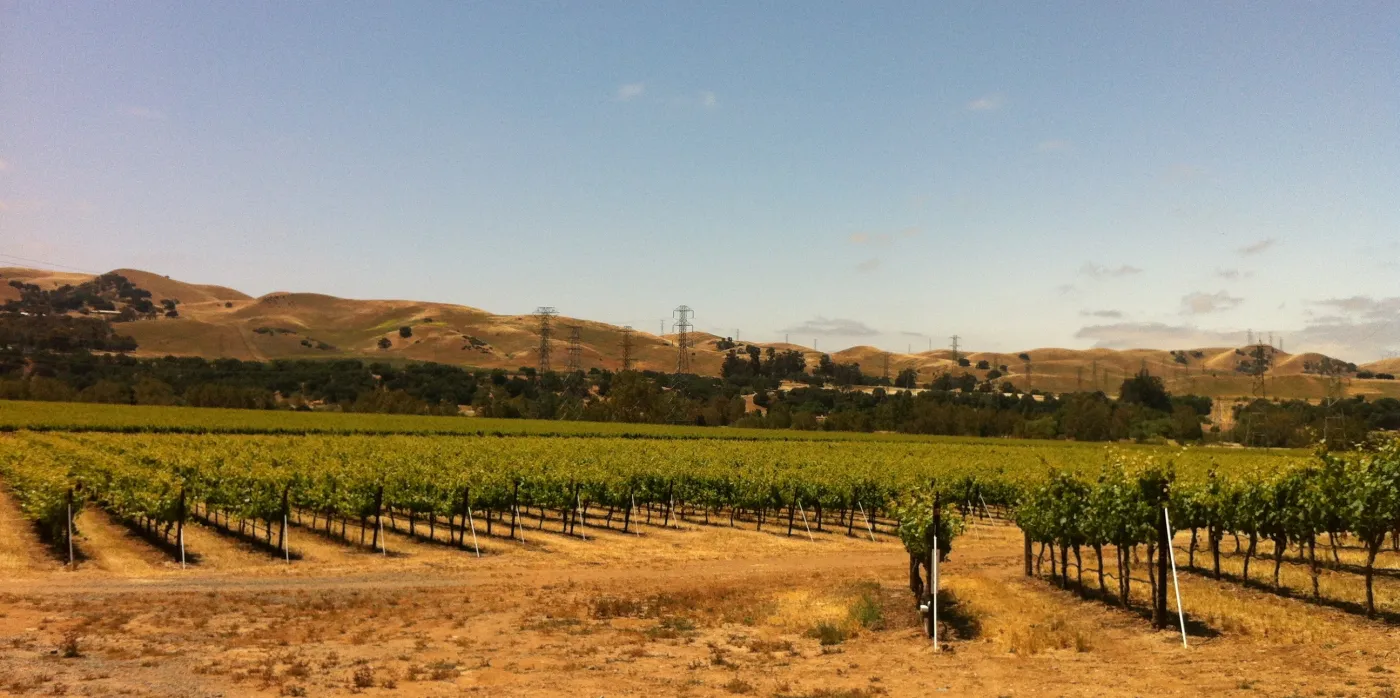
The Tri-Valley straddles the Alameda and Contra Costa county line, tucked between the Diablo Range to the east and the East Bay Hills to the west, with Interstates 580 and 680 crossing through. Five cities anchor the region: Dublin, Pleasanton, Livermore, San Ramon, and Danville. Lawrence Livermore National Laboratory and Sandia National Laboratories together employ roughly 8,000 scientists and engineers. Bishop Ranch in San Ramon and Hacienda Business Park in Pleasanton host major offices for Chevron, IBM, Workday, Verizon, and Kaiser Permanente. The region supports a large, diversified job base. Three top-rated school districts (San Ramon Valley, Pleasanton, and Dublin Unified) anchor housing demand across the entire valley.
What buying in Tri-Valley means
The Tri-Valley is one of the Bay Area's premium master-planned suburbs: newer construction, large lots, top-decile schools, and a self-contained job base, all without the density tradeoffs of the inner Bay. Typical buyers are dual-income households, often relocating from Cupertino or Palo Alto for school value or from Fremont for newer homes, with the active price band running from roughly 1.4M (Dublin townhomes) to 3M-plus (Danville and San Ramon single-family). Structural pros are school quality, walkable downtowns in Pleasanton and Danville, and easy 580/680 access. Structural cons are summer heat (often ten degrees hotter than San Francisco), some of the worst Bay Area commute traffic at the Dublin/Pleasanton interchange, and high property tax burdens on newer Mello-Roos communities. The Tri-Valley housing market spans from roughly 1.4M for Dublin townhomes to 3M-plus for Danville and San Ramon single-family, with Mello-Roos adding to the monthly cost on the newer tracts.
Most prominent cities
Dublin: youngest and fastest-growing Tri-Valley city, Dublin Unified schools, BART access, newer subdivisions at 1.4M to 2.2M.
Pleasanton: historic downtown, Pleasanton Unified schools, Hacienda Business Park, mature single-family inventory 1.6M to 3M.
Livermore: wine country east of 580, Lawrence Livermore Lab, more value per square foot than the other four cities.
Danville: walkable historic Main Street, large-lot estates, the highest typical price point in the valley.
Sunol: the rural corner at the Niles Canyon end of the region, single-school Sunol Glen Unified (K-8), acreage and ranch parcels with CAL FIRE wildfire diligence.
6 cities with dedicated guides
Every city in Tri-Valley has its own advisory page with schools, hospitals, pricing math, and per-city FAQ:
I drive these roads between showings, and a deer once crossed within inches of my car in Niles Canyon. Sunol is the rural corner of the Tri-Valley, and it now has its own advisory page. Buyers here get the same pricing discipline I bring to the rest of the region: when there are only a handful of recent nearby sales to compare against (the comps, or comparable sales), I work carefully from what little the data gives us rather than guessing.
Also serving Lamorinda: Lafayette, Orinda, and Moraga
West of the five Tri-Valley cities, along the Highway 24 corridor toward Oakland, sit the three Lamorinda towns: Lafayette, Orinda, and Moraga. All three feed the Acalanes Union High School District and share a semi-rural, large-lot character, and I represent buyers and sellers there as well.
Lafayette. Lafayette has its own BART station and a downtown strip along Mt. Diablo Boulevard, with ranch and custom single-family homes on lots that often exceed a quarter acre.
Orinda. Orinda pairs a BART station with wooded hillside streets and a small village center split by Highway 24; wildfire-zone and insurance checks belong in any hillside offer.
Moraga. Moraga, home to Saint Mary's College, has no BART station of its own and a quieter, more residential character, with ranch homes and townhomes around Rheem Valley and the Moraga Country Club.
Call or text me at 415-910-3958 to talk through a Lafayette, Orinda, or Moraga purchase or sale.
How the Tri-Valley cities compare
A neutral, side-by-side snapshot of Tri-Valley's cities from the most recent U.S. Census Bureau American Community Survey. Sorted by median home value; every figure is city-wide, and individual neighborhoods and parcels vary.
Source: U.S. Census Bureau, American Community Survey 2019-2023 5-year estimates.
Lily's Tri-Valley track record
7 documented Tri-Valley closings, $5.8M of local volume. Career-wide: 104 documented closings, $115M+ in total volume, with 91 of 104 on the buyer side, 10 closings in the last 12 months, career range $323K to $3.3M, 5.0-star Zillow average across 38+ reviews. Every transaction below links to the address on Zillow.
Call or text me at 415-910-3958 for a free 30-minute Tri-Valley consultation.
104 transactions · $115M+ · 5.0★ Zillow · Cal DRE #02010731
Environment and infrastructure
The environmental and infrastructure factors buyers ask about most, summarized at the regional level. Each factor names the cities in this region that carry the notable exposure; see the individual city guides for parcel-level detail.
Factor
Detail
Gas transmission pipelines
PG&E high-pressure gas transmission lines cross all five Tri-Valley cities, generally following the I-680 and I-580 corridors; a documented line runs from San Ramon (near Dougherty and Crow Canyon roads) south through Dublin (along Dougherty Road and Dublin Boulevard) into Pleasanton. PHMSA NPMS publishes only approximate (about plus or minus 500 foot) alignments, so per-address proximity must be verified. See the individual city guides for parcel-level detail.
Noise (freeway, rail, flight paths)
The Tri-Valley is comparatively quiet, with traffic noise from the I-680 and I-580 corridors and BART (the Dublin/Pleasanton stations sit in the I-580 median) as the main sources in Danville, Dublin, Pleasanton, and San Ramon; San Ramon also has heavy Bishop Ranch commute traffic. The standout is Livermore, where Livermore Municipal Airport (LVK, roughly 197,000 operations in 2022) generates general-aviation flight-training noise and the Altamont corridor adds ACE rail and freight; no major commercial airport sits over any of the five cities.
Refineries and heavy industry
There are no oil refineries in the Tri-Valley, and Danville, Dublin, Pleasanton, and San Ramon are office, retail, and residential (Bishop Ranch, Hacienda Business Park) with no heavy industry. The exception is Livermore, home to Lawrence Livermore National Laboratory (LLNL) and Sandia National Laboratories, two major federal facilities east of downtown with specialized regulatory and contamination considerations.
Soil and groundwater contamination
The dominant site is Lawrence Livermore National Laboratory, on the EPA Superfund National Priorities List at its main Livermore site (VOCs, fuel hydrocarbons, PCBs, tritium, high-explosive compounds) and the Site 300 location southeast toward Tracy. Pleasanton has a separate concern: PFAS (PFOA/PFOS) took all three city wells offline (the city now buys from Zone 7), tied to a plume that includes the Livermore Airport and fire-training center. Danville, Dublin, and San Ramon have no Superfund site, only routine smaller cleanup cases. See the individual city guides for parcel-level detail.
Air quality and wildfire smoke
Air quality across the inland Tri-Valley is generally moderate, with the recurring concern being summer ozone driven by inland heat and valley-basin trapping within the Bay Area's EPA ozone nonattainment region. Livermore is the standout, consistently recording the highest ozone readings in the Bay Area (over 70 ppb versus under 55 ppb at the coast); wildfire smoke and winter PM2.5 affect all five cities.
Wildfire zone and power shutoffs (PSPS)
Every Tri-Valley city has elevated to high CAL FIRE fire-hazard terrain in its surrounding hills (the Mount Diablo foothills above Danville and the Las Trampas Ridge above San Ramon, the Pleasanton Ridge, the eastern Dublin grasslands, and the south and Altamont hills around Livermore), and PG&E PSPS de-energizations have affected these hillside and outlying areas during high-wind events. The valley floors are lower-risk. See the individual city guides for parcel-level detail.
High-voltage power lines
PG&E and CAISO high-voltage transmission corridors cross all five cities, with the densest infrastructure in Livermore (500 kV lines crossing I-580 into the Tesla substation, plus the Las Positas 230/60 kV substation) and lines along the I-580/I-680 alignment feeding the Vineyard substation in Pleasanton; Danville, Dublin, and San Ramon carry transmission across the San Ramon Valley. See the individual city guides for parcel-level detail.
Sea level and shoreline flooding
The Tri-Valley is entirely inland at elevation, with no bay or Delta shoreline in Danville, Dublin, Livermore, Pleasanton, or San Ramon, so sea-level rise poses no direct exposure; the relevant water risk is localized creek and arroyo flooding (FEMA-mapped) rather than tidal inundation.
These are regional summaries from public agencies and are approximate. Pipeline and power-line alignments, contamination parcels, and wildfire zones differ block by block; verify the exact address with the agency tools linked above and your inspections before you write an offer.
Tri-Valley homes are newer than most of the East Bay's, which tempts buyers to skip steps. Lily does not: every disclosure still gets read, every claim still gets verified, and the walk-away still goes in writing when the numbers fail. The step that earns its keep here is cost modeling, because newer subdivisions often carry an HOA fee plus a Community Facilities District tax, also called Mello-Roos, a special assessment that funds local infrastructure and rides on top of the regular property tax bill. Two homes at the same list price can differ by hundreds of dollars a month, so Lily totals all of it before her client writes an offer. For a city-by-city look at what that charge runs across the Tri-Valley, see the Mello-Roos cost by Tri-Valley city. She also prices the commute honestly: values along I-580 and I-680 move with drive times, and a bargain far from the interchange is not always a bargain. School boundaries get verified with the district directly, because enrollment is bound to the address as of a specific date, not to what a listing flyer promises.
Tri-Valley FAQ
Why is Dublin more expensive than Livermore or Pleasanton's older tracts in 2026?
East Dublin's master-planned communities (Dublin Ranch, Positano, Schaefer Ranch, Tassajara Hills) are newer construction, command higher Mello-Roos overlays, and have stronger combined Dublin Unified School District scores than Livermore Unified. Pleasanton's premium is concentrated in pre-1990 east-side tracts (Birdland, Vintage Hills) and Ruby Hill, but the median Pleasanton home is older than the median Dublin home. Buyers are paying for newer build, better infrastructure, and higher school metrics, not just for the Dublin brand.
Tri-Valley inventory is swelling, what does that mean for a buyer in 2026?
Days-on-market in Tri-Valley have stretched 50-100% compared to 2022, especially in the $1.6M-$2.4M East Dublin and West Pleasanton bands. This shifts negotiating leverage: contingencies become acceptable again, sellers entertain credits for repairs and inspections, and bidding wars are now the exception in non-prime streets. The math still favors negotiation by address, not by city; well-priced homes in top school feeders still see competition.
Is a $1M Dublin condo actually worth $3.2M of cash outflow over 30 years?
The headline arithmetic is real (principal + interest + tax + HOA + Mello-Roos + insurance summed to 30 years yields that ballpark), but the comparison is incomplete without the rent-side cash flow and the home equity at year 30. The right comparison runs both sides in real dollars: rent inflation, investment returns on the rent-vs-buy delta, and the buyer's actual stay-horizon. Sub-5-year horizons in Dublin condos rarely pencil; 10+ year primary-residence cases typically do.
Mountain House vs Tri-Valley: which makes sense for a long-term BART commute?
Mountain House delivers larger newer homes for 30-50% less per square foot, but the commute to BART Dublin/Pleasanton adds 35-55 minutes each way before the train ride begins. ACE train from Tracy is an option but runs only at peak. For buyers committed to 3+ days per week in-office at SF or Walnut Creek, Tri-Valley usually still wins on total quality-of-life math. For hybrid 1-2 days in-office, Mountain House becomes competitive.
East Dublin Mello-Roos: which tracts have it, how much, and when does it sunset?
Most East Dublin tracts built after 1995 carry CFD (Community Facilities District) Mello-Roos assessments ranging from $1,500 to $7,000 annually depending on tract and home size. Sunset dates vary by CFD: some sunset around 2035-2042, others extend to 2050+. The exact CFD number is in the preliminary title report; ask for it before offer. Mello-Roos is on TOP of the standard 1.25% Prop-13 base rate, not part of it.
Pleasanton's 2024 high-school boundary redraw: how to verify school assignment by exact address?
Pleasanton Unified redrew its high-school boundaries in 2024 to balance enrollment across Amador Valley High, Foothill High, and the new Village High. Boundary maps published by PUSD are the source of truth; do not rely on listing-agent claims or 2023 GreatSchools data. Run the address through the district enrollment portal and verify the elementary, middle, and high feeder chain before assuming any school assignment.
BART Dublin/Pleasanton to SF: what's the real commute math in 2026?
From Dublin/Pleasanton BART, a peak-direction trip to Embarcadero is about 47-52 minutes if all transfers connect cleanly. The catch is off-peak frequency: midday and weekend headway can stretch to 20 minutes per train. Buyers planning a 3-day-in-office hybrid usually still take the train; buyers expecting 4-5 days frequently choose Walnut Creek or Lafayette BART for shorter trip times and trade off the East Dublin school quality.
What are Tri-Valley single-family price bands by city in 2026?
Pleasanton single-family runs $1.7M-$2.6M (Vintage Hills, Foothill, Ruby Hill push higher). Dublin runs $1.4M-$2.2M (East Dublin newer tracts at the high end). San Ramon single-family runs $1.7M-$2.5M (Bridges, Henry Ranch, Gale Ranch). Danville runs $2.2M-$3.5M (Blackhawk, Diablo, Westside hills push $4M+). Livermore is the value entry at $1.1M-$1.6M for the core south-of-580 grid; north Livermore vineyards run $1.5M-$2.5M. Within-city variance is large; comps by exact tract.
How are Tri-Valley school districts ranked in 2026?
Pleasanton Unified (PUSD), Foothill High and Amador Valley High consistently rank top-10 California public high schools by Niche and GreatSchools. Dublin Unified (DUSD), Dublin High GreatSchools 8-9, Cottonwood Creek Elementary GreatSchools 9-10. San Ramon Valley Unified (SRVUSD), Monte Vista High, San Ramon Valley High, Dougherty Valley High, GreatSchools 9-10 across the district; one of California's strongest comprehensive districts. Livermore Valley Joint Unified (LVJUSD), mid-tier overall with strong specific schools (Granada High, Livermore High). Tri-Valley district premium is real and priced into single-family.
What are Tri-Valley Mello-Roos rates and which tracts carry them?
Mello-Roos CFD assessments apply to most post-1990 Tri-Valley master-planned tracts. East Dublin (Schaefer Ranch, Dublin Ranch, Positano, Wallis Ranch): $2,000-$5,500/year, 30-40 year terms, several sunset by 2030-2040. San Ramon Bridges and Gale Ranch: $3,000-$6,000/year, 30-40 year terms. Dougherty Valley north: $2,000-$4,500/year. Pleasanton Ruby Hill and Bridle Creek: $1,500-$4,000/year. Livermore newer tracts (Sage, Tapestry): $2,500-$4,500/year. Always pull the parcel-specific CFD disclosure and remaining term before offer; Mello-Roos can flip a 30-year mortgage math by $60K-$150K.
Which Tri-Valley cities have BART access?
Dublin/Pleasanton BART (West Dublin/Pleasanton and East Dublin/Pleasanton stations) sits at the I-580/680 interchange and serves Dublin, Pleasanton north of Stoneridge, and is the parking destination for Livermore and San Ramon BART commuters. The Dublin/Pleasanton line terminates here; trains go via Castro Valley to MacArthur and on to SF via the Transbay Tube. There is no BART station in Livermore (the Livermore Valley extension was cancelled in 2018), no BART in San Ramon, no BART in Danville. ACE train serves Livermore for Central Valley jobs; not a viable SF commute.
What is the actual BART Dublin/Pleasanton to SF commute math in 2026?
Dublin/Pleasanton BART to Embarcadero is roughly 45-55 minutes door-to-platform peak and $8.40-$9.20 one-way in 2026 ($16.80-$18.40 round-trip). Monthly: about $360 for 5-day commute. Driving I-580 / Bay Bridge: $7-$8 Bay Bridge toll + $25-$45/day SoMa/FiDi parking + 50-90 minutes peak; round-trip drive is $55-$100/day. BART differential is $40-$80/day in BART's favor. Off-peak BART service was cut in 2024; verify the actual schedule. Hybrid 2-3 days office shifts the math but BART still wins on cost.
What is the Mountain House vs Tri-Valley comparison for long-term buyers?
Mountain House (Tracy area, San Joaquin County, off I-580 east) trades $200K-$500K below comparable Dublin or Livermore single-family for newer-construction master-planned product. Trade-offs: Tracy Unified or Mountain House School District (mid-tier, not Tri-Valley caliber); no BART access (Lathrop ACE station nearest, Central Valley commute only); 25-40 minute I-580 commute east of the Altamont Pass with reverse-commute pattern. For buyers prioritizing newer construction and lower entry, Mountain House pencils; for buyers prioritizing schools, BART, or career flexibility, Tri-Valley wins.
What is the Pleasanton 2024 high-school boundary redraw and how does it affect buyers?
Pleasanton USD redrew Foothill High vs Amador Valley High attendance areas in 2024 following enrollment-balance pressure. Specific changes: portions of Vintage Hills shifted from Foothill to Amador; portions of southeast Pleasanton shifted from Amador to Foothill. The redraw affected roughly 800 parcels. MLS listings frequently still cite the pre-2024 assignment; only the PUSD registrar's current-year attendance lookup is reliable. The premium between Foothill and Amador is small (both are top-tier); the issue is matching the specific feeder for IB, AP catalog, and sports programs the buyer is targeting.
Which Tri-Valley neighborhoods carry Very High fire hazard per CAL FIRE?
Per CAL FIRE FHSZ: Pleasanton Ridge and the Sunol Regional Wilderness edges; the hills above San Ramon (Norris Canyon, Bollinger Canyon hillside tracts); Diablo Foothills west of Danville; the Livermore Hills and Greenville Road edges; the East Dublin / Tassajara Road hillside parcels. Most Tri-Valley flatland tracts (Dublin Ranch, Pleasanton bench, central San Ramon, central Livermore) carry Moderate or Low FHSZ. Insurance carriers in 2026 are declining new HO-3 in Very High zones; budget California FAIR Plan plus DIC for hillside Tri-Valley parcels.
What is the Danville Blackhawk vs San Ramon Bridges comparison?
Danville Blackhawk is the original 1980s gated luxury community with golf course (the Blackhawk Country Club), $2.5M-$5M+ price band, mature landscaping, Diablo Vista Middle and Monte Vista High feeders. San Ramon Bridges is a 2000s-2010s gated community at Dougherty Valley with newer construction, $2.0M-$3.5M, Mello-Roos $4K-$6K/year, Dougherty Valley High feeder. Blackhawk wins on character, golf access, and SRVUSD top-tier schools; Bridges wins on newer mechanicals, contemporary floor plans, and lower entry. Both are SRVUSD; school quality is comparable.
How does Lily's Russian fluency help Tri-Valley Russian-speaking buyers?
Russian is Lily's native language. The full California disclosure package (TDS, NHD, SPQ, HOA, preliminary title, NHD report, parcel-specific CFD Mello-Roos disclosure) is read and explained clause-by-clause in Russian on request; English-language documents remain the legally binding originals. Offer negotiation, escrow communication, lender coordination, and closing-table conduct all run in Russian or English at the client's preference. Lily has documented Tri-Valley closings with Russian-speaking buyers in Dublin, Pleasanton, San Ramon, Livermore.
How does Lily underwrite Mello-Roos exposure on Tri-Valley offers?
Lily pulls the parcel-specific Mello-Roos CFD disclosure from the county Assessor's office (Alameda or Contra Costa), reads the bond indenture's amortization schedule to identify the sunset year and the remaining principal, calculates the 30-year carrying-cost impact at the buyer's discount rate, and integrates that into the affordability model. A Wallis Ranch parcel with $5,500/year Mello-Roos running 35 more years adds roughly $130K-$180K of nominal payments versus a comparable Pleasanton parcel with no CFD. The right comparison isn't sticker price; it's all-in monthly carrying cost.
What is the typical Tri-Valley buyer-side closing timeline in 2026?
Standard Tri-Valley buyer-side closing runs 25-35 days from contract acceptance. Cash offers 7-14 days. Conventional financing with appraisal 28-30 days. FHA 30-35 days. VA 35-45 days. Jumbo (most Tri-Valley single-family triggers jumbo): 28-35 days but the underwriting is heavier and the rate-lock window matters more. Contingency periods typically 17 days inspection, 21 days appraisal, 21 days loan. The Mello-Roos and HOA-document review adds 5-7 days that buyers in non-CFD markets don't face; budget for it.
What is the Tri-Valley property tax math including Mello-Roos?
Base California property tax is 1% of assessed value (Prop 13). Tri-Valley add-ons: Alameda County voter-approved bonds add 0.10-0.20% (Dublin, Pleasanton, Livermore); Contra Costa County voter-approved bonds add 0.10-0.20% (San Ramon, Danville). Mello-Roos CFD assessments on master-planned tracts add $2,000-$6,000/year. School parcel taxes $100-$500/year. Effective rate in pre-1990 Tri-Valley tracts: 1.10-1.25%; in post-2000 Mello-Roos tracts: 1.50-1.95%. The Mello-Roos differential is the single biggest variable; always pull the parcel-specific tax bill.
What is the Tri-Valley HOA pattern and SB326 exposure?
Most post-1990 Tri-Valley master-planned tracts carry HOA: Dublin Ranch, Wallis Ranch, Schaefer Ranch, Bridle Creek, Ruby Hill, Bridges, Gale Ranch, Sage, Tapestry. Typical SFH HOA dues $150-$400/month. SB326 doesn't apply to detached SFH but does apply to attached townhomes and condos; Tri-Valley condo and townhome HOAs in Dublin and Pleasanton have started issuing $5K-$30K per-unit assessments in 2025-2026. Always pull reserve study, SB326 inspection report (where applicable), and 12 months of HOA minutes before offer.
How does Lily verify school assignment by parcel before a Tri-Valley offer?
Lily pulls the APN, runs the address through each district's attendance lookup (DUSD, PUSD, SRVUSD, LVJUSD), and calls the district registrar to confirm current-year assignment. The 2024 Pleasanton redraw, the 2023 Dublin elementary boundary shift, and several San Ramon Valley adjustments all changed assignment for parcels with no MLS update. For Russian-speaking buyers targeting a specific school, Lily confirms the principal-level program (immersion, IB, AP) is still active for the buyer's grade levels before recommending the offer.
Which Tri-Valley neighborhoods are best for first-time buyers under $1.4M?
Under $1.4M Tri-Valley options in 2026: Livermore south-of-580 core (Vine Crest, Tapestry, central Livermore), Dublin condos and townhomes (Dublin Ranch attached, Schaefer Ranch attached, downtown Dublin Bart-adjacent), Pleasanton condos (Stoneridge, downtown), Livermore older single-family near Springtown and central, parts of east Dublin attached. Single-family detached under $1.4M is rare in Pleasanton, Danville, San Ramon; condo and townhome is the entry path. Trade-offs in HOA dues, Mello-Roos, school feeder; Lily walks the carrying cost.
Which Tri-Valley neighborhoods are best for trade-up buyers $2M-$3.5M?
Trade-up Tri-Valley $2M-$3.5M: Pleasanton Vintage Hills, Foothill, Ruby Hill (top-tier PUSD schools); Dublin Ranch Phase 1-3 (newer construction, DUSD Cottonwood Creek/Dublin High); San Ramon Bridges, Henry Ranch, Bridges Country Club (Dougherty Valley High); Danville Westside (Monte Vista feeder), parts of Blackhawk; Livermore north vineyards (acreage, Granada feeder). Each tier brings school quality, lot size, Mello-Roos exposure, and HOA pattern into the price. Calibrate by attendance area and CFD profile, not by city brand alone.
How do Tri-Valley multiple-offer situations differ city-by-city in 2026?
Pleasanton Vintage Hills and Foothill attendance areas, Dublin Cottonwood Creek attendance area, San Ramon Bridges and Henry Ranch routinely draw 6-12 offers, clearing 5-12% over-ask. Danville Blackhawk and Westside hills, 3-7 offers, 2-7% over-ask. Livermore single-family, 2-5 offers, at or slightly over ask. Condos and townhomes across the region sit at ask or below as SB326 disclosure surfaces deferred liability. The top-school tracts haven't softened; entry tracts and attached housing have.
How does Lily handle Tri-Valley disclosure packets specifically?
Standard California disclosure packet for Tri-Valley includes: TDS, SPQ, NHD report, HOA documents (most Tri-Valley parcels), preliminary title report, CFD Mello-Roos disclosure (most post-1990 master-planned), supplemental disclosures (Alquist-Priolo earthquake fault zone, FEMA flood, CAL FIRE FHSZ, the Calaveras Fault disclosure for some San Ramon and Danville parcels). The CFD disclosure is the Tri-Valley-specific item that most buyers underweight; Lily reads it cover to cover and verifies the remaining bond term against the county Assessor's record.
What is the typical Tri-Valley closing-cost breakdown for buyers in 2026?
Buyer closing costs in Tri-Valley 2026 typically run 2.5-3.5% of purchase price. Major items: lender fees 0.5-1.0%, escrow fee $1,500-$3,500 (Alameda or Contra Costa), title insurance 0.4-0.6%, county transfer tax (Alameda $1.10/$1,000, Contra Costa $1.10/$1,000; San Ramon, Danville have no additional city transfer tax; Dublin adds none; Pleasanton adds none; Livermore adds none), property tax proration (Mello-Roos prorated separately), prepaid insurance, recording fees. Tri-Valley closing costs are lower than Oakland (no city transfer tax) but the Mello-Roos prepayment can add.
How does Lily handle Tri-Valley new-construction transactions?
Tri-Valley new-construction tracts (Wallis Ranch, Sage, Tapestry, Bridges Phase 4, certain Dublin Ranch infill) sell through the builder's sales office, not MLS. Lily registers the buyer on first visit, reviews the builder's contract (typically heavily one-sided), negotiates upgrades, lot premium, builder credits, and the construction-loan financing structure. The buyer's lender and the builder's preferred lender are often different; Lily models both options. Construction timeline 6-14 months from contract; deposit at risk during build. Lily's documented Tri-Valley new-construction closings include Dublin Ranch and Sage.
How does Lily approach Tri-Valley investor and ADU transactions?
Tri-Valley investor activity centers on Livermore (small multifamily, rental yields 3.5-4.5% gross), older Pleasanton SFH with ADU potential, and Dublin attached for student/relocation rentals. California ADU law (SB9, AB1033, AB976) plus the Tri-Valley cities' permit-friendly ADU programs make ADU-added SFH a real resale segment; an existing permitted ADU adds $80K-$150K of appraised value. Lily reviews the rent roll, permit history, code-compliance status, and the city's ADU rental restrictions before recommending the offer.
How do I schedule a Tri-Valley consultation with Lily Garipova?
Call or text 415-910-3958, or email lilyagaripova@gmail.com. Free 30-minute initial consultation by phone, Zoom, or in person at any Tri-Valley city (Dublin, Pleasanton, Livermore, San Ramon, Danville). Available in English and Russian. Cal DRE #02010731. The consultation walks through your specific buying or selling math: budget, timeline, school constraints, commute corridor (BART Dublin/Pleasanton, I-580, I-680), financing pre-approval, Mello-Roos exposure, and the realistic Tri-Valley sub-area that fits.
Free 30-minute consultation to walk through your Tri-Valley buying or selling math in either Russian or English. Call 415-910-3958 or email lilyagaripova@gmail.com.
 Buyer
Buyer
 Buyer
Buyer
 Buyer
Buyer
 Buyer
Buyer
 Buyer
Buyer
 Buyer
Buyer
 Buyer
Buyer