Why San Ramon
San Ramon runs on a business park. It sits at the north end of the Tri-Valley, between Dublin to the south and Danville to the north, but its steady buyer demand comes largely from inside its own limits, from the Bishop Ranch employer cluster where Chevron, AT&T, PG&E, and GE keep large offices. That local job base, paired with San Ramon Valley Unified (one of the top-ranked districts in California), is what keeps demand steady even in slower markets. The real decision a buyer makes here, though, is between two versions of the same city: older central San Ramon, built out from the 1970s through the 1990s with no special tax, and the master-planned east side of Windemere and Gale Ranch, built after 2000 with active Mello-Roos (an annual parcel tax that pays down the newer infrastructure). The two can list close on price, then part ways every month on what it actually costs to hold. That split defines the San Ramon housing market: two homes can list within a few thousand dollars, then diverge by hundreds a month once the east-side Mello-Roos parcel tax is counted.
Lily works the whole Tri-Valley corridor, with 2 Dublin closings, 1 Pleasanton closing, and 1 Livermore closing on the record; the Tri-Valley triangle of Dublin, Pleasanton, and San Ramon is covered in detail in the Dublin city-page FAQ. That adjacent experience maps onto San Ramon almost directly, because the two questions that decide an east-side purchase here, what the Mello-Roos line actually costs on a specific parcel and what a master-planned HOA package (the homeowners association's governing and financial documents) really contains, are the same two she works on Dublin's East-side tracts. She reads the parcel-specific tax detail and the full HOA package before recommending an offer, so the monthly number a buyer commits to is known going in rather than discovered after closing.
A short history of San Ramon
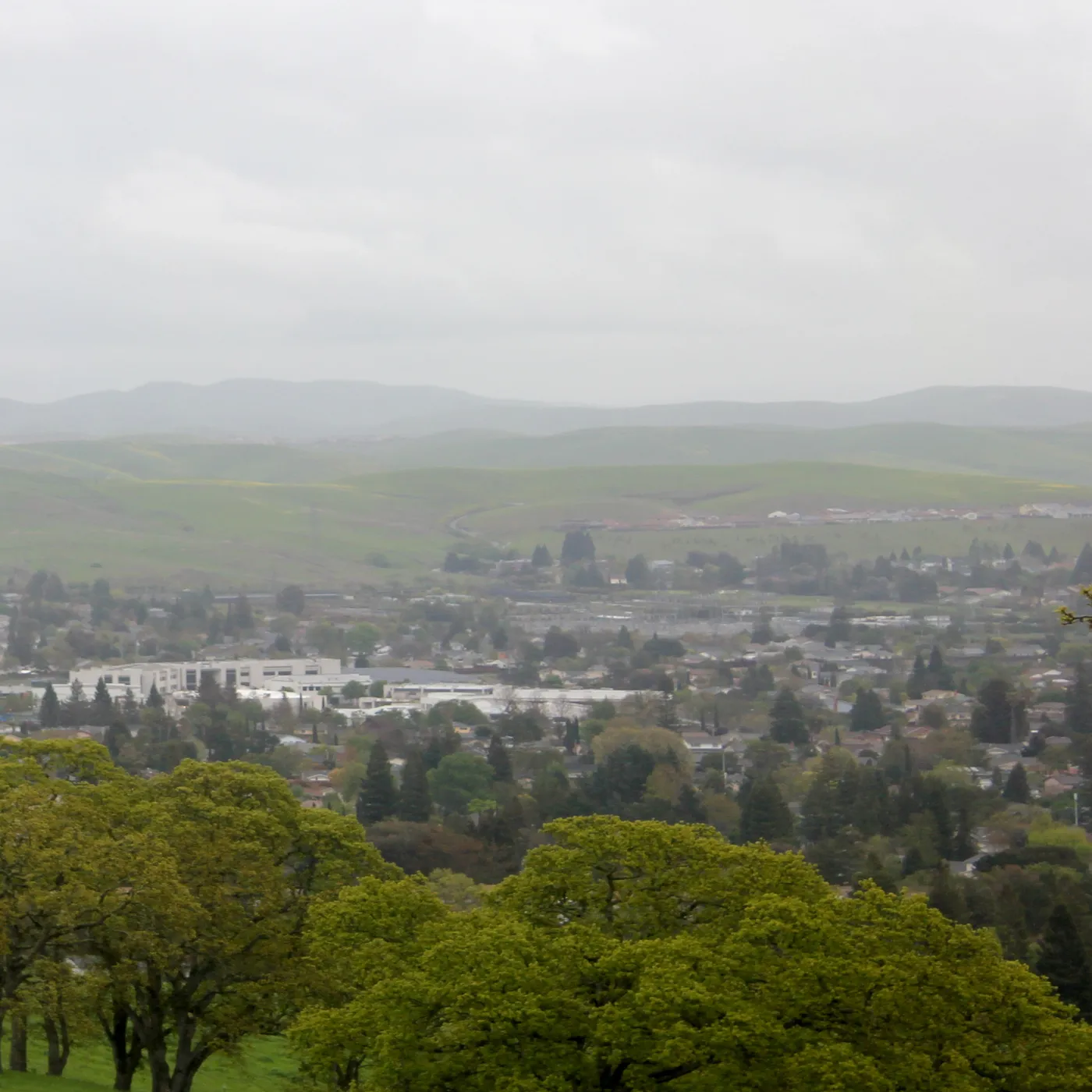
The land that is now San Ramon was once inhabited by the Seunen, an Ohlone group who built their homes near the area's creeks. In 1834 the site became part of the Rancho San Ramon land grant to Jose Maria Amador, and in 1850 Leo and Mary Jane Norris arrived as the first permanent American settlers, buying the northwest corner of the rancho near what are today Bollinger Canyon Road and Crow Canyon Road. According to the account recorded in the city's history, Amador named the area San Ramon, Spanish for Saint Raymond, after a vaquero who tended mission sheep on the land. San Ramon became the official place name in 1873, when a permanent post office opened and a railroad reached the valley.
San Ramon lies in Contra Costa County, about 34 miles east of San Francisco, and incorporated as a city on July 1, 1983. Its modern growth was shaped by Bishop Ranch, a master-planned office park that began major construction in the early 1980s, and by Chevron, which moved its headquarters from San Francisco to San Ramon in 2001. The City Center Bishop Ranch retail and dining district opened in 2018, giving the city a walkable downtown core.
Source: Wikipedia: San Ramon, California.
San Ramon by the numbers
A neutral demographic snapshot from the most recent U.S. Census Bureau American Community Survey. These are city-wide figures; individual neighborhoods and parcels vary.
| Measure | Value |
|---|---|
| Population | 85,734 |
| Median age | 40.9 years |
| Median household income | $197,358 |
| Homeownership rate | 70.5% |
| Median home value (owner-occupied) | $1,359,100 |
| Median gross rent (monthly) | $2,916 |
| Average commute to work (one way) | 35.5 minutes |
| Average household size | 2.88 people |
Source: U.S. Census Bureau, American Community Survey 2019-2023 5-year estimates, San Ramon city, California.
The San Ramon market right now
| Median sale price | $1,530,000 |
|---|---|
| Days on market | 15 |
| Homes for sale (inventory) | 147 |
| Homes sold | 59 |
| Sale-to-list | 99% |
Data: Redfin, May 2026
For broader Bay Area context behind the San Ramon numbers, read the current Bay Area market note.
What this means for you (May 2026)
San Ramon's numbers tell a split story. Homes still sold in a median 15 days, but the 99% sale-to-list ratio shows that buyers aren't paying premiums. With 147 listings, there's enough selection to be choosy. Stay firm on price and keep your timeline flexible.
Property taxes in San Ramon
In San Ramon, property tax begins with Contra Costa County's 1% base under Proposition 13 (California's 1978 cap on the base tax at 1% of assessed value), plus voter-approved bonds. On a verified San Ramon bill (FY 2024-25), the 1% base tax is $13,690.85 and the total ad valorem tax (the part charged against assessed value) is $14,818.98.
Above the ad valorem tax sit two land-secured lines (a fixed annual charge on the parcel). The larger is S/A M-29 DOUGHERTY $1,720.30, the Dougherty Valley assessment, plus SAN RAMON GHAD $181.68, a Geologic Hazard Abatement District (GHAD). Together the special taxes and assessments total $2,832.10.
Dougherty Valley (Gale Ranch, Windemere) was financed largely through Assessment District M-29 rather than a named Mello-Roos Community Facilities District (CFD), so it reads as a special assessment, not a CFD line, though the annual effect is the same. See the Mello-Roos guide, how California property tax works, and the true monthly cost calculator. Figures come from a representative single-family county bill (FY 2024-25); every parcel differs, so check the actual bill for any home you are weighing. Compare all 38 cities side by side on the Bay Area property tax map. This is educational, not tax or legal advice; confirm any figure with a qualified tax professional and the county assessor before relying on it.
Schools (San Ramon Valley Unified School District)
San Ramon Valley Unified School District (SRVUSD) is one of the strongest large districts in California: 29,183 students across 37 schools, PublicSchoolReview state rank #53 of 1,907 California districts (top 5%). The district covers San Ramon, Danville, Alamo, and Blackhawk, and the strength is uniformly distributed: every high school in the district ranks in the top 5% of California, and there is no weak-feeder pocket the way some larger Bay Area districts have. The Dougherty Valley / north-San-Ramon side and the Twin Creeks / central-San-Ramon side both feed strong high schools, so the central question is which specific attendance area you buy into, not whether SRVUSD itself is strong.
Dougherty Valley High is the in-San-Ramon flagship. Dougherty Valley High School (~3,000 students, U.S. News #27 Californiatop 200 nationally, 90%+ AP participation, 4.1 average GPA) anchors the eastern Dougherty Valley master-planned tracts. California High School (~3,100 students, U.S. News #199 California) anchors the central-San-Ramon and Bishop Ranch corridor. San Ramon Valley High and Monte Vista High are the Danville flagships and pull buyers north across the city line for the boundary, but for in-San-Ramon buyers Dougherty Valley and California High are the central question. Windemere Ranch Middle and Iron Horse Middle are the top feeders.
Typical assignment by sub-area
| Sub-area | Elementary feeders | Middle | High |
|---|---|---|---|
| Dougherty Valley (east, master-planned) | Coyote Creek / Hidden Hills / Quail Run | Windemere Ranch / Gale Ranch | Dougherty Valley High |
| Twin Creeks / Bishop Ranch corridor (central) | Country Club / Walt Disney | Iron Horse | California High |
| Old Ranch / south San Ramon | Bollinger Canyon / Neil Armstrong | Pine Valley | California High |
| North San Ramon / Alamo-adjacent | Rancho Romero / Alamo | Stone Valley | San Ramon Valley High (Danville) |
SRVUSD attendance lines are stable but a few neighborhoods on boundary edges have been adjusted recently. Lily verifies the current assignment with the SRVUSD registrar before any offer.
Highlight schools
- Dougherty Valley High School (9-12, ~3,000 students), U.S. News #27 California, top 200 nationally, 90%+ AP participation. The Dougherty Valley flagship and the main price driver for east-San-Ramon master-planned tracts.
- California High School (9-12, ~3,100 students), U.S. News #199 California; central-San-Ramon flagship; strong music + AP catalog.
- Windemere Ranch Middle School (6-8), Niche A+; Dougherty Valley feeder; high CAASPP scores.
- Coyote Creek Elementary (K-5), one of the highest-scoring elementaries in California; the Dougherty Valley early-grades anchor.
Sources: San Ramon Valley Unified School District; PublicSchoolReview SRVUSD; U.S. News SRVUSD; Niche SRVUSD.
Hospitals and birthing centers
San Ramon's in-city hospital is San Ramon Regional Medical Center (6001 Norris Canyon Rd), an independent Tenet Healthcare PPO-accepting hospital with a full Family Birthing Center and Level II Special Care Nursery. Kaiser Permanente members from San Ramon deliver at Kaiser Walnut Creek (~25-35 min north). For Level III NICU referral (high-risk pregnancy, premature delivery below 32 weeks), John Muir Walnut Creek is the regional destination (~20-30 min).
| Hospital | Network | Drive time from San Ramon | Key services |
|---|---|---|---|
| San Ramon Regional Medical Center | Tenet (PPO, independent) | in-city (0-10 min) | Family Birthing Center; Level II Special Care Nursery; 24/7 neonatologist on-call; UCSF Benioff Children's Hospital pediatricians on-call 24/7 |
| Stanford Health Care Tri-Valley (Pleasanton) | Stanford (PPO) | 15-25 min | Alternative south-bay PPO option; Level II NICU (32+ weeks); 24/7 OB anesthesiology |
| Kaiser Permanente Walnut Creek Medical Center | Kaiser (closed) | 25-35 min | Closest Kaiser L&D for San Ramon Kaiser members |
| John Muir Medical Center Walnut Creek (Level III NICU referral) | John Muir (PPO) | 20-30 min | Regional Level III NICU (only one in Contra Costa County, Stanford Children's partnership); Level II Trauma Center |
Birthing centers: what matters
San Ramon Regional is the closest option for most San Ramon buyers on a PPO plan: in-city, Level II NICU on-site (handles babies 32+ weeks), 24/7 neonatology and pediatric coverage. The hospital is part of the Tenet network and partners with UCSF Benioff Children's Hospital for pediatric specialty care.
Stanford Health Care Tri-Valley (Pleasanton) is the alternative for south-San-Ramon and Dougherty Valley buyers; comparable Level II NICU and slightly longer drive, but Stanford-affiliated and with the only outpatient lactation clinic in the Tri-Valley.
Kaiser members deliver at Kaiser Walnut Creek (~25-35 min). There is no Kaiser L&D facility in San Ramon. Factor this commute into prenatal-care scheduling, particularly in late pregnancy.
Hospital network coverage depends on your insurance plan. Lily does not advise on medical coverage decisions; for in-network confirmation contact your insurer directly. Hospital information above is current as of 2026-05-28 and should be re-verified with each hospital's admissions office before relying on it for a major life decision.
Sources: San Ramon Regional Obstetrics; Stanford Tri-Valley maternity; Kaiser Walnut Creek maternity; John Muir Walnut Creek; California Perinatal Quality Care Collaborative NICU Directory.
Crime, hazards, and ratings
San Ramon scores well on crime, sits mostly outside FEMA flood zones, with elevated fire hazard in hillside tracts relative to the broader Bay Area. School ratings reflect the local district's performance bands.
| Category | Rating | Detail |
|---|---|---|
| Crime | among the lowest crime rates in the Bay Area; both property and violent crime well below California average | |
| Flood | Mostly Zone X; Zone AE along San Ramon Creek and Bollinger Canyon Creek | |
| Fire | Moderate to High on the eastern (Tassajara) and western (Bollinger Canyon / Las Trampas) ridgelines; flatland tracts not in LRA hazard zones | |
| Earthquake | Calaveras Fault about 3 miles east of Dougherty Valley; Las Trampas/Bollinger Fault on the western ridges; Hayward Fault about 9 miles west; liquefaction: Low overall; Moderate along the San Ramon Creek floodplain |
School ratings
Numeric snapshots for the highlight schools above:
| School | GreatSchools | Niche |
|---|---|---|
| Dougherty Valley High | 10 | A+ |
| California High | 10 | A+ |
| Windemere Ranch Middle | 10 | A+ |
| Coyote Creek Elementary | 10 | A+ |
Environment and infrastructure
Beyond the natural-hazard ratings above, these are the environmental and infrastructure factors buyers ask about most. Each is a city-level summary; confirm the exact parcel before any offer.
| Factor | Detail |
|---|---|
| Gas transmission pipelines | A PG&E 12-inch natural gas transmission line runs through populated parts of San Ramon (near Dougherty and Crow Canyon roads) and continues south into Dublin and Pleasanton; PHMSA NPMS publishes only approximate (plus or minus 500 foot) alignments, so proximity to a specific property must be verified. |
| Noise (freeway, rail, flight paths) | San Ramon is split by I-680, and the Bishop Ranch business park (a 585-acre office park of roughly 550 tenants and over 30,000 workers near I-680/Bollinger Canyon Road) generates heavy weekday commute traffic, the city's main traffic/noise driver alongside the freeway. |
| Refineries and heavy industry | There are no oil refineries in San Ramon or the Tri-Valley; the dominant industrial presence is office/corporate (Bishop Ranch), not heavy processing. |
| Soil and groundwater contamination | San Ramon has no EPA Superfund NPL site; routine smaller cleanup cases (fuel-station tank leaks, former commercial solvent sites) may appear in DTSC EnviroStor and GeoTracker as in any developed city, none constituting a notable city-wide hazard. |
| Air quality and wildfire smoke | San Ramon, in the inland San Ramon/Tri-Valley basin, experiences somewhat higher summer ozone than coastal Bay Area cities within an EPA ozone nonattainment region, and is subject to regional wildfire smoke. |
| Wildfire zone and power shutoffs (PSPS) | The Las Trampas Ridge and western/southern hills around San Ramon are wildland-urban-interface terrain with elevated fire hazard and have fallen within PG&E Public Safety Power Shutoff footprints during high-wind events; the valley-floor neighborhoods are lower risk. |
| High-voltage power lines | High-voltage transmission corridors cross the San Ramon Valley; specific tower alignments relative to individual residential streets should be confirmed against PG&E and CAISO transmission maps. |
| Sea level and shoreline flooding | San Ramon is inland and elevated with no bay frontage, so sea-level rise is not a factor; localized creek flood zones (San Ramon Creek and tributaries) are the relevant water risk and are FEMA-mapped. |
These are city-level summaries from public agencies and are approximate. Pipeline and power-line alignments, contamination parcels, and wildfire zones can differ block by block; verify the exact address with the agency tools linked above and your inspections before you write an offer.
Sources: PHMSA National Pipeline Mapping System; DTSC EnviroStor; State Water Board GeoTracker; EPA Superfund; BAAQMD air data; CAL FIRE Fire Hazard Severity Zones; PG&E PSPS maps; NOAA Sea Level Rise Viewer
Hazard ratings are city-level aggregates from public agencies (FEMA, CAL FIRE, USGS). Specific addresses can carry materially different risk; verify the exact parcel via the FEMA Flood Map Service Center, the CAL FIRE FHSZ viewer, and your insurance carrier before any offer. School ratings vary by year and by metric; the numbers above are point-in-time snapshots, treat them as a starting point and re-verify with the district registrar.
Sources: CrimeGrade.org (crime); FEMA Flood Map Service Center (flood); CAL FIRE FHSZ viewer (fire); USGS earthquake hazards (earthquake); GreatSchools + Niche (school ratings).
Track Record
Active San Ramon coverage via adjacent Tri-Valley cities. Career-wide: 104 documented closings, $115M+ in total volume, with 91 of 104 on the buyer side, 10 closings in the last 12 months, career range $323K to $3.3M, 5.0-star Zillow average across 38+ reviews. The full transaction record for every Bay Area city Lily has closed in is summarized at the cities index.
Ready to talk about San Ramon? Call or text me at 415-910-3958 for a free 30-minute consultation.
104 transactions · $115M+ · 5.0★ Zillow · Cal DRE #02010731
What buying a home in San Ramon actually involves
Same fiduciary discipline as on every Lily Garipova representation: read every disclosure end-to-end before recommending an offer, model the carrying cost (mortgage + property tax + HOA + Mello-Roos if applicable + insurance) over the buyer's actual cash-flow horizon, walk the property at multiple times of day before bidding, and stay willing to walk you away from a property that does not pencil for your specific situation. San Ramon-specific particulars are covered in the FAQ below; verify exact school assignment by address through the district registrar before any offer.
What selling a home in San Ramon involves
Strategic Listing Model applied to San Ramon: data-driven comp analysis of the specific San Ramon sub-area (not city-wide averages), pre-listing prep with positive-ROI improvements only (no over-spending), professional staging targeted to the San Ramon buyer demographic, multi-platform marketing with active bid management, and honest disclosure of every defect found in pre-listing inspection. San Ramon sub-area pricing variance is large; the comp set for one neighborhood typically does not transfer to another.
The Meticulous Protector, applied to San Ramon
The methodology that has earned Lily 38+ five-star Zillow reviews and the highest repeat-and-referral rate of her career: read every disclosure line, verify every claim, model every carrying cost, walk every property in person before recommending an offer, document the ethical "no" when the math says no. The San Ramon version of that methodology is the same as the Dublin version, the Pleasanton version, the Walnut Creek version, and every other city Lily represents, discipline does not change by city.
San Ramon FAQ
What are San Ramon price ranges in 2026?
Single-family in older central San Ramon (1970s-1990s) typically runs $1.4M-$1.9M. Master-planned east San Ramon (Windemere, Gale Ranch) runs $1.6M-$2.5M plus an active Mello-Roos special tax (a per-parcel tax funding a Community Facilities District, or CFD) that varies tract to tract, so pull the current annual levy for the specific parcel and add it to carrying cost. Bishop Ranch / Crow Canyon corridor estate inventory pushes past $2.5M. Condos and townhomes city-wide run $700K-$1M.
San Ramon vs Dublin vs Pleasanton?
All three are Tri-Valley cities with strong schools and freeway access. San Ramon Valley Unified ranks above Dublin Unified and on par with Pleasanton Unified on most published measures. Pleasanton carries the school + downtown premium. Dublin has the most new-construction inventory + BART access. San Ramon has Bishop Ranch as the employer anchor + the largest concentration of newer master-planned with Mello-Roos.
Does Lily Garipova speak Russian for San Ramon transactions?
Yes. Russian is Lily's native language. Lily represents Russian-speaking buyers and sellers across the entire Tri-Valley including San Ramon, with disclosure review and negotiation in either English or Russian. Russian-language San Ramon page: lilygaripova.com/ru/san-ramon-realtor/.
What is Dougherty Valley and why does it matter for San Ramon buyers?
Dougherty Valley is the master-planned eastern half of San Ramon, built out from the late 1990s through the 2010s on the former Dougherty Ranch. It includes Windemere and Gale Ranch, feeds Dougherty Valley High School (U.S. News #27 California), and carries some of the highest Mello-Roos rates in the Tri-Valley because the infrastructure bonds are newer and still amortizing. The trade-off is uniform newer construction, top-tier feeder schools, and master-planned amenities versus higher monthly CFD line items than older central San Ramon.
Windemere vs Gale Ranch, what is the actual difference?
Both are Shapell-developed master-planned tracts within Dougherty Valley with similar build era (late 1990s through 2010s), both feed Dougherty Valley High, and both carry active Mello-Roos. Gale Ranch is the older and larger of the two, with a wider mix of single-family floor plans from starter detached through estate; Windemere is the newer and slightly higher-density build, with a heavier mix of townhomes and smaller-lot detached. Pricing per square foot is comparable; the practical decision is floor plan, lot size, and which HOA sub-association rules you prefer.
How are San Ramon schools split between Dougherty Valley High and California High?
Dougherty Valley High School serves the master-planned eastern tracts (Windemere, Gale Ranch, the Dougherty Valley corridor) at about 3,000 students, ranked U.S. News #27 California. California High School serves central and southern San Ramon (Twin Creeks, the Bishop Ranch corridor, older 1970s-1990s tracts) at about 3,100 students, ranked U.S. News #199 California. Both are top-tier; Dougherty Valley is the newer flagship, California High the historic central flagship. Attendance is by exact parcel, verify with the SRVUSD registrar before any offer.
What is the price band for central San Ramon (1970s-1990s) homes?
Central San Ramon, the Twin Creeks / Bishop Ranch corridor and the older 1970s-1990s tracts west of Dougherty Valley, runs $1.4M to $1.9M for single-family in 2026 with no active Mello-Roos. Stock is generally 1,800-2,800 sf on conventional 6,000-8,000 sf lots, California High feeder pattern, original mechanicals on many homes with HVAC and roof end-of-life conversations common in inspection. The price floor sits below comparable Dougherty Valley square footage in part because there is no CFD (Community Facilities District) overlay, meaning no Mello-Roos special tax; the exact difference varies by tract and parcel, so compare the current property tax bills side by side.
What does the Mello-Roos line cost on a typical Dougherty Valley home in 2026?
Dougherty Valley single-family homes (Windemere, Gale Ranch) carry an annual Mello-Roos special tax (a per-parcel tax funding a Community Facilities District, or CFD) that varies tract to tract, so pull the current annual levy for the specific parcel rather than relying on a range. The CFD line is in addition to the ad valorem property tax and any homeowners association (HOA) dues, so the all-in carrying cost above mortgage and insurance is higher than a comparable central San Ramon home with no Mello-Roos. The current levy is shown on the county property tax bill and disclosed in the seller Mello-Roos Notice of Special Tax; the recorded special-tax lien also appears on the preliminary title report, but the prelim shows only that the lien and tax formula exist, not the current dollar amount. Always pull the parcel-specific CFD detail before offer.
What is Bishop Ranch and how does it shape the San Ramon market?
Bishop Ranch is the largest business park in northern California, 585 acres along Camino Ramon with Chevron, AT&T, PG&E, GE, and a long tail of finance, tech, and consulting offices, plus the City Center retail / dining / cinema mixed-use complex. The Sunset Development-owned park employs more than 30,000. The buyer-pool implication: a meaningful share of central and east San Ramon single-family demand comes from Bishop Ranch employees commuting on-foot or by shuttle. That structural demand floor is one reason central San Ramon resale liquidity stays deep through soft cycles.
Is there BART access in San Ramon?
No, San Ramon has no BART station. The closest BART is Dublin/Pleasanton (East Dublin), about 15-20 minutes south down I-680. The Wheels and County Connection shuttle systems plus Bishop Ranch's private shuttles feed BART; commute math from San Ramon for daily SF in-office work works best with a car-to-BART transfer at Dublin/Pleasanton, then 45-55 minutes BART to Embarcadero. The lack of in-city BART is the structural reason San Ramon trades below comparable Dublin square footage for buyers who commute to SF daily.
How does the San Ramon to SF commute actually work?
Three options. (1) Drive I-680 north to I-580 west to I-880 north or 24 west, 50-80 minutes off-peak, 75-110 in peak. (2) Park at Dublin/Pleasanton BART (15-20 minutes south) and ride 45-55 minutes to Embarcadero, total 60-75 minutes door-to-platform. (3) For Bishop Ranch employees, the company shuttle plus an on-site office eliminates the SF commute. The middle option is the most common SF in-office San Ramon commute pattern; full-car drives are reserved for non-BART-corridor destinations like SoMa parking or the Peninsula.
San Ramon vs Danville, what's the trade-off?
Both are SRVUSD (top 5% California per PublicSchoolReview), both Tri-Valley, both no-BART. Danville to the north has Monte Vista High (U.S. News #93 California) as the hills flagship and trades premium for the downtown Hartz Avenue walkability and Blackhawk-adjacent estate inventory; central Danville single-family runs $1.5M-$3.5M with view-lot estates pushing $4M-$6M+. San Ramon to the south has Dougherty Valley High (U.S. News #27 California) as the flagship and more newer master-planned inventory with Mello-Roos. For buyers prioritizing newer construction and tech-adjacent peer pool, San Ramon wins; for downtown walkability and prestige resale, Danville.
What does a Dougherty Valley HOA package actually look like?
Dougherty Valley HOAs (Windemere and Gale Ranch sub-associations, meaning a smaller homeowners association nested under a master association) charge monthly dues that vary by tract and phase, covering common-area landscaping, private parks and pools, gates where applicable, and shared infrastructure; pull the current HOA package for the specific property to confirm the exact dues. The HOA package includes CC&Rs, current budget, reserve study (look for 70%+ funded), most recent meeting minutes (12 months), special assessment history, and pending litigation disclosure. Some Windemere phases additionally carry sub-HOA dues for specific townhome buildings. Always read every page before recommending an offer; SRVUSD-anchored demand will not save you from a poorly reserved HOA.
What hazard exposures should I expect for San Ramon homes?
Earthquake is the dominant exposure: the Calaveras Fault sits about 3 miles east of Dougherty Valley, Las Trampas / Bollinger Fault on the western ridges, Hayward Fault about 9 miles west. Fire hazard is Moderate to High on the eastern Tassajara and western Bollinger Canyon / Las Trampas ridgelines per CAL FIRE FHSZ; flatland tracts are not in LRA hazard zones. Flood risk is low overall (mostly Zone X), with Zone AE along San Ramon Creek and Bollinger Canyon Creek. Liquefaction is Low overall, Moderate along creek floodplains. Always pull the parcel-specific overlay.
Are San Ramon condos and townhomes a viable entry point?
Yes, with discipline. San Ramon condos and townhomes run $700K to $1M in 2026, with stock concentrated in central San Ramon along Crow Canyon Rd, in older Twin Creeks attached, and in Windemere / Gale Ranch attached townhome phases. Homeowners association (HOA) dues vary by building and phase, so pull the HOA package for the specific unit to confirm the current amount. SB 326 (the California law requiring periodic inspection of exterior elevated elements such as balconies and decks, first inspection round due 2025) can trigger special assessments where repairs are needed; the amount depends on the building, so review the SB 326 inspection report and the reserve study (the HOA's funding plan for future major repairs) before making an offer. Always pull the SB 326 inspection report, reserve study, and 12 months of meeting minutes before offer.
What is the most common mistake San Ramon buyers make on Dougherty Valley homes?
Underestimating the Mello-Roos and HOA stack. A Windemere or Gale Ranch single-family home carries ad valorem property tax, an annual Mello-Roos special tax (a per-parcel tax funding a Community Facilities District, or CFD), homeowners association (HOA) dues, plus insurance. The Mello-Roos levy and the HOA dues both vary tract to tract and parcel to parcel, so the all-in carrying cost above mortgage and insurance can be materially higher than a same-priced central San Ramon home with no Mello-Roos. The current Mello-Roos levy is shown on the county property tax bill and disclosed in the seller Mello-Roos Notice of Special Tax; the recorded lien also appears on the preliminary title report, but the prelim shows only that the lien and tax formula exist, not the current dollar amount. Buyers anchor on the ad valorem rate and miss the CFD line. Pull the parcel-specific tax bill (every line, every district) before offer.
What does a Bishop Ranch reverse-commute to South Bay tech look like?
I-680 south to I-580 west to I-880 south, 50-80 minutes off-peak to Apple Cupertino / Google Mountain View / NVIDIA Santa Clara, 65-100 minutes in peak. The reverse-commute morning (south at 7-9 AM) is materially worse than the southbound evening, because Tri-Valley to South Bay is one of the heaviest reverse-commute corridors in the region. Hybrid 2-3 days in-office shifts the math; for daily on-site South Bay roles, San Ramon is a meaningful commute and the Mello-Roos premium matters less than the time cost.
Is San Ramon a good investor market for SFR rentals?
Cash-on-cash math is challenging at 2026 carrying costs. A central San Ramon 1980s 4-bedroom at $1.7M with 25% down, 7% interest, plus property tax, HOA, and insurance, carries roughly $12K-$13K monthly. Attainable market rent on a comparable 4-bedroom typically falls well short of that monthly carry, so the negative cash flow on a fully financed investor purchase is real; pull current comparable rents for the specific home to confirm. The case for is appreciation plus tax shielding via depreciation, not cash flow. For investor buyers with cash to deploy, the Tri-Valley single-family rental market typically pencils better in Dublin or Livermore at lower entry.
How does Lily Garipova represent San Ramon buyers specifically?
Lily reads every disclosure end-to-end (TDS, NHD, SPQ, HOA package, preliminary title, CFD disclosure), pulls the parcel-specific Mello-Roos detail with bond amortization schedule, models full carrying cost including all CFD line items over the buyer's actual horizon, verifies SRVUSD attendance (Dougherty Valley vs California High) by parcel through the district registrar, walks the property at multiple times of day, and stays willing to recommend walking from a deal that does not pencil. Free 30-minute initial consultation in English or Russian.
How does Lily Garipova represent San Ramon sellers specifically?
Strategic Listing Model applied at the San Ramon sub-area level: comp set drawn from the exact tract (Windemere vs Gale Ranch vs Twin Creeks vs Old Ranch), not city-wide averages; pre-listing inspection with positive-ROI improvements only; professional staging targeted to the Dougherty Valley tech-buyer demographic or the central San Ramon Bishop Ranch demographic depending on tract; full Mello-Roos and HOA disclosure preparation to minimize post-close litigation exposure; multi-platform marketing with active bid management. Bay Area closings in every year since 2017, $115M+ career volume.
How do I schedule a San Ramon consultation with Lily Garipova?
Call or text 415-910-3958, or email lilyagaripova@gmail.com. Free 30-minute initial consultation by phone, Zoom, or in person at any San Ramon address that works for you. Available in English and Russian. Cal DRE #02010731. The consultation walks through your specific buying or selling math: budget, timeline, SRVUSD school priorities, commute, Mello-Roos exposure, financing pre-approval, and the realistic San Ramon sub-area that fits.
What hospitals serve San Ramon and which one matters for my plan?
San Ramon Regional Medical Center (in-city, Tenet PPO independent, Level II NICU) is the closest option for PPO-plan buyers. Stanford Health Care Tri-Valley in Pleasanton (15-25 minutes south) is the alternative Stanford-affiliated PPO. Kaiser members deliver at Kaiser Walnut Creek (25-35 minutes north). John Muir Walnut Creek (20-30 minutes north) is the regional Level III NICU referral for high-risk pregnancy. Network coverage depends on your insurance plan; confirm in-network status with your carrier before any major hospital-anchored decision.
What is Crow Canyon Country Club and how does it shape the San Ramon premium tier?
Crow Canyon Country Club is a private country club in the western foothills of San Ramon, anchoring an estate-tier residential neighborhood off Crow Canyon Rd. Single-family inventory in the Crow Canyon Country Club corridor frequently runs $2.5M-$4M+, the upper end of the San Ramon single-family band. The club has its own membership structure separate from any HOA; ownership in the surrounding tracts does not include automatic club membership. Buyers chasing the country-club lifestyle should price the membership separately; sellers should not assume the listing includes it.
Are there top private school options near San Ramon?
Yes. Athenian School (Danville, K-12 day and boarding, IB curriculum) and Quarry Lane School (Dublin, PreK-12, AP curriculum) are the most prominent private K-12 options in the Tri-Valley. Stratford School operates multiple PreK-8 campuses in the Tri-Valley. Catholic options include St. Joan of Arc School (San Ramon, K-8). For buyers weighing SRVUSD K-12 against private options, the public-private decision in San Ramon is generally easier than in mid-tier school districts because SRVUSD itself is top-tier; private enrollment is typically driven by curriculum preference (IB, religious, smaller class) rather than school-quality flight.
What is the 2026 outlook for San Ramon single-family pricing?
Trailing 12 months ending mid-2026, central San Ramon single-family medians have been flat to up low-single-digits with Twin Creeks slightly outperforming Old Ranch. Dougherty Valley (Windemere, Gale Ranch) has been mildly negative as buyers stress-test Mello-Roos exposure against the tech-stock correction; price-per-square-foot is still up career-cycle. Days-on-market has lengthened versus the 2021-2022 peak. Well-priced, well-prepped listings still draw multiple offers; overpriced listings sit and reduce. The Bishop Ranch employer cluster keeps the bid floor structurally sticky.
What is the SRVUSD attendance verification process before offer?
The SRVUSD enrollment office at 699 Old Orchard Dr, Danville, maintains the current attendance area maps. The district publishes searchable address-to-school lookup tools on srvusd.net, but the registrar is the source of truth and confirms by parcel. For boundary-edge addresses (the Dougherty Valley / Twin Creeks line, the Alamo / San Ramon line), Lily contacts the registrar in writing before recommending an offer and gets the assignment confirmation in writing. A Zillow listing description is not a substitute for a registrar confirmation.
Does Lily handle non-Dougherty-Valley parts of San Ramon (Twin Creeks, Old Ranch, north corridor)?
Yes. Lily represents buyers and sellers across all San Ramon sub-areas: Dougherty Valley (Windemere, Gale Ranch), Twin Creeks / Bishop Ranch corridor, Old Ranch / south San Ramon, and the north San Ramon / Alamo-adjacent corridor that feeds San Ramon Valley High in Danville. Each sub-area has its own comp set, school feeder, and inspection pattern; Lily applies the same disclosure discipline to every offer regardless of tract. The methodology does not change by sub-area; the local data and feeder pattern do.