Lily Garipova is a REALTOR® (Cal DRE #02010731) serving Castro Valley and the surrounding Alameda County communities, California licensed since 2016 and in real estate since 2007 (first in Nantucket, MA), with 4 documented Castro Valley closings ($5.5M local volume) among 104 career transactions and a 5.0★ Zillow rating. Call or text 415-910-3958. I work in English and Russian.
Why Castro Valley
The defining fact about Castro Valley is that it is not a city. It is an unincorporated stretch of Alameda County wedged between Hayward and Dublin, with the I-580 corridor cutting through the middle, and it runs on county services rather than a city hall of its own. What draws buyers is the arithmetic that unincorporated status never touches: Castro Valley Unified School District ranks consistently among the strongest in Alameda County, often ahead of Hayward Unified and on par with Fremont Unified neighborhoods outside Mission San Jose, which lets a household reach top-tier schools without paying the Tri-Valley or Mission San Jose price.
Lily has 4 documented Castro Valley closings on roughly $5.5M of volume, and the market splits cleanly along the hillside and the valley floor. The hillside inventory (Five Canyons, Greenridge, Palomares) carries the view premiums and the larger lots. The valley-floor single-family around the Castro Valley BART station is the walkable mid-tier in the middle of the range, and pockets toward the Dublin border are newer construction. Having a BART station at all is the piece that sets Castro Valley apart; few unincorporated East Bay communities have one. The Castro Valley housing market divides on that terrain, with view-premium hillside lots in Five Canyons and Greenridge on one side and walkable valley-floor single-family near the BART station on the other.
A short history of Castro Valley
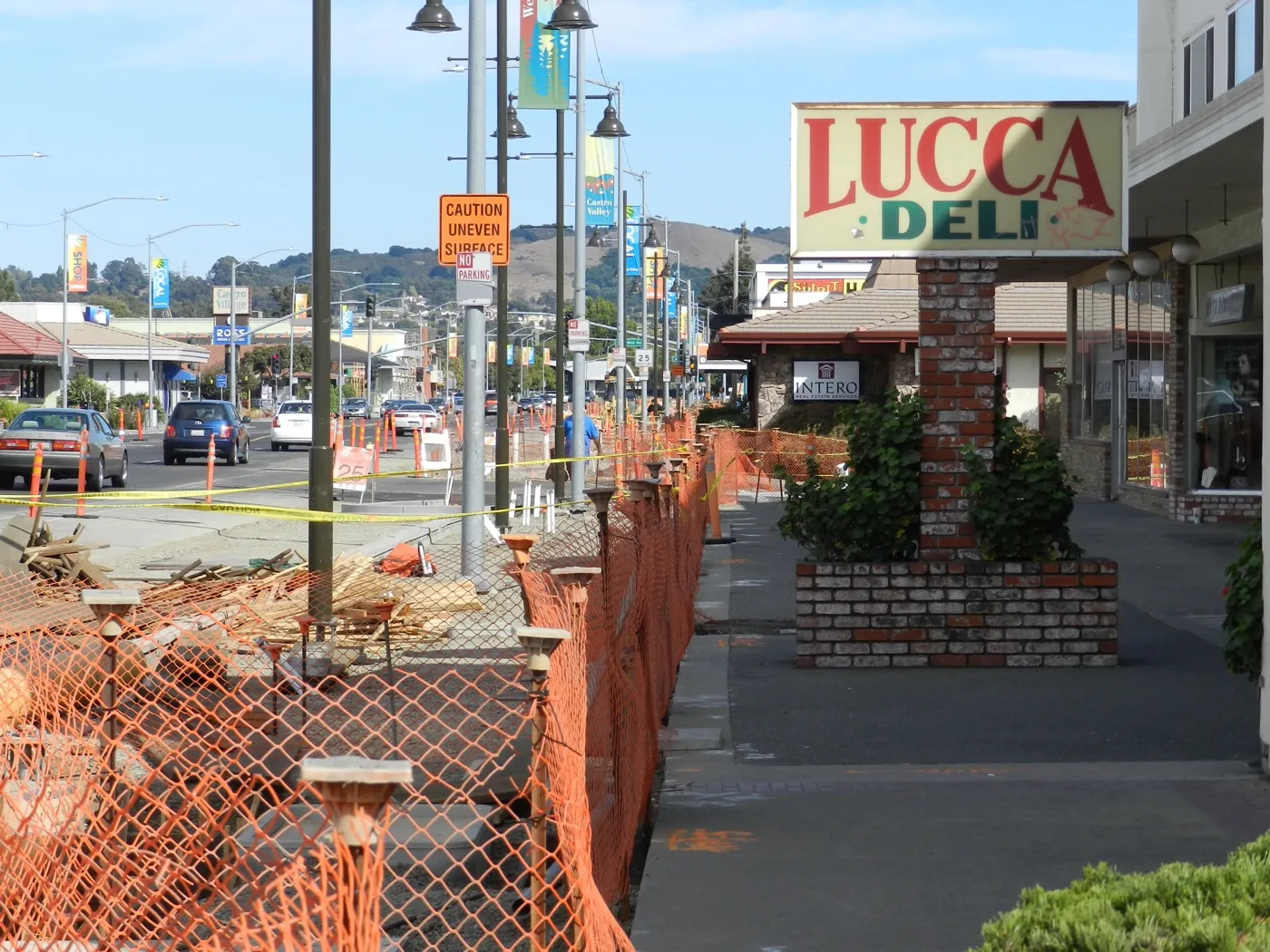
Castro Valley lies in Alameda County and takes its name from Guillermo Castro, a Californio ranchero who in 1840 received the roughly 28,000-acre Rancho San Lorenzo land grant covering the area along with present-day Hayward and San Lorenzo. Castro later sold off portions of the land to pay gambling debts, and through the late 19th century the valley shifted into farming and ranching use. The area's first public school, the Redwood School, opened in 1866, and in the 1870s the nearby Lake Chabot reservoir was built to the west.
Through the mid-20th century Castro Valley was known for its chicken ranches before growing into a residential suburb. It remains an unincorporated community rather than a chartered city: ballot measures to incorporate it were rejected by voters in 1956 and again in 2002.
Source: Wikipedia: Castro Valley, California.
Castro Valley by the numbers
A neutral demographic snapshot from the most recent U.S. Census Bureau American Community Survey. These are city-wide figures; individual neighborhoods and parcels vary.
| Measure | Value |
|---|---|
| Population | 65,389 |
| Median age | 42.8 years |
| Median household income | $138,069 |
| Homeownership rate | 71.5% |
| Median home value (owner-occupied) | $1,058,200 |
| Median gross rent (monthly) | $2,499 |
| Average commute to work (one way) | 33.6 minutes |
| Average household size | 2.89 people |
Source: U.S. Census Bureau, American Community Survey 2019-2023 5-year estimates, Castro Valley city, California.
The Castro Valley market right now
| Median sale price | $1,271,500 |
|---|---|
| Days on market | 14 |
| Homes for sale (inventory) | 51 |
| Homes sold | 42 |
| Sale-to-list | 104% |
Data: Redfin, May 2026
For broader Bay Area context behind the Castro Valley numbers, read the current Bay Area market note.
What this means for you (May 2026)
Sellers in Castro Valley are in a strong position. In May, homes sold at 104% of asking in a median 14 days, and 42 of 51 active listings found buyers. That absorption rate means a well-priced home should sell quickly, and likely above asking. For sellers, the strategy is clear: price accurately and let competition push the final number up.
Property taxes in Castro Valley
In Castro Valley, property tax begins with Alameda County's 1% base under Proposition 13 (California's 1978 cap on the base tax at 1% of assessed value), plus voter-approved bonds. On a representative single-family bill in Castro Valley (FY 2025-26), the total ad valorem rate (the part charged against assessed value) is 1.1800%, and the effective rate runs about 1.24%.
The flat charges are led by sewer. CV SAN SEWER SVC is $583.74, billed by Castro Valley Sanitary. The rest are AC TRANSIT MEAS VV $96.00, HARD - PARK MAINT $28.54, and CSA ST LIGHTING $21.80. Special assessments total $869.46, with no Mello-Roos or Community Facilities District (CFD) line, the special taxes newer developments use to fund infrastructure.
The Castro Valley Sanitary sewer charge and the CSA street-lighting line are the notable local costs here. For how the base rate and bonds fit, see how California property tax works, then estimate the monthly cost with the true monthly cost calculator. Figures come from a representative single-family county bill (FY 2025-26); every parcel differs, so check the actual bill for any home you are weighing. Compare all 38 cities side by side on the Bay Area property tax map. This is educational, not tax or legal advice; confirm any figure with a qualified tax professional and the county assessor before relying on it.
Schools (Castro Valley Unified School District)
Castro Valley Unified School District (CVUSD) is one of the strongest mid-size school districts in the East Bay: 9,471 students across 16 schools (9 elementaries, 2 middle schools, 3 high schools). PublicSchoolReview state rank #158 of 1,908 California districts (top 10%)10/10 on testing dashboards. The compact district size means consistency: every CVUSD elementary feeds into one of two middle schools (Canyon or Creekside), which both feed Castro Valley High. There is no Dublin-style east/west split or San Jose-style 13-district fragmentation here, and the in-Castro-Valley uniformity is exactly the structural advantage buyers pay the premium for.
Castro Valley High is the single high school for the entire district. Castro Valley High School (9-12, ~2,800 students, U.S. News #179 California51% AP participation) anchors every attendance line in the city. The two middle schools split the district geographically: Canyon Middle covers the Canyon-side / Five Canyons / Palomares Hills tracts, Creekside Middle covers most of the central and flatland tracts. The unincorporated status of Castro Valley (it is not a city, it is an unincorporated Alameda County community) does not change school assignment; CVUSD boundaries are independent of incorporation.
Typical assignment by sub-area
| Sub-area | Elementary | Middle | High |
|---|---|---|---|
| Five Canyons / Palomares Hills | Palomares / Independent | Canyon Middle | Castro Valley High |
| Lake Chabot / Proctor | Proctor / Chabot | Creekside Middle | Castro Valley High |
| Stanton / Marshall (downtown / flatland) | Stanton / Marshall / Vannoy | Creekside Middle | Castro Valley High |
| Jensen Ranch / east hillside | Jensen Ranch / Independent | Canyon Middle | Castro Valley High |
Castro Valley is a small unified district; the elementary assignment is the main variable. Lily verifies the current assignment with the CVUSD registrar before any offer.
Highlight schools
- Castro Valley High School (9-12, ~2,800 students), U.S. News #179 California, top 1,000 nationally, 51% AP participation, 92% graduation rate. The single CVUSD high school: every Castro Valley student converges here.
- Canyon Middle School (6-8), Niche A, the east-side feeder; strong music and STEM programs.
- Creekside Middle School (6-8), Niche A, the flatland feeder; serves the larger share of CVUSD students.
- Palomares Elementary (K-5), one of the highest-scoring CVUSD elementaries; the Five Canyons / Palomares Hills attendance area.
Sources: Castro Valley Unified School District; PublicSchoolReview CVUSD; Niche CVUSD; U.S. News Castro Valley High.
Hospitals and birthing centers
Castro Valley's in-city hospital is Sutter Eden Medical Center (20103 Lake Chabot Rd), a Sutter Health PPO-accepting hospital with a full birth center and trauma-receiving emergency department. Kaiser Permanente members from Castro Valley deliver at Kaiser San Leandro (~10 minutes north). One important regional note for the south-county pool: St. Rose Hospital's Family Birthing Center in Hayward is currently suspended for 12 to 18 months per Alameda Health System, so that previously-listed Hayward alternative is not available in 2026.
| Hospital | Network | Drive time from Castro Valley | Key services |
|---|---|---|---|
| Sutter Eden Medical Center | Sutter Health (PPO) | in-city (0-10 min) | Family-centered birth center; private LDR suites; trauma-receiving emergency department; regional destination for stroke and maternity |
| Kaiser Permanente San Leandro Medical Center | Kaiser (closed) | 10-15 min | Closest Kaiser L&D for Castro Valley Kaiser members |
| UCSF Benioff Children's Hospital Oakland (high-acuity NICU referral) | UCSF (PPO) | 20-30 min | Level IV NICU; only pediatric Level I trauma center for Alameda + Contra Costa County |
| Washington Hospital Fremont (alternative south-bay PPO) | Independent (PPO) | 20-30 min | Alternative birthing center for Castro Valley south-side PPO buyers |
Birthing centers: what matters
Sutter Eden is the default in-city option for Castro Valley buyers on a PPO plan. Private labor and delivery suites, full Sutter Health network integration, and the hospital is also the regional stroke and trauma receiving facility, so the same building handles the full acute-care spectrum.
Kaiser members deliver at Kaiser San Leandro (~10-15 min) which has a full Kaiser L&D facility. There is no Kaiser birthing center in Castro Valley itself.
For high-acuity newborn needs (high-risk pregnancy, premature delivery requiring Level III or IV NICU), UCSF Benioff Children's Hospital Oakland is the regional referral destination (~20-30 min); it operates the only pediatric Level I trauma center in Alameda + Contra Costa County.
Hospital network coverage depends on your insurance plan. Lily does not advise on medical coverage decisions; for in-network confirmation contact your insurer directly. Hospital information above is current as of 2026-05-28 and should be re-verified with each hospital's admissions office before relying on it for a major life decision.
Sources: Sutter Eden Birth Center; Kaiser San Leandro maternity; UCSF Benioff Children's Hospital Oakland; Tri City Voice on St. Rose closure; California Perinatal Quality Care Collaborative NICU Directory.
Crime, hazards, and ratings
Castro Valley sits under two serious structural hazards: the Hayward Fault runs along the western edge under the Lake Chabot and Cull Canyon ridges, and the Fairview and Five Canyons hillsides sit in Very High Fire Hazard Severity Zones. Flatland tracts downtown sit outside LRA fire hazard zones, and overall crime is below California averages.
| Category | Rating | Detail |
|---|---|---|
| Crime | property and violent crime both below California average | |
| Flood | Mostly Zone X; Zone AE along Castro Valley Creek and San Lorenzo Creek | |
| Fire | Very High on the Fairview/Five Canyons hillsides and along Palomares Rd / Crow Canyon; Moderate on the foothill bench; flatland downtown tracts not in LRA hazard zones | |
| Earthquake | Hayward Fault runs along the western edge of Castro Valley (under Lake Chabot/Cull Canyon ridges); Calaveras Fault about 6 miles east; liquefaction: Low to Moderate; lowest on the Fairview bench, Higher near San Lorenzo Creek |
School ratings
Numeric snapshots for the highlight schools above:
| School | GreatSchools | Niche |
|---|---|---|
| Castro Valley High | 9 | A |
| Canyon Middle | 8 | A |
| Creekside Middle | 8 | A- |
| Palomares Elementary | 9 | A |
Environment and infrastructure
Beyond the natural-hazard ratings above, these are the environmental and infrastructure factors buyers ask about most. Each is a city-level summary; confirm the exact parcel before any offer.
| Factor | Detail |
|---|---|
| Gas transmission pipelines | PG&E gas transmission segments are mapped in the broader Castro Valley/Hayward area within PHMSA's National Pipeline Mapping System. NPMS alignments are approximate and exclude distribution mains, so any property-specific proximity should be verified through the NPMS viewer or PG&E. |
| Noise (freeway, rail, flight paths) | Castro Valley's main noise sources are I-580 and the I-580/I-238 interchange, plus the BART line and Castro Valley station; there is no significant freight rail or commercial airport directly in town. Some San Jose and Oakland airport overflight can occur at altitude. |
| Refineries and heavy industry | Castro Valley is a primarily residential unincorporated community with no refinery or heavy industry adjacent to it; the Contra Costa refineries are well to the north and do not affect it locally. |
| Soil and groundwater contamination | Castro Valley has a small number of routine cleanup records (e.g. former gas stations and minor commercial sites) in SWRCB GeoTracker and DTSC EnviroStor but no widely documented major Superfund or large industrial contamination site. Specific addresses can be checked against GeoTracker. |
| Air quality and wildfire smoke | Air quality in Castro Valley is generally moderate and traffic-influenced (I-580 corridor) with no dominant local industrial source, and it shares the region's wildfire-smoke exposure. BAAQMD, AirNow and CalEnviroScreen provide current and tract-level data. |
| Wildfire zone and power shutoffs (PSPS) | The eastern hills and canyon (wildland-urban-interface) portions of Castro Valley fall within CAL FIRE / CPUC High Fire Threat District tiers and have meaningful PG&E Public Safety Power Shutoff exposure, while the central valley floor is largely outside the HFTD. |
| High-voltage power lines | PG&E transmission corridors cross the hills and valley near Castro Valley as part of the East Bay grid; exact corridor proximity to a given neighborhood should be confirmed on PG&E or CPUC mapping. |
| Sea level and shoreline flooding | Castro Valley is inland and elevated, with no bay frontage and no meaningful sea-level-rise exposure. |
These are city-level summaries from public agencies and are approximate. Pipeline and power-line alignments, contamination parcels, and wildfire zones can differ block by block; verify the exact address with the agency tools linked above and your inspections before you write an offer.
Sources: PHMSA National Pipeline Mapping System; DTSC EnviroStor; State Water Board GeoTracker; EPA Superfund; BAAQMD air data; CAL FIRE Fire Hazard Severity Zones; PG&E PSPS maps; NOAA Sea Level Rise Viewer
Hazard ratings are city-level aggregates from public agencies (FEMA, CAL FIRE, USGS). Specific addresses can carry materially different risk; verify the exact parcel via the FEMA Flood Map Service Center, the CAL FIRE FHSZ viewer, and your insurance carrier before any offer. School ratings vary by year and by metric; the numbers above are point-in-time snapshots, treat them as a starting point and re-verify with the district registrar.
Sources: CrimeGrade.org (crime); FEMA Flood Map Service Center (flood); CAL FIRE FHSZ viewer (fire); USGS earthquake hazards (earthquake); GreatSchools + Niche (school ratings).
Track Record
4 documented Castro Valley closings, $5.5M local volume. Career-wide: 104 documented closings, $115M+ in total volume, with 91 of 104 on the buyer side, 10 closings in the last 12 months, career range $323K to $3.3M, 5.0-star Zillow average across 38+ reviews. The full transaction record for every Bay Area city Lily has closed in is summarized at the cities index. Every transaction below links to the address on Zillow.


104 transactions · $115M+ · 5.0★ Zillow · Cal DRE #02010731
What buying a home in Castro Valley actually involves
Castro Valley buying starts with the fact that it is not a city. It is unincorporated Alameda County, which means county services, county permits, and county records, so I check the permit history through the county channel on any addition or converted space, and I confirm the school assignment for the address with the Castro Valley Unified registrar before any offer is written, never from a boundary map. What buyers are here for is the arithmetic the county status never touches: Castro Valley Unified schools at a price below the Tri-Valley and Mission San Jose alternatives, plus a BART station few unincorporated communities can offer.
The market decision is hillside versus valley floor. Five Canyons, Greenridge, and the Palomares side carry the view premium, the larger lots, and the hillside due diligence: drainage, grading, septic where it applies, and a fire-zone insurance quote confirmed in writing before contingencies come off, with a return trip up the canyon roads at commute time because hillside light and traffic both change the answer. The valley floor near BART is the walkable mid-tier where the commute case is simplest. My four documented Castro Valley closings, all buyer-side, cluster between $1,360,000 and $1,450,000, exactly the mid band where most Castro Valley decisions get made; if the monthly model cannot carry the asking price, the recommendation is one word: pass. The FAQ below covers the school, septic, and permit questions.
What selling a home in Castro Valley involves
Selling in Castro Valley means selling the school arithmetic to the buyer who is cross-shopping Hayward below and Dublin or Pleasanton above. Your listing's comparison set is not just the street: it is the question of what the same money buys in the neighboring districts, and Castro Valley wins that comparison on schools-per-dollar when the listing makes it legible. I comp hillside against hillside and valley floor against valley floor, because the view premium and the BART walk price on different logic.
Preparation runs the standard discipline: pre-listing inspection, county permit records pulled and reconciled before buyers find the gaps, positive-ROI improvements only, professional photography, and managed bidding through the opening weekends. On the hillside I also prepare the insurance and drainage answers in advance, because the buyer's agent will ask, and a listing that answers first keeps its price.
The Meticulous Protector, applied to Castro Valley
Buyers choose Castro Valley for one reason above all: Castro Valley Unified runs a single comprehensive high school, so every address in town feeds the same campus, and that consistency supports prices across the entire district. Protecting a buyer here starts with being clear-eyed about what that premium buys: certainty about the schools, and nothing about the condition of the house attached to them.
Caution looks different up the canyon roads. Many hillside parcels deserve a geotechnical review, a soils and slope-stability assessment by a licensed engineer, and some homes still run on septic systems rather than sewer, which adds an inspection and a maintenance cost most buyers have never priced. And because Castro Valley is unincorporated, governed by Alameda County not a city hall, the permit history on a converted garage or a finished basement lives in county records, not city ones. Lily pulls the county file instead of taking the listing's word. If the slope report, the septic inspection, or the permit record argues against the house, she will say so and move you to the next one.
What the record shows in Castro Valley
Castro Valley accounts for 4 of Lily's documented closings, and she represented the buyer in all four: one in 2022, then three more in 2025 alone. Three closings in a single recent year is worth noticing. It means current, repeated exposure to how this market prices and negotiates now, not a memory of how it worked a cycle ago, and it is the local face of a career that totals 104 documented closings and $115M+ in volume. The price band is unusually tight, $1,360,000 to $1,450,000. The three 2025 purchases were the house Castro Valley is known for, a three- or four-bedroom single-family home built between 1954 and 1964, the mid-century core that the single-high-school district keeps in steady demand; the 2022 closing sits in the same band. A band that tight is its own kind of evidence: it shows what this specific market actually pays, repeatedly, with a buyer's interests on the line each time. The purchases, in order:
- July 2025: 18561 Lamson Rd, $1,360,000. Single-family, 3 bedrooms, 3 baths, 1,923 sqft, built 1956.
- June 2025: 17781 Mayflower Dr, $1,363,000. Single-family, 3 bedrooms, 3 baths, 1,696 sqft, built 1954.
- April 2025: 19862 Zeno St, $1,360,000. Single-family, 4 bedrooms, 3 baths, 2,112 sqft, built 1964.
- June 2022: 16982 Grovenor Dr, $1,450,000. 3 bedrooms, 2 baths, 1,890 sqft, built 1963.
Castro Valley FAQ
What are Castro Valley price ranges in 2026?
Hillside single-family (Five Canyons, Greenridge, Palomares-area) typically runs $1.2M-$2M depending on view and lot size. Valley-floor single-family (central Castro Valley) runs $900K-$1.4M. Condos and townhomes run $500K-$800K. Newer construction on the Dublin-side fringe can carry HOA and occasional Mello-Roos.
How are Castro Valley schools?
Castro Valley Unified School District ranks consistently strong, top tier within unincorporated East Bay communities. Castro Valley High School is the main public high school. Verify exact attendance area by address; some Castro Valley addresses on the boundaries may be assigned to neighboring districts.
Castro Valley vs Hayward vs Dublin?
Castro Valley sits between the three in price and prestige. Dublin (Tri-Valley) is more expensive with Dublin Unified schools and east-side master-planned new construction. Hayward is the largest of the three with the lowest entry price and the most varied inventory. Castro Valley is the quietest, has top-tier schools, and is the only one in the unincorporated East Bay (county services, not city services).
Does Lily Garipova speak Russian for Castro Valley transactions?
Yes. Russian is Lily's native language. Lily represents Russian-speaking buyers and sellers in Castro Valley with full disclosure review and negotiation in either English or Russian. Russian-language Castro Valley page: lilygaripova.com/ru/castro-valley-realtor/.
What is the price band for Five Canyons single-family in 2026?
Five Canyons is a planned 1990s-2000s hillside community in southeastern Castro Valley (the unincorporated portion that overlaps the Hayward Hills boundary) with HOA, contemporary floor plans, and uniform architectural standards. Single-family runs $1.3M to $1.9M in 2026 depending on lot, view, and floor plan. The HOA covers private streets, the greenbelt, and common-area maintenance; HOA dues vary by phase, so pull the current HOA package for the specific home. Castro Valley Unified School District is the standard attendance, but verify by parcel; some Five Canyons addresses route to Hayward Unified.
What is the price band for Palomares Hills in 2026?
Palomares Hills is the easternmost gated planned community in unincorporated Castro Valley, sitting in the Palomares Canyon foothills on the I-580 east side. Single-family runs $1.4M to $2.1M in 2026 for the planned tract (1990s-2010s construction) and higher for the custom estate parcels deeper in Palomares Canyon Road. The community is equestrian-friendly and the Palomares Canyon road accesses Pleasanton over the hill. Distance from BART and central Castro Valley shopping is a meaningful trade-off; the view and acreage carry the premium.
What is the price band for central Castro Valley single-family in 2026?
Central Castro Valley valley-floor single-family runs $900K to $1.4M in 2026 depending on the block, era of construction, and proximity to Castro Valley Boulevard. The submarket covers the area around Castro Valley BART, the Lake Chabot adjacent neighborhoods, and the Castro Valley Boulevard / Redwood Road commercial spine. Most stock is 1950s-1970s tract single-family on smaller lots; pockets of 1990s-2000s infill add variety. Castro Valley Unified attendance is the standard.
Hillside vs flatland Castro Valley, what differs?
The hillside / flatland split is the central pricing divide in Castro Valley. Hillside (Five Canyons, Greenridge, Palomares Hills, Crow Canyon foothills) carries larger lots, view inventory, planned-community HOA in several pockets, Very High Fire Hazard Severity Zone status on the upper tracts, and $1.2M-$2M+ pricing. Flatland (central Castro Valley around BART, Lake Chabot, Redwood Road) carries smaller lots, no HOA, mid-tier fire hazard, and $900K-$1.4M pricing. Both share Castro Valley Unified School District as the primary draw.
Castro Valley unincorporated status, what does it mean practically?
Castro Valley is not an incorporated city. It is a Census-Designated Place (CDP) in unincorporated Alameda County. Practically: police service comes from the Alameda County Sheriff (not a city police department), planning and permits go through Alameda County (not a city planning department), and there is no city council or city transfer tax. Property tax rate is the Alameda County base (about 1.0-1.1%) with no city overlay. The Municipal Advisory Council (MAC) is the local elected body but has only advisory authority over county decisions.
Castro Valley High School and Canyon Middle feeder pattern?
Castro Valley Unified School District operates one comprehensive high school (Castro Valley High, U.S. News #179 California, GreatSchools 8, Niche A) and two middle schools (Canyon Middle and Creekside Middle). The feeder elementaries include Independent Elementary, Vannoy Elementary, Marshall Elementary, Castro Valley Elementary, Jensen Ranch Elementary, Strobridge Elementary (some), Stanton Elementary, and Proctor Elementary. Each elementary feeds either Canyon or Creekside Middle by attendance area; both middle schools feed Castro Valley High. Verify the specific elementary by parcel.
Castro Valley vs Hayward Unified schools, the actual gap?
Castro Valley Unified (PublicSchoolReview rank #158 of 1,908 California districts, top 10%) consistently outscores Hayward Unified (rank #1386 of 1,907). Castro Valley High beats every Hayward Unified high school on test scores, AP catalog, and college matriculation. The CVUSD-vs-HUSD school boundary cuts through portions of the Hayward Hills and the unincorporated belt between the two cities; a Hayward mailing address can carry CVUSD attendance, and vice versa. Lily Garipova verifies attendance with both registrars by parcel.
Castro Valley BART walkshed and commute math?
Castro Valley BART (on Norbridge Avenue at Castro Valley Boulevard) is one of the more park-and-ride oriented Blue Line stations; the true walkshed is modest (about a quarter-mile of central Castro Valley). The park-and-ride lot fills early on weekdays. Travel times: Embarcadero 35-45 minutes; MacArthur transfer 15-20 minutes; Berryessa / North San Jose 20-30 minutes (one transfer at Bay Fair). The Blue Line is the connection to both SF and the South Bay employer cluster; weekend service has been reduced versus pre-2020.
Castro Valley I-580 commute math to SF and Tri-Valley?
I-580 runs through the middle of Castro Valley and is the spine for both directions: west to Oakland (15-25 minutes off-peak), the Bay Bridge, and SF; east through Dublin Grade to Dublin / Pleasanton / Livermore (15-30 minutes off-peak). Peak hours add 15-30 minutes either direction. The I-238 connector to I-880 gives Castro Valley a direct south route to Hayward and Fremont (10-25 minutes off-peak). For two-car households splitting an SF commute (BART) and a Tri-Valley commute (I-580), Castro Valley is uniquely positioned in the East Bay.
Sutter Eden Medical Center for Castro Valley buyers?
Sutter Eden Medical Center on Lake Chabot Road is the in-city PPO hospital for Castro Valley with a family-centered birth center, trauma-receiving emergency department, and full surgical services. The birth center has become the regional PPO L&D destination since St. Rose Hospital in Hayward suspended its Family Birthing Center in 2024. For Kaiser members, Kaiser Permanente Hayward or Kaiser San Leandro are the closest in-network L&D options (10-20 minutes). UCSF Benioff Children's Hospital Oakland (~25 min) is the regional Level IV NICU referral.
Five Canyons vs Hayward's Five Canyons, which is which?
Five Canyons is a single planned community that straddles the Hayward / unincorporated Castro Valley boundary in the southeastern hills. Most Five Canyons addresses fall in unincorporated Alameda County (Castro Valley CDP) with Castro Valley Unified attendance; a smaller portion falls in the City of Hayward with Hayward Unified. Mailing addresses use Hayward for the southern portion and Castro Valley for the northern. The MLS subdistrict naming is not consistent. Always verify the city and school district by parcel through the Alameda County Assessor before paying the Castro Valley premium.
Equestrian-friendly Castro Valley, where?
Castro Valley has a long equestrian tradition concentrated in Crow Canyon (north end, the upper Crow Canyon Road parcels), Palomares Canyon (east end), and Cull Canyon (northeast). Several parcels carry horse-keeping zoning, on-property barns, and access to county-maintained equestrian trails connecting to East Bay Regional Park District trails (Lake Chabot Regional Park, Anthony Chabot Regional Park). Pricing for true horse properties (3-5+ acres) typically runs $1.8M-$3M+. Lily Garipova verifies the parcel's zoning and any covenant restrictions before any equestrian-property offer.
Castro Valley fire hazard along the eastern hills?
The eastern Castro Valley hills (Palomares Canyon, upper Crow Canyon, upper Cull Canyon, the Crow Canyon Road and Norris Canyon Road parcels) sit in CAL FIRE's Very High Fire Hazard Severity Zone. The 2025 FHSZ update retained the upper tracts as VHFHSZ. Defensible-space inspection by the Alameda County Fire Department (which contracts to CAL FIRE) is annual; California's Zone 0 ember-resistance regulation applies. Insurance market: State Farm and several admitted carriers have non-renewed in the VHFHSZ; FAIR Plan plus a Difference-in-Conditions wrap is the common fallback.
Castro Valley Lake Chabot and Cull Canyon parks?
Lake Chabot Regional Park (north of central Castro Valley) and Cull Canyon Regional Recreation Area (northeast) are two East Bay Regional Park District anchors directly accessible from Castro Valley residential neighborhoods. Lake Chabot has a 14-mile paved trail loop, a marina with rental boats and a small bait shop, and the historic Lake Chabot dam. Cull Canyon has a swim lagoon, a fishing reservoir, and shaded picnic groves. Both materially raise the resale appeal of adjacent Castro Valley single-family for outdoor-oriented buyers.
Castro Valley vs San Lorenzo, what should I know?
San Lorenzo sits west of Castro Valley along the I-238 corridor and is also unincorporated Alameda County (San Lorenzo CDP) with San Lorenzo Unified schools (mid-tier, similar to Hayward Unified). Pricing is roughly $700K-$1M for comparable single-family, a meaningful discount to Castro Valley. The trade-off is San Lorenzo Unified versus Castro Valley Unified (top-10% California) plus the higher per-square-foot at the boundary. For first-time buyers willing to trade schools for affordability, San Lorenzo can pencil; for buyers prioritizing school assignment, the Castro Valley premium is the standard answer.
Castro Valley vs Pleasanton, what's the honest comparison?
Pleasanton (Tri-Valley, incorporated city, I-580 / I-680 corridor) carries Pleasanton Unified schools (top 5% California by PublicSchoolReview, slightly stronger than Castro Valley Unified), single-family $1.6M-$3M+, and city services with active code enforcement. Castro Valley sits unincorporated, with Castro Valley Unified schools (top 10% California), single-family $900K-$2M, county services, and a more rural-edge character on the hillside tracts. For buyers wanting the Tri-Valley package at a lower price with comparable schools, Castro Valley is the standard answer.
Castro Valley new-construction and Mello-Roos exposure?
Castro Valley has limited new-construction inventory; most stock is 1950s-2000s. The exceptions are: pockets of 2010s-2020s infill near the Dublin-side fringe (Five Canyons newer phases, some Palomares Hills custom builds), and the occasional ADU or detached-second-unit conversion. Where Mello-Roos (a special tax that funds infrastructure through a Community Facilities District, or CFD) applies, the annual special tax varies tract to tract, so pull the current annual levy for the specific parcel and add it to carrying cost. The current levy is shown on the county property tax bill and disclosed in the seller's Mello-Roos Notice of Special Tax; the recorded special-tax lien also appears on the preliminary title report, but the preliminary report shows only that the lien and the tax formula exist, not the current dollar amount. If it is unclear whether a parcel carries Mello-Roos, confirm it before writing an offer. Lily Garipova pulls the parcel-specific assessment detail from the Alameda County Auditor before modeling carrying cost.
How does Lily Garipova represent Castro Valley buyers specifically?
Lily reads every disclosure end-to-end (TDS, NHD, SPQ, HOA package for planned communities, preliminary title), runs the CVUSD enrollment lookup and verifies attendance area with the district registrar by parcel (especially for the Hayward boundary and Dublin fringe cases), pulls the FEMA, CAL FIRE FHSZ, and USGS overlays, models full carrying cost including the unincorporated tax rate plus any HOA, walks the property at multiple times of day, and stays willing to recommend walking from a deal that does not pencil. Free 30-minute initial consultation.
How does Lily Garipova represent Castro Valley sellers specifically?
Strategic Listing Model applied at the Castro Valley sub-area level: comp set from the exact submarket (Five Canyons, Palomares Hills, central Castro Valley, Lake Chabot adjacent), not city-wide averages; pre-listing structural and pest inspection plus age-appropriate disclosure preparation; staging targeted to the actual sub-area buyer; multi-platform marketing with active bid management; full carrying-cost modeling for net proceeds before list. 4 documented Castro Valley closings on $5.5M of local volume.
How do I schedule a Castro Valley consultation with Lily Garipova?
Call or text 415-910-3958, or email lilyagaripova@gmail.com. Free 30-minute initial consultation by phone, Zoom, or in person at any Castro Valley address. Available in English and Russian. Cal DRE #02010731. The consultation walks through your specific buying or selling math: budget, timeline, school constraints (CVUSD attendance verification), commute (BART, I-580, I-880 via I-238), mortgage pre-approval, and the realistic Castro Valley sub-area that fits.
How has Castro Valley priced over the trailing 12 months?
Castro Valley single-family median has been roughly flat to up low-single-digits over the trailing 12 months ending mid-2026, with hillside (Five Canyons, Palomares Hills) modestly outperforming valley-floor stock. Insurance availability in the VHFHSZ has begun to weigh on the upper hillside resale velocity; well-prepped, well-disclosed listings still draw multiple offers, while listings with deferred maintenance or fire-insurance question marks sit and chase the market down.
Castro Valley vs Hayward for a Russian-speaking buyer?
Castro Valley wins on schools (Castro Valley Unified vs Hayward Unified, a meaningful gap) and on the quieter neighborhood character; Hayward wins on inventory variety, lower entry price, and three BART stations versus Castro Valley's one. For Russian-speaking buyers prioritizing schools and willing to pay the Castro Valley premium, Castro Valley is the standard answer; for buyers prioritizing affordability with BART access, Hayward pencils better. Lily Garipova represents both markets in English and Russian.
Castro Valley condo and townhome SB326 exposure?
Castro Valley condos and townhomes run $500K to $800K in 2026. California SB326 requires HOAs to inspect exterior elevated elements every nine years with the first round due 2025; Castro Valley HOAs along Castro Valley Boulevard and the BART-adjacent product have begun reserving for these assessments; the per-unit cost varies by association, so pull the HOA package and the reserve study (the study projecting the reserve fund against upcoming repairs) for the specific building. Always request the SB326 inspection report, the reserve study, and the last 12 months of HOA meeting minutes before offer.
Pre-1970 Castro Valley single-family inspection findings to budget?
Central Castro Valley tract stock from the 1950s-1970s typically carries: original clay-tile sewer lateral ($8K-$15K replacement), original galvanized water service ($3K-$6K), original electrical panel and possibly two-prong outlet branch wiring ($4K-$10K), and post-and-pier foundation on the older Lake Chabot-adjacent pockets ($15K-$40K bolt-and-brace). Budget $20K-$50K of contingency-period findings for a typical 1,400-1,800 sf pre-1970 Castro Valley single-family before deciding.
How does the Hayward Fault risk profile look in Castro Valley?
The Hayward Fault runs along the western edge of Castro Valley, roughly parallel to I-580 / I-238 on the Hayward side; the Alquist-Priolo Earthquake Fault Zone overlay touches portions of the western flatland tracts closest to the boundary. The Calaveras Fault sits about 5 miles east through the Sunol corridor. Liquefaction is Moderate to High in the lowest valley-floor blocks near San Lorenzo Creek and Low to Moderate on the hillside tracts. Lily Garipova pulls the parcel-specific California Geological Survey overlay before any offer.